How to Budget for a Home Water Management Project
Budget for gutters and drainage with a method — triage by urgency, phase the work, add a contingency, and anchor to real quotes instead of online averages.
A French drain's cost tracks the trench — its length and depth, the soil and access, the gravel and filter fabric, whether it ties into a catch basin or a distant outlet, and disposal of the spoil. Long runs, clay and tight access push it up.
There is no set price for a French drain, and any per-foot figure you find online hides where the money actually goes: into the trench. A French drain is essentially a gravel-filled trench, sometimes with a perforated pipe at the bottom, that gives water an easy path away from where it collects. Its cost tracks that trench — how long and deep it is, what soil you are cutting through, how easy the yard is to reach, the gravel and fabric it takes to fill, and where the water finally goes. Learn those factors and you can read a quote instead of chasing a number.
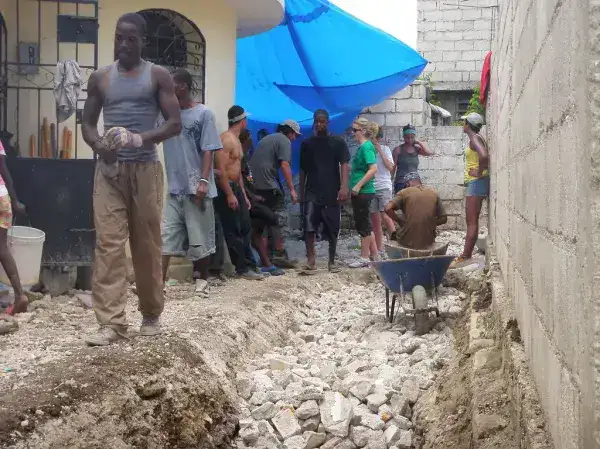
Two things move a French drain quote more than anything else: how much trench you dig, and how hard the ground is to dig. Length and depth set the volume of earth you remove and replace with stone; soil sets how slow and equipment-heavy that digging is. Everything else — pipe, fabric, the outlet, cleanup — matters, but it orbits those two. That is why the same drawing can cost very differently in sand versus clay, or across an open lawn versus a tight, planted, fenced yard.
A price you can trust comes from someone reading your yard, not a chart. That is why this article walks through the factors rather than quoting dollars. And before pricing a French drain at all, it is worth confirming it is the right tool for your water problem — see french drain vs catch basin.
We deliberately do not quote prices here. French drain cost varies too much by trench length, depth, soil and access to put a responsible number on — the same run can differ severalfold between loose soil with open access and rocky clay behind a fenced, planted yard. What stays consistent is the set of factors below.
Length and depth are the foundation of the price because they set how much earth moves and how much gravel replaces it. A longer run to reach a lower outlet means more trench; a deeper trench — to intercept water or hold slope over distance — means more digging, more stone and more difficulty per foot. This is the single biggest lever in most quotes.
Soil decides how fast the digging goes. Loose loam and sand give way quickly; clay, rock and hardpan slow the work and may demand heavier equipment. Access compounds it: a yard a machine can reach is far cheaper to trench than one where every scoop of soil and load of gravel has to be moved by hand through a gate or around plantings. Tight access can turn a modest run into a long day of labor.
Because a French drain is mostly stone, gravel is a real material cost, and a longer or deeper trench needs proportionally more of it. Filter fabric lines the trench to keep soil from migrating into the gravel and clogging it. Both have to be delivered and placed, so they scale directly with trench size — not the dominant cost, but far from trivial.
Many French drains include a perforated pipe at the bottom of the gravel to carry water faster along the run. The pipe itself is inexpensive; its main effect on cost is that it commits you to a proper graded trench and a defined outlet rather than a simple soak trench. Whether pipe is included is a common difference between quotes.
The drain has to end somewhere lower than it starts. Daylighting to a low point is simplest and cheapest. Tying into a catch basin, a dry well, or a distant outlet adds digging, materials and sometimes permits. A far or uphill outlet lengthens the run and can force a deeper grade — both of which push the number up. Understanding how underground outlets are built helps here — see underground downspout drainage.
Digging a trench and filling it with imported gravel leaves you with a pile of displaced soil — the spoil — that has to be spread, hauled away or otherwise handled. The surface above the trench also has to be restored, whether that means reseeding lawn or resetting pavers. Disposal and restoration are genuine line items that a stripped-down quote may leave out.
| Factor | Why it changes the cost |
|---|---|
| Trench length and depth | Sets the volume of earth moved and gravel needed; the biggest single lever. |
| Soil conditions | Clay, rock and hardpan slow digging and may require heavier equipment. |
| Access | Tight, planted or fenced yards force slow hand-moving of soil and gravel. |
| Gravel and filter fabric | A French drain is mostly stone; material scales with trench size. |
| Perforated pipe | Cheap itself, but commits the job to a graded trench and defined outlet. |
| Outlet / catch basin | Daylight is simplest; basins, dry wells and distant outlets add work and permits. |
| Spoil disposal / restoration | Displaced soil and the surface above the trench must be handled and restored. |
So much of a French drain is underground that a quote is partly a read of what the crew expects to hit. A vein of rock, a root ball or a stretch of unexpectedly heavy clay can change the pace of digging, which is why a careful estimate may carry a contingency rather than a single exact figure. That reflects the unknowns honestly; a suspiciously precise number for a trench no one has opened yet is the thing to question. A related, fully underground piped system prices on the same logic — see underground drainage cost factors.
You cannot price a French drain from a chart, because the number lives in a trench no one can fully see until it is open. What explains any honest quote is a set of factors — trench length and depth, soil, access, gravel and fabric, the outlet, and cleanup — with length and soil doing most of the work. Learn them, confirm a French drain is even the right fix, and compare quotes like for like. Do that and the price becomes something you can judge rather than a surprise waiting in the ground.
FAQ
Because a per-foot figure hides the two things that actually move the total — how deep the trench has to be and what you are digging through. The same length of drain costs very differently in loose soil with open access than in rocky clay behind a fenced, planted yard. A responsible estimate prices your trench, not a generic foot of drain.
The trench itself — its length and depth combined with how hard the soil is to dig. A French drain is essentially a gravel-filled trench, so the volume of earth you move and replace with stone is the core of the price. Gravel, fabric and pipe follow from the trench size; access and disposal adjust it.
Yes. Loose, sandy soil digs fast and cheap; heavy clay, rock or hardpan slows the work, can require heavier equipment, and often makes the drain more necessary in the first place. Soil is one of the largest swings in any French drain quote and a big reason local numbers vary so widely.
They are a meaningful material cost because a French drain is mostly gravel. A longer or deeper trench needs proportionally more stone and filter fabric, and both have to be hauled in and placed by hand or machine. It is not the dominant cost like excavation, but it is far from trivial.
Because the drain has to end somewhere lower than it starts. Daylighting to a low spot is simplest; tying into a catch basin, a dry well or a distant outlet adds digging, materials and sometimes permits. A far or uphill outlet lengthens the run and can force a deeper grade, both of which raise the number.
Not always. A French drain manages water spread through soil or across a yard, while a catch basin collects water pooling at a single low point. Choosing the wrong one wastes money, so the right tool depends on how and where your water shows up rather than on which is cheaper.
Match the trench length and depth, the soil expectation, the gravel and fabric spec, whether perforated pipe is included, how the outlet is handled, and whether spoil disposal and surface restoration are in the price. Once the scope lines up, the difference reflects real access and workmanship, not two different drains.
Keep reading
Budget for gutters and drainage with a method — triage by urgency, phase the work, add a contingency, and anchor to real quotes instead of online averages.
Underground drainage cost is driven by excavation — run length and depth, soil, obstacles, pipe type and outlet. Learn why digging, not pipe, sets the price.
What does fixing a wet basement cost? It depends on the cause — grading, downspouts, a sump, interior drains or foundation work. Diagnose first, then price the fix.