Solid vs Perforated Drainage Pipe — When to Use Each
Solid pipe conveys concentrated water to an outlet; perforated pipe collects water from soil. Here is when to use each and what goes wrong when you swap them.
Drainage
Underground downspout drainage carries roof water through buried pipe to an outlet away from the house. It works when it has continuous slope, a real outlet the water can escape from, cleanouts for access, and protection from roots and freezing. Most failures come from lost slope, a buried outlet with nowhere to drain, or clogs with no way to clear them.
Running downspouts into buried pipe is popular for a reason: it gets roof water away from the foundation and out of sight, with no extensions to mow around. Done well, it is one of the tidiest drainage solutions there is. Done poorly, it hides its own failure underground until water is backing up at the house.
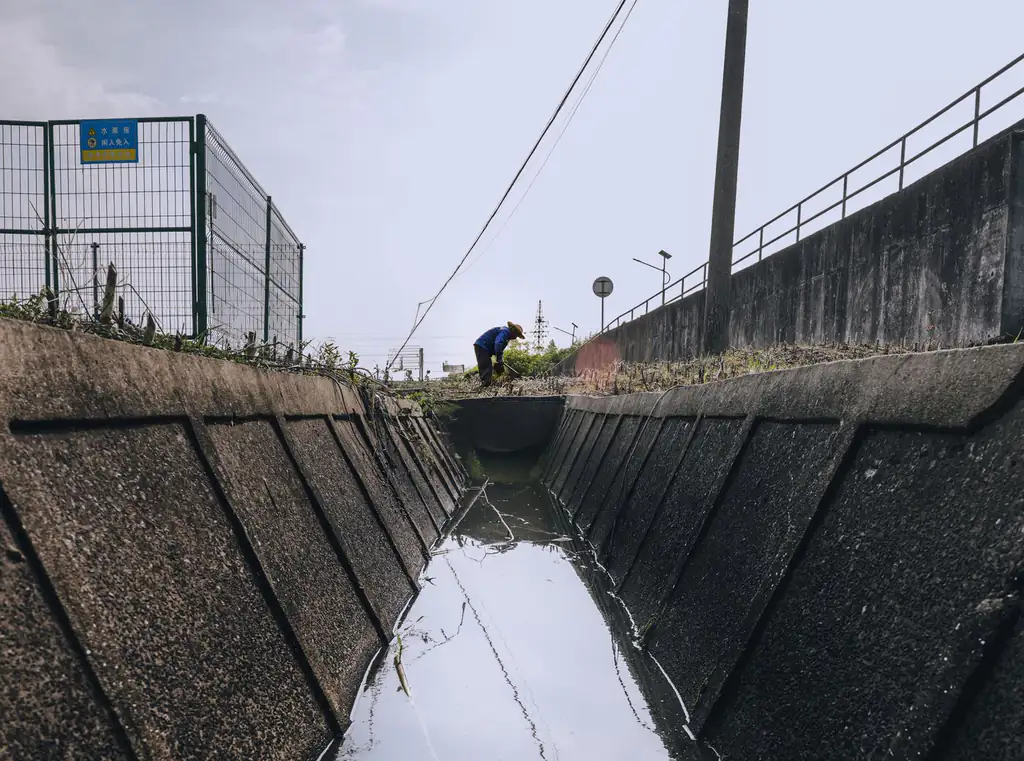
The concept is straightforward. Instead of discharging at a splash block, the downspout connects to a pipe buried in a sloped trench. That pipe carries the water — by gravity alone — to an outlet some distance away, where it can safely leave the system.
Three things make it work:
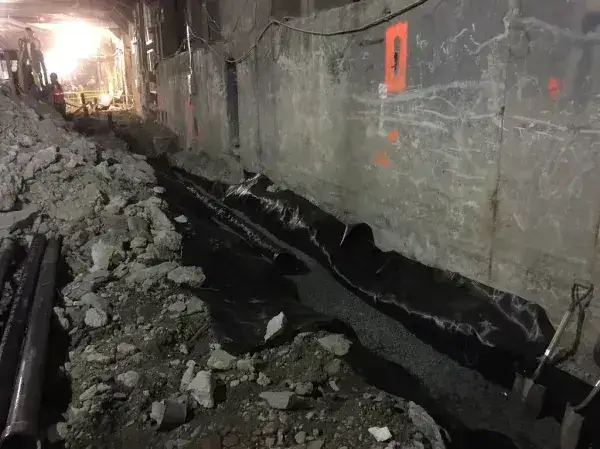
This is where many well-intentioned installs go wrong. Downspout discharge should use solid pipe, because the goal is to move concentrated water past the foundation to a distant outlet. Perforated pipe is designed to collect water from the surrounding soil — that is the job of a French drain, not a downspout line. Send roof water through perforated pipe and it leaks out along the trench, saturating the ground you are trying to protect.
| Solid pipe | Perforated pipe | |
|---|---|---|
| Purpose | Move water to an outlet | Collect water from soil |
| Right use | Downspout discharge lines | French drains, footing drains |
| If misused | — | Waterlogs soil near the house |
Corrugated pipe is cheap and flexible but its ridged interior catches debris and it crushes more easily than smooth-wall pipe; roots find their way into joints; and in cold climates a line that holds any standing water will freeze and block. None of these are visible from the surface, which is the real hazard of buried drainage — by the time you see a backup at the house, the problem has usually been developing underground for a while.
The requirements are site-specific. Slope, burial depth, pipe size and outlet type depend on your soil, roof area, climate and local code. Treat the principles here as a framework for asking the right questions, not as fixed measurements to copy.
Underground downspout drainage is an excellent solution when it is designed to move water, not just hide it — solid pipe, real slope, a working outlet and access to clean it. Skip any one of those and you have simply moved the problem where you cannot see it. If you are weighing this against a surface solution, compare it with how far downspouts should extend above ground before you dig.
FAQ
For carrying concentrated roof water from a downspout to a distant outlet, solid pipe is usually the right choice — you want the water to travel, not seep out along the way. Perforated pipe is for collecting water from soil, as in a French drain. Using perforated pipe for downspout discharge can waterlog the very soil you are trying to keep dry.
There is no universal depth. It depends on your slope needs, frost depth, and what the pipe passes under. The pipe must fall continuously toward the outlet, and in cold climates burial and outlet design must account for freezing. Local frost depth and code should guide the specifics rather than a generic number.
A pop-up emitter is a spring-loaded outlet that opens under water pressure to release drainage at the surface, then closes to keep debris and animals out. It is useful when you cannot daylight the pipe on a slope. It only works if the pipe has enough fall to push water up and out; on flat ground it can hold standing water.
The two usual causes are a clog somewhere in the line and an outlet that cannot release water fast enough — or at all, if it is buried or submerged. Without cleanouts, a clogged buried line is very hard to diagnose or clear, which is why access points matter so much.
Yes. Roots are drawn to moisture and can work into joints or crushed sections of pipe, especially with corrugated pipe that has many seams. Routing lines away from large trees where possible, using smooth-wall pipe with sound joints, and keeping cleanouts for periodic flushing all reduce the risk.
They do, even though they are out of sight. Flushing the line through a cleanout, checking that the outlet still drains freely and has not been buried or crushed, and clearing debris at the downspout connection are all worth doing periodically — a buried line hides its problems until water backs up at the house.
Keep reading
Solid pipe conveys concentrated water to an outlet; perforated pipe collects water from soil. Here is when to use each and what goes wrong when you swap them.
Roof water, ground slope, and a real outlet decide whether water stays away from your house. A practical order for tackling water near the foundation.
A French drain collects and moves water; a dry well stores and soaks it into the ground. Here is how to tell which one your yard actually needs.