Gutters Overflow in Heavy Rain — Causes and What to Do
Overflowing gutters in a downpour can mean a clog, an undersized system, lost slope, or too few downspouts. Here is how to tell which, and the safe next steps.
Category
Sometimes you do not want a category — you want to know why water is doing something. This hub starts from symptoms and walks through likely causes, how to diagnose them, safe next steps and when to call a professional.
Guides
Overflowing gutters in a downpour can mean a clog, an undersized system, lost slope, or too few downspouts. Here is how to tell which, and the safe next steps.
Water running behind the gutter usually means a missing drip edge, a low-hung trough, or overflow. Here's how to find the cause and fix it.
A noisy downspout usually means water hitting a hard surface, a loose section, or splashing at an elbow. Here is how to find the cause and quiet it.
Gutters leak at the seams when the sealant ages and joints loosen. Here is how to reseal a joint properly and when to stop patching and replace.
A gutter pulling away from the house usually means rotted fascia, failed hangers, or trapped-water weight. Here is how to diagnose and fix it right.
Soil eroding beside the house comes from concentrated water — overflow, a downspout at the wall, or runoff. Here is how to spread the flow and stop it.
A yard that stays soggy after rain points to slow soil, a low spot, a high water table, or downspouts. Diagnose the cause before choosing a drain.
Overflow in light rain points to a clog or lost slope, not capacity. How to tell the difference, trace the blockage, and fix the flow.
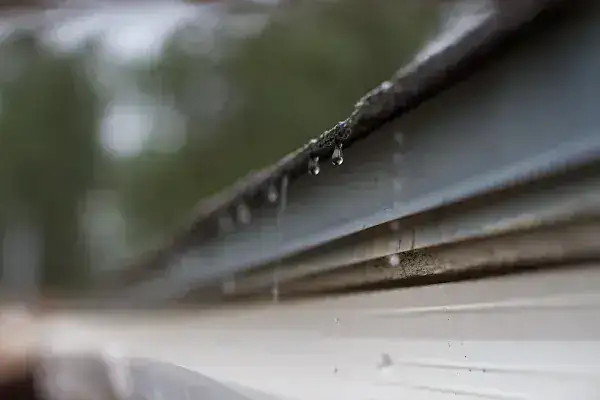
Dripping from the gap between gutter and roof edge points to missing drip edge, a low-hung gutter, or overflow. How to diagnose and fix it.