How Gutters Work (and the Main Reasons They Fail)
A plain-English explanation of how residential gutters move roof water away from your home, the parts involved, and the handful of reasons gutters overflow, sag or leak.
The clearest signs of failing gutters are water spilling over the front edge, gutters sagging or pulling from the fascia, peeling paint or stains on the fascia, erosion or pooling directly below, standing water in the trough, cracks and rust, and a wet basement after rain. Each points to a specific, fixable cause.
Gutters rarely fail without warning. Long before a run finally pulls off the house, it usually shows smaller symptoms that tell you exactly what is wrong. The short answer: watch for water spilling over the front edge, sagging, staining on the fascia, erosion below, standing water in the trough, cracks or rust, and dampness inside after rain. Each of the seven points to a specific, usually fixable cause — and learning to read them lets you catch a cheap problem before it becomes an expensive one. Many are easiest to spot during a steady rain, when you can watch how and where water actually leaves the system. If it helps to picture the parts as you go, how gutters work walks through the trough, hangers, slope and downspouts.
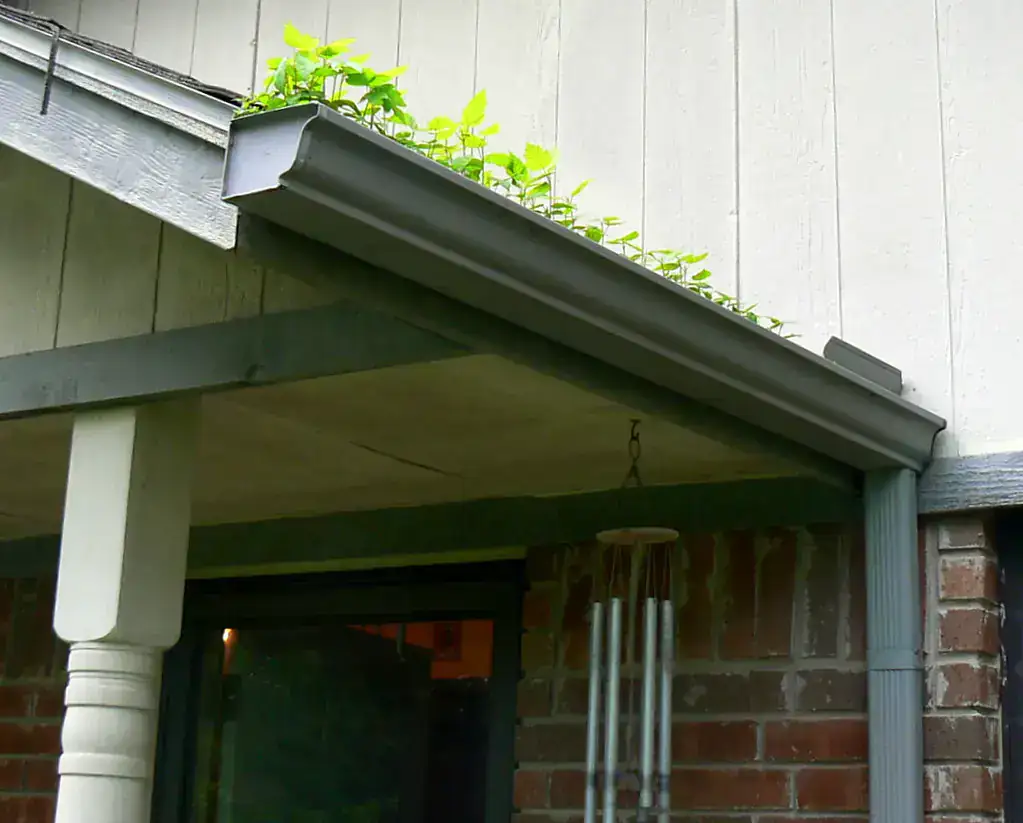
What it looks like: During rain, water sheets over the front lip of the gutter in a curtain rather than running to the downspout and out.
What it means: The trough is not moving water fast enough. That is usually a clog, a lost slope, or a system that is simply undersized for the roof it serves. An occasional overflow in an extreme downpour can be a capacity limit; frequent overflow in ordinary rain almost always means a blockage or a pitch problem.
What to do: Clear the trough and downspouts first, since debris is the most common culprit. If it still overflows when clean, check the slope and whether the downspouts can keep up.
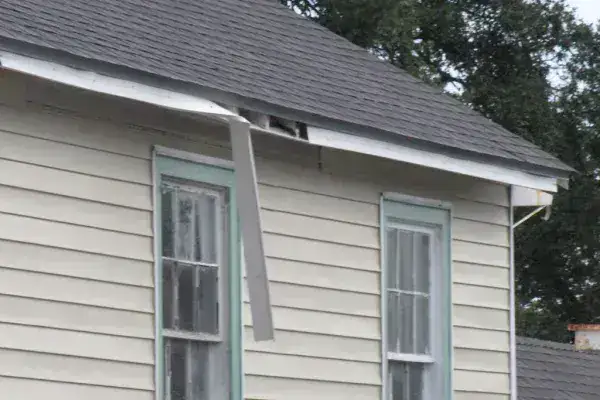
What it looks like: A visible dip in an otherwise straight run, or a gap opening between the back of the gutter and the house.
What it means: The hangers are failing, or the fascia board behind them has softened and no longer holds a fastener. Sagging flattens the slope, so water pools in the low spot, adds weight, and the sag deepens — a problem that accelerates once it starts.
What to do: From the ground, note where the dip is worst. A single loose hanger on sound wood is a modest repair; a run that has dropped along its length, or soft fascia, points to a bigger job.
What it looks like: Blistered or peeling paint, dark vertical streaks, or soft, discolored wood on the fascia board and trim just below the gutter.
What it means: Water is not staying inside the trough where it belongs. It is either overtopping the back edge, wicking behind a gutter mounted too low, or getting past a missing drip edge. Chronic moisture here rots fascia and soffit from the outside in.
What to do: Watch that section during rain to see where the water escapes. Correcting a drip edge or re-seating the gutter is far cheaper than replacing rotted boards later.
What it looks like: Channels carved in soil or mulch, a trench of splashed-out gravel, splash marks on the lower siding, or standing water on the ground directly under the gutters and downspouts.
What it means: Runoff is landing where it should not — either the gutter is overflowing above, or the downspout is discharging too close to the house. Water concentrated at the base of a wall is exactly what you want to avoid. This is closely tied to water pooling near the foundation, which covers where that water goes next.
What to do: Add or extend downspout outlets so water discharges well away from the wall, and confirm the ground slopes away from the house rather than toward it.
What it looks like: After the rain stops, a shallow band of water sitting in one section, or a silt line marking an old, higher waterline along the inside of the trough.
What it means: That section has lost its slope and no longer drains fully. A healthy gutter empties to near-dry within a short time. Standing water breeds sediment, corrosion and, in cold climates, ice that can force joints apart.
What to do: The fix is usually re-pitching the run toward the downspout. Because this is best confirmed by looking into the trough, it is one to leave for a safe vantage point or a professional rather than an awkward ladder reach.
What it looks like: Hairline cracks, orange rust blooms on steel, or daylight showing at a seam where two sections meet.
What it means: On sectional systems, joints work loose and leak as the sealant ages and the metal expands and contracts. On steel, rust means the protective coating has failed and the material is thinning. Any visible gap at a seam is a leak in the making, even if it looks dry between storms.
What to do: Small, accessible seams can be resealed; widespread rust or cracking usually signals a run near the end of its service life. Track how many joints are affected before deciding between repair and replacement.
What it looks like: Damp patches, a musty smell, or actual water appearing in a basement or crawl space in the day or two after a storm.
What it means: This is the least obvious sign because it shows up indoors, far from the gutter itself. Overflowing or poorly discharging gutters concentrate water against the foundation, which can contribute to interior moisture. They are not the only possible cause — grading, drainage and the wall’s own condition all play a part — but they are among the easiest to check first.
What to do: Before assuming the wall is the problem, confirm the gutters are clean, draining and carrying water away from the house. It is a cheap thing to rule out.
| Sign | Likely cause | First action |
|---|---|---|
| Overflow at the front edge | Clog, lost slope, or undersized system | Clear trough and downspouts; then check pitch |
| Sagging or pulling away | Failed hangers or softened fascia | Note the low point; assess hangers and wood |
| Stains or peeling paint on fascia | Water escaping behind or over the trough | Watch during rain; correct drip edge or mounting |
| Erosion or pooling below | Overflow or downspout discharging too close | Extend downspouts; slope soil away from wall |
| Standing water in the trough | Section has lost its slope | Re-pitch the run toward the downspout |
| Cracks, rust, open joints | Aged sealant, failed coating | Reseal small seams; evaluate widespread rust |
| Damp basement after rain | Water concentrated at the foundation | Confirm gutters are clean and draining away |
Inspect from the ground first. Climbing to inspect gutters risks falls, worse on wet or damaged surfaces; if you lack safe access, this is a job for a professional.
Caught early, most of these problems are minor: a cleaning, a re-pitched section, a new hanger, or a downspout extension. Keeping to a routine — see how often to clean gutters — prevents many of them from appearing at all. Ignored, the same water quietly damages fascia, soffit and, over time, the ground and foundation the system is meant to protect.
FAQ
A good baseline is twice a year — once in late autumn after leaves fall and once in spring — plus a look after major storms. Many of these signs are easiest to spot during rain, when you can watch how and where water actually leaves the system.
It can be. Water running behind the gutter often means a missing or misaligned drip edge, or a gutter mounted too low. Left alone it rots the fascia and soffit, so it is worth diagnosing even when it looks minor.
Failing gutters are one common contributor, not the sole cause. Gutters that overflow or discharge next to the house deliver large volumes of water straight to the foundation, which can add to basement and crawl-space moisture. It is one of the first things to rule out, but grading, drainage and the wall itself all matter too.
A run that has pulled noticeably away from the house, softened or rotted fascia behind the hangers, or any sign you can only confirm by climbing to a height you cannot reach safely. Diagnosing from the ground is fine for a homeowner; working at height on a compromised surface is not.
Sometimes. A single loose hanger on sound fascia is a modest repair. But if the fascia behind it is soft or the whole run has dropped, the wood may need attention first, and that is usually beyond a quick fix from a ladder.
It varies widely with material, climate and maintenance, so there is no single number worth quoting. Aluminum and steel systems tend to last many years when kept clean and draining; neglect, standing water and freeze-thaw cycles shorten that considerably. Regular inspection matters more than age alone.
Keep reading
A plain-English explanation of how residential gutters move roof water away from your home, the parts involved, and the handful of reasons gutters overflow, sag or leak.
How splash guards and valley diverters stop concentrated valley runoff from shooting over the front of the gutter.
How to clean gutters step by step — clearing debris, flushing the run, clearing downspouts and inspecting as you go — with safety front and center.