Why Water Runs Behind the Gutter (and How to Stop It)
Water running behind the gutter usually means a missing drip edge, a low-hung trough, or overflow. Here's how to find the cause and fix it.
Problem–Solution Hub
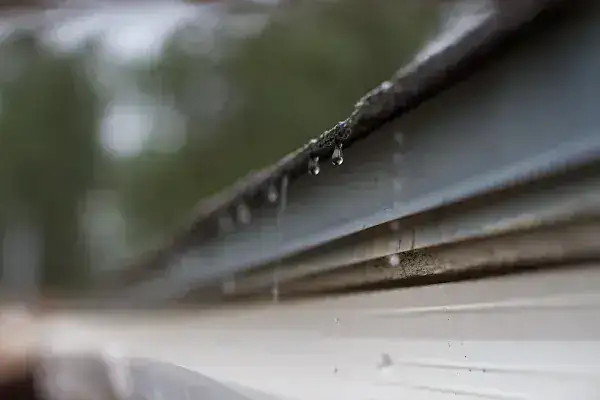
Water dripping from the gap between the gutter and the roof edge usually means missing drip edge or gutter apron, a gutter hung too low, or overflow backing up. It is closely related to water running behind the gutter and rots the same fascia.
Water dripping straight down from the narrow gap between the gutter and the edge of the roof is a specific, readable symptom. It usually means the flashing that should carry runoff off the roof and into the gutter — a drip edge or, better, a gutter apron — is missing or too short, that the gutter is hung too low to catch the water, or that the gutter is overflowing and backing up to the gap. It is a close cousin of water running behind the gutter, and left alone it rots the very same fascia board.
At the bottom edge of the roof, water leaving the last course of shingles needs to be handed cleanly into the gutter. That handoff is the job of edge flashing. A drip edge is a bent metal strip that directs water off the roof and away from the fascia. A gutter apron is a related piece with a longer, more sharply angled lower leg that reaches out over the back lip of the gutter, physically bridging the gap so water cannot fall between the roof and the trough.
When that bridge is missing or too short, surface tension takes over. Water clings to the underside of the shingles and the edge metal, runs back toward the fascia, and drips through the gap — sometimes into the gutter, often behind or in front of it.
Drip edge and gutter apron are easy to confuse and are not interchangeable in every situation. For a plain-language breakdown of which piece does what, see gutter apron vs. drip edge.
The most common reason is simply that no gutter apron is present, or a short drip edge stops before it reaches over the gutter. This is especially common on older homes and on roofs where gutters were added after the fact. Water has no guided path across the gap.
If the gutter sits below the plane where water sheds off the roof edge, runoff arcs past the back of the trough and falls through the gap. This can happen when hangers loosen and the gutter drops, or when the gutter was installed too far down the fascia to begin with.
A clogged or over-full gutter can raise the water level until it spills at the back and appears to drip from the gap. In this case the dripping is a downstream symptom of a blockage, and clearing the clog solves it.
Work from a safe vantage point and, where possible, watch the edge during a light rain or while running a hose onto the roof above.
| Symptom | Likely cause | Fix |
|---|---|---|
| Drips at the gap in every rain, gutter not full | Missing or short edge flashing | Add a gutter apron that reaches over the back of the gutter |
| Water arcs past the back lip of the gutter | Gutter hung too low | Re-hang the gutter higher, or add an apron to bridge the gap |
| Gap drips only when gutter is full or clogged | Overflow backing up | Clear the clog and restore drainage first |
| Staining and drips both in front of and behind the gutter | Missing flashing plus water tracking back | Install apron and inspect fascia for early rot |
| Icicles and drips at the edge in winter | Edge flashing gap worsened by freeze-thaw | Address flashing; evaluate roof edge in cold conditions |
If the cause is missing flashing, the fix is adding a gutter apron. A length of apron can often be slipped up under the first course of shingles and bent down over the back edge of the gutter, giving water a guided path into the trough. Success depends on access and on shingles that are supple enough to lift without cracking — brittle, sun-baked shingles are easy to damage.
If the gutter is hung too low, it may need to be re-hung slightly higher so the shingle edge sheds into it, or an apron can be added to bridge the enlarged gap. If overflow is the real driver, the fix is upstream: clear the blockage and restore proper slope so the water level never reaches the gap.
Reaching the roof edge means working at height, often near the eave. Work at height risks falls; if you lack safe access, hire a professional.
The reason this small drip deserves attention is where the water ends up. Runoff that slips through the gap tends to wet the fascia and, from there, the soffit and the top of the wall. That is the same path water takes when it runs behind the gutter, and the same fascia board pays the price. Paint peels, wood softens, and eventually the hangers lose the solid backing they depend on.
Because the mechanism overlaps so heavily, it is worth reading these two symptoms together. If you also see water tracking down the wall side of the gutter, work through water running behind the gutter alongside this fix.
Bring in a pro if the shingles are too brittle to lift safely, if the gutter needs re-hanging along a long run, or if you find soft or stained fascia and soffit behind the drip. Any suspicion that water has reached the roof deck or the top of the wall is a structural question, not a cosmetic one, and is worth a trained set of eyes before it spreads.
Caught early, dripping at the gap is one of the tidier roof-edge problems to solve — a missing piece of flashing put back where it belongs, guiding water where it was always meant to go.
FAQ
The roof edge is meant to direct runoff into the gutter, usually with a drip edge or gutter apron guiding water past the fascia and into the trough. If that flashing is missing or the gutter sits too low, water clings to the edge and drips through the gap instead.
Both are metal flashing at the roof edge, but a gutter apron has a longer, more angled lower leg that reaches over the back of the gutter to steer water into it. A standard drip edge protects the fascia but does not always extend far enough to bridge the gap over the gutter.
Yes. If the gutter sits below the line where water leaves the roof edge, runoff can miss the back of the trough and fall through the gap, especially without an apron to carry it across.
They are closely related and often share a cause. Missing flashing lets water both drip through the front gap and track down behind the gutter, and both attack the same fascia board.
Over time it can. Water repeatedly wetting the fascia and soffit invites paint failure, wood rot, and interior staining. Catching it early keeps a flashing problem from becoming a carpentry one.
Often a length of gutter apron can be slipped under the first course of shingles and over the back of the gutter, but access, shingle brittleness, and existing flashing vary. If the shingles are fragile or the fit is awkward, it is worth having a pro do it.
Keep reading
Water running behind the gutter usually means a missing drip edge, a low-hung trough, or overflow. Here's how to find the cause and fix it.
A gutter pulling away from the house usually means rotted fascia, failed hangers, or trapped-water weight. Here is how to diagnose and fix it right.
Peeling paint and dark stains below a gutter are moisture marks. Read the pattern, trace the water above, and fix the source, not the paint.