How to Budget for a Home Water Management Project
Budget for gutters and drainage with a method — triage by urgency, phase the work, add a contingency, and anchor to real quotes instead of online averages.
Cost & Planning
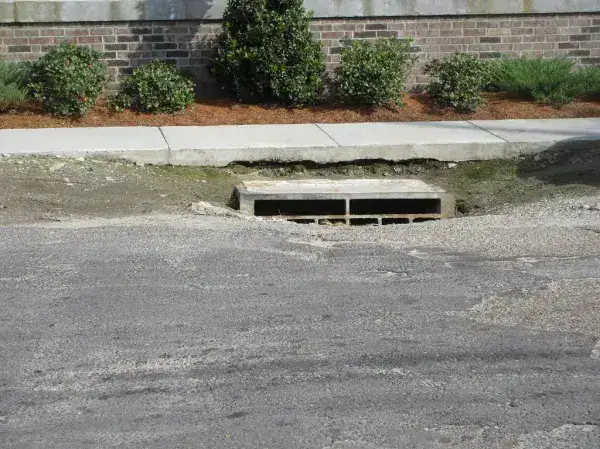
Catch-basin cost tracks the box and the pipe — the basin size, how deep it sits, the outlet pipe run and where it goes, plus digging and surface restoration. A single basin is modest; the connected drain line is usually the bigger number.
A catch basin has no standard price, because a catch basin is almost never just a basin. It is a box that collects surface water plus a buried pipe that carries that water away, and the cost is split between the two — with the pipe usually the bigger number. The basin’s size and depth, the length and destination of the outlet line, the digging, and the surface restoration afterward are what set the price. Understand how the box and the line each contribute and you can read a quote instead of being surprised by it.
A catch basin is a square or round box, usually plastic, set into a low spot with a grate on top. Water pooling on the surface drains through the grate, drops into the box where debris settles out, and leaves through an outlet pipe near the bottom. Dropping that box into a single hole is quick work. What costs money is the outlet pipe — the trench that carries the collected water all the way to a place it can safely leave.
That line grows with distance, depth and difficulty. A basin near a natural low point with a short run to daylight is cheap on the pipe side. A basin whose water has to travel across a long yard, stay below grade the whole way, and reach a distant outlet is mostly a trenching job with a box on one end. Understanding what the basin does in the first place helps — the catch basins how they work guide covers the collection-and-carry logic that shapes the cost.
We deliberately do not quote prices here. A catch basin's cost varies too much by outlet-line length, depth, soil and destination to put a responsible number on — the same box can anchor a short daylight run or a long, deep line under a lawn. What stays consistent is the set of factors below.
The box itself scales with size and depth. A larger basin handles more flow and traps more debris, and it needs a slightly larger, deeper hole. But the jump between a small yard basin and a larger one is usually modest next to the rest of the project. Depth matters more than width, because a deeper basin forces its outlet to leave from lower down — which pulls the whole drain line deeper.
This is the heart of the cost. The pipe carrying water from the basin to its destination is a trench, and its length and depth set most of the price. A short run to a nearby low spot is cheap; a long run across a yard, held at a continuous downhill slope, is a substantial dig. The pipe material — cheaper flexible corrugated versus pricier smooth-wall PVC that resists clogs — matters a little, but the digging matters far more.
The outlet decides how far and deep the line runs. Daylighting to a lower point on your property is simplest. Tying into a dry well, a pop-up emitter or a storm connection where local rules allow adds materials, digging and sometimes permits. A distant or uphill destination lengthens the trench and can force a deeper grade, which is exactly where the cost climbs.
What you dig through shapes the price of every foot of that line. Loose loam gives way quickly; clay, rock and hardpan slow the work. Tree roots have to be cut or routed around. A run that crosses a driveway, patio or walkway means cutting and restoring that hardscape — expensive and hard to price exactly until the work starts. These obstacles are why many catch-basin quotes carry a contingency.
The trench and basin hole produce excavated soil that has to be spread or hauled, and the lawn or surface above has to be restored. Reseeding grass, replacing pavers or repairing a walkway are real line items a bare-bones quote may quietly leave out.
If several low spots collect water, more than one basin feeding a shared line may be the right design, and each basin adds a box and a connection. Basins should follow the drainage problem, not a rule of thumb — extra basins you do not need just raise the cost.
| Factor | Why it changes the cost |
|---|---|
| Basin size and depth | Bigger, deeper boxes need larger holes and pull the outlet line deeper. |
| Outlet pipe run | Length and depth of the trench to the destination drive most of the cost. |
| Where the water goes | Daylight is simplest; dry wells, emitters and connections add work and permits. |
| Soil, roots, hardscape | Clay, rock, roots and crossings slow digging and add contingencies. |
| Restoration and spoil | Reseeding, replacing pavers and hauling soil are real line items. |
| Number of basins | Each added basin adds a box and a connection; size to the actual problem. |
Because most of a catch-basin project is the buried line, a quote is partly an educated read of what the crew expects to find while trenching. A root ball, a patch of rock or a driveway crossing can change the plan mid-dig, which is why a responsible estimate may carry a contingency or a range. The underground portion follows the same cost logic as any underground drainage project: the box is a small, knowable cost, but the line that gives it somewhere to send water is where the real, harder-to-price work lives.
You cannot price a catch basin from a chart, because the box is only half the job and rarely the expensive half. What explains any honest quote is a set of factors — basin size and depth, the outlet line’s length and destination, the digging through your particular soil, and the restoration afterward — with the connected drain line usually the bigger number. Learn them, ask installers to itemize the box separately from the line, and compare like for like. Do that and a catch-basin quote becomes something you can judge rather than a figure to fear.
FAQ
Because the basin is a single box dropped into one hole, while the outlet line is a trench that has to run all the way to a safe place for the water to leave. A basin sets in fairly quickly, but the pipe carrying its water away is a stretch of digging that grows with distance, depth and whatever soil, roots or hardscape lie in the path. Most of the cost of a catch-basin project is in that line, not in the box that collects the water.
The box itself scales with size, but the jump between a small yard basin and a larger one is usually modest next to the rest of the job. A bigger basin handles more flow and traps more debris, and it needs a slightly larger hole, but the real cost driver remains the outlet pipe and the digging around it. Size the basin to the water it must handle rather than trying to save on the box.
A basin that sits deeper needs a deeper hole, and its outlet pipe has to leave from lower down, which usually means a deeper trench for the whole run to keep the water flowing downhill. Depth also raises the difficulty of the digging. A shallow basin draining to a nearby low spot is a simpler job than a deep basin whose line has to stay below grade across a long yard.
Because the outlet decides how far and how deep the line has to run. Draining to a lower spot on your own property that daylights naturally is simplest. Tying into a dry well, a pop-up emitter or a storm connection where local rules allow adds materials, digging and sometimes permits. A distant or uphill outlet lengthens the trench and can force a deeper, more careful grade, which is where the money goes.
Because a catch basin is rarely just a basin — it is a basin plus a drain line, and that line varies too much by length, depth, soil and outlet to quote responsibly. The same box can anchor a short, cheap run or a long, expensive one depending on where the water has to go. A single number would mislead more than it helps. What stays consistent is the set of factors this article walks through.
Sometimes. If you have several low spots or a large area collecting water, more than one basin feeding a shared line may be the right design, and each basin adds a box and a connection. But adding basins you do not need just raises the cost, so the number of basins should follow the drainage problem, not a rule of thumb. A good installer sizes the system to where the water actually pools.
Match the basin size and depth, the length and depth of the outlet line, where the water is going, whether the pipe is corrugated or smooth-wall, and whether digging, spoil disposal and surface restoration are included. Once the scope lines up, the difference reflects real access and workmanship rather than one bid quietly leaving out the drain line that does most of the work.
Keep reading
Budget for gutters and drainage with a method — triage by urgency, phase the work, add a contingency, and anchor to real quotes instead of online averages.
French drain cost tracks the trench — length, depth, soil, access, gravel and fabric, and the outlet. Learn why length and soil dominate the number.
Underground drainage cost is driven by excavation — run length and depth, soil, obstacles, pipe type and outlet. Learn why digging, not pipe, sets the price.