How to Budget for a Home Water Management Project
Budget for gutters and drainage with a method — triage by urgency, phase the work, add a contingency, and anchor to real quotes instead of online averages.
Cost & Planning
A dry well's cost depends on how big it must be (roof area and soil infiltration), how deep you dig, the soil and access, the unit or gravel used, and the pipe run feeding it. Poor-draining soil that needs a larger well is the biggest swing.
A dry well has no standard price, and any figure you find online hides the two things that actually set it: how big the well has to be and how hard the ground is to dig. A dry well is a buried pit or chamber that collects roof water and lets it soak slowly into the surrounding soil, and its cost is driven by the volume it must hold, the depth you excavate, the soil and access, the unit or gravel you fill it with, and the pipe that feeds it. Understand those factors and you can read a quote instead of being blindsided by one.
A dry well is really a storage-and-absorption problem. It has to hold the water your roof delivers during a storm long enough for the ground around it to drink that water in. Two things set how large that store must be: the roof area draining into it, which decides how much water arrives, and the soil’s infiltration rate, which decides how fast the ground can take it away. Fast soil empties the well quickly, so a modest size works. Slow soil holds water, so the well must be larger to bank the same storm while the ground catches up.
That is why soil is the biggest single swing in the price. A large roof over tight clay can need a well several times the size of the same roof over sandy loam — and a bigger well means more digging, more material and more cost. Before you weigh anything else, it is worth understanding what a dry well is meant to do and where it fits, which the dry wells explained guide covers.
We deliberately do not quote prices here. A dry well's cost varies too much by roof area, soil infiltration, digging depth and feeder-pipe length to put a responsible number on — the same downspout can need a small well in fast soil or a large, deep one in clay. What stays consistent is the set of factors below.
The volume of the well is the foundation of its cost. More roof area feeding the well means more water to store; slower-draining soil means the well must be larger to compensate. These two combine into the required storage, and that storage drives how big a hole you dig and how much you fill it with. Getting the size right usually means reading how fast your soil drains, sometimes through a percolation test.
How deep the well sits changes the excavation. A deeper well reaches soil that may drain differently and holds more volume in a smaller footprint, but it costs more to dig and, past a point, raises the difficulty of the work. Depth is also constrained by the water table and by keeping the well below the frost line in cold climates.
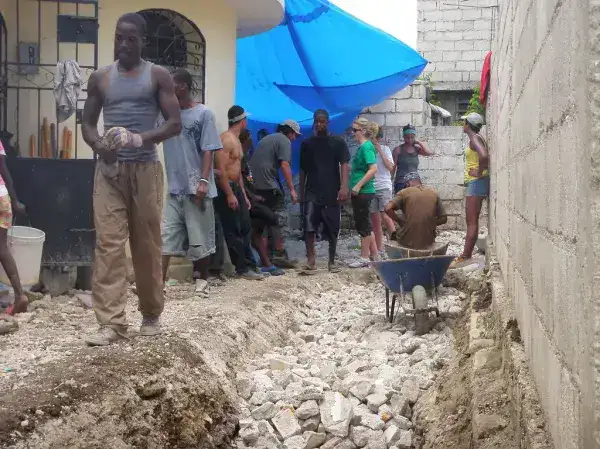
What you are digging through matters as much as how much. Loose loam gives way quickly; heavy clay, rock or hardpan slows the work and can demand heavier equipment. Access matters too — a well tucked into a tight side yard where a machine cannot reach may have to be dug by hand, which is slower and pricier than an open backyard a small excavator can drive into.
What fills the hole is a real choice. A prefabricated dry-well chamber or a stack of infiltration crates gives more storage in less digging and installs faster, but the units cost money. A gravel-filled pit uses cheaper material but needs a bigger hole, because gravel occupies much of the space water would otherwise fill. Filter fabric wraps either type to keep silt out. Neither approach is automatically cheaper — it depends on the volume you need and local digging costs.
The well is one cost; the buried pipe carrying roof water from the downspout to the well is another. That feeder run is its own stretch of trenching, and the longer and deeper it is, the more it adds. Placing the well far from the house to keep water away from the foundation is good practice, but it means more pipe and more digging.
A well-designed dry well has an overflow path for storms that exceed its capacity, which may add pipe or a pop-up emitter. The lawn or surface above the well and the feeder trench has to be restored. And in some areas a dry well needs a permit or a percolation test on record — small line items a bare-bones quote may omit.
| Factor | Why it changes the cost |
|---|---|
| Sizing (roof area + infiltration) | Sets the required storage volume; slow soil forces a larger well. |
| Digging depth | Deeper wells hold more but cost more to excavate and can hit the water table. |
| Soil and access | Clay, rock and tight side yards slow digging and may need hand work or heavy equipment. |
| Unit vs gravel | Chambers and crates store more per dig but cost more; gravel is cheap but needs a bigger hole. |
| Feeder pipe | A longer, deeper run from downspout to well adds trenching. |
| Overflow / restoration / permits | Overflow paths, surface repair and percolation tests are real line items. |
Because so much of a dry well is buried and soil-dependent, a quote is partly an educated read of how your ground behaves and what the crew expects to hit while digging. A patch of rock, a high water table or slower-than-expected percolation can push the design toward a larger well mid-project, which is why a responsible estimate may carry a contingency. That is honesty about the unknowns, not vagueness — the underground portion of the job shares the same cost logic as any underground drainage project, where digging, not material, sets the number.
You cannot price a dry well from a chart, because the number lives in your soil and the ground you dig through to reach it. What explains any honest quote is a set of factors — sizing from roof area and infiltration, digging depth, soil and access, the unit or gravel, the feeder pipe, and the overflow and restoration around it — with slow-draining soil the biggest swing of all. Learn them, ask installers to size the well to a real read of your ground, and compare like for like. Do that and a dry-well quote becomes something you can judge rather than a figure to fear.
FAQ
Size and soil, working together. A dry well has to be large enough to hold the water your roof sends it long enough for the ground to absorb it, and if your soil drains slowly, the well has to be bigger to make up for the sluggish infiltration. A big roof over tight clay needs a much larger, deeper well than a small roof over sandy loam, and that difference in excavation and volume is the biggest swing in the price.
Because a dry well works by letting water soak into the surrounding ground, and how fast that happens depends entirely on the soil. Fast-draining sand empties a well quickly, so a modest size does the job. Slow clay holds water, so the well must be larger to store the same storm while the ground catches up. Soil sets the size, and size drives the digging, which is where most of the cost lives.
It depends on the size and your labor. A dry-well chamber or a stack of infiltration crates gives you more storage in less digging and installs faster, but the units cost money. A gravel-filled pit uses cheaper materials but needs a bigger hole, since gravel takes up much of the space water would otherwise fill. Neither is automatically cheaper; the right choice depends on the volume you need and how the digging prices out locally.
It can. The dry well itself is one cost, but the buried pipe that carries roof water from the downspout to the well is a separate run of trenching, and the longer and deeper it is, the more it adds. A well placed far from the house to keep water away from the foundation means more feeder pipe and more digging, so the location trade-off is part of the price.
Because the honest answer changes too much from yard to yard. The same roof can need a small well or a large one depending on soil, the digging can be easy or brutal depending on rock and roots, and the feeder pipe can be short or long depending on where the well has to sit. Any single number would be wrong for most houses. What holds steady is the set of factors, which is what this article walks through.
For a well sized correctly, yes, some read of how fast your soil drains is important, and on larger or permitted jobs a percolation test may be required. It is a small line item, but skipping it means guessing at the size, which risks an undersized well that overflows or an oversized one you overpaid for. Treat the test as cheap insurance against building the wrong well.
Match the storage volume, the depth, the type of well (chamber, crates or gravel pit), the length and depth of the feeder pipe, and whether the quote includes a percolation read, filter fabric, an overflow path and surface restoration. Once those line up, the price difference reflects real access and workmanship rather than two different designs for the same problem.
Keep reading
Budget for gutters and drainage with a method — triage by urgency, phase the work, add a contingency, and anchor to real quotes instead of online averages.
French drain cost tracks the trench — length, depth, soil, access, gravel and fabric, and the outlet. Learn why length and soil dominate the number.
Underground drainage cost is driven by excavation — run length and depth, soil, obstacles, pipe type and outlet. Learn why digging, not pipe, sets the price.