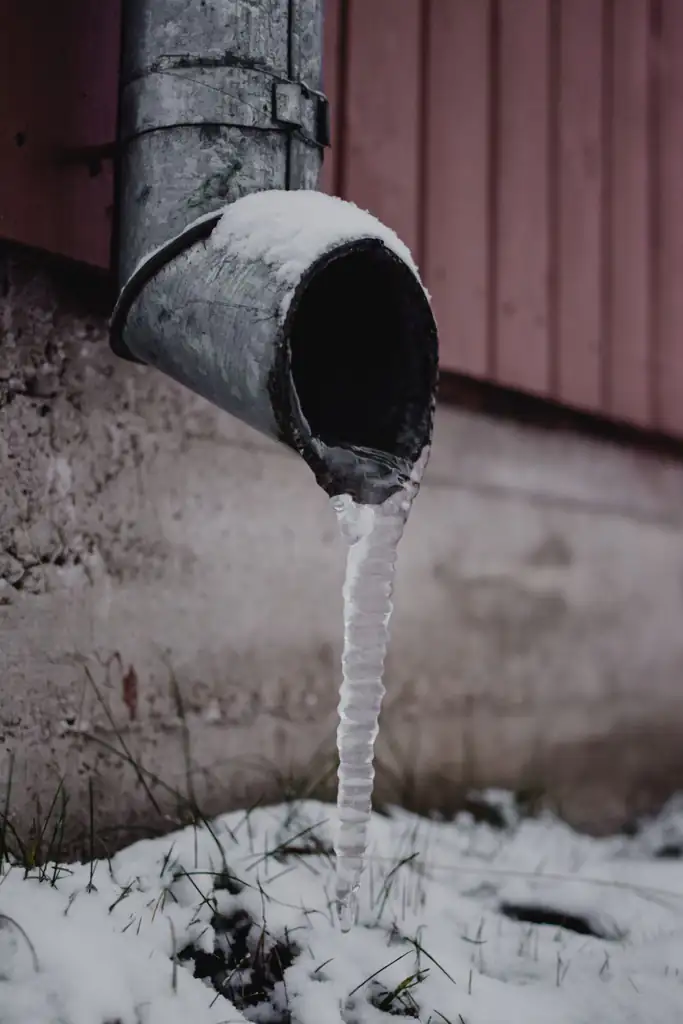
Oversized Downspouts Explained
When upsizing to larger downspouts like 3x4 actually helps, why the gutter outlet has to match, and how to avoid simply relocating the bottleneck.
Downspouts
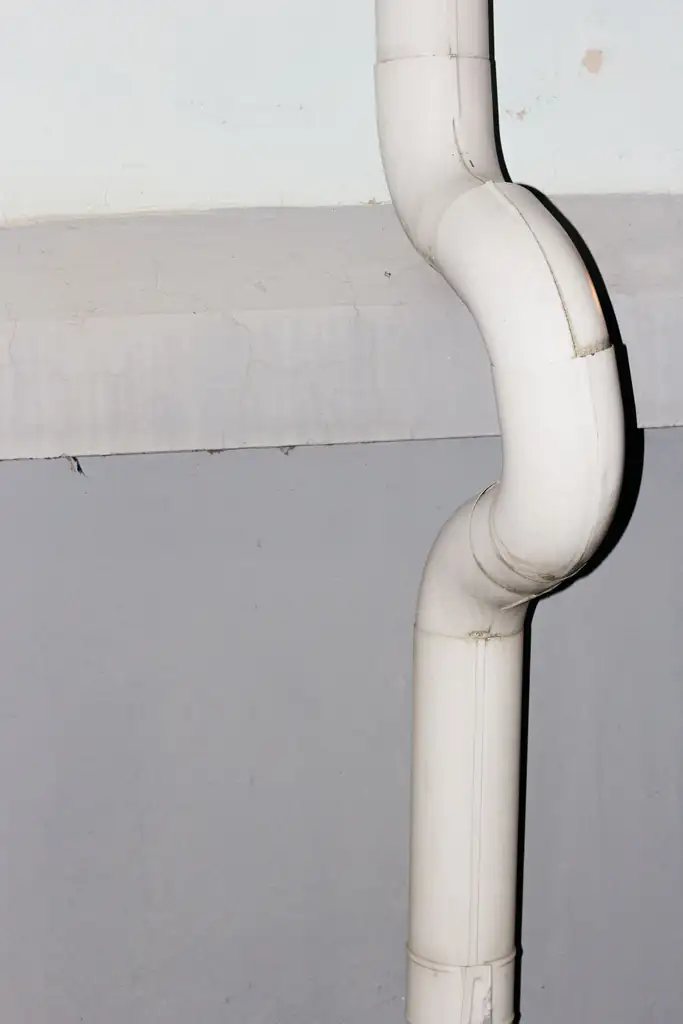
A downspout that backs up only in heavy rain is usually undersized or too few for the roof, or a partial clog restricting flow — the outlet cannot keep up with the volume. It is a capacity or blockage problem, not the gutter itself.
A downspout that runs fine most of the time but overflows the moment a real storm hits is telling you something specific: the outlet cannot pass water as fast as the roof is delivering it. This is almost always a capacity problem — the downspout is undersized or there are too few for the roof — or a partial clog quietly restricting flow. It is not usually the gutter’s fault, and it is not a mystery. Heavy rain simply reveals a limit that was always there but never got tested in a drizzle.
In light or moderate rain, the volume of water reaching any one downspout is small enough that even a narrow or partly blocked pipe keeps up. Nothing spills, so nothing seems wrong. A downpour changes the math. Now every square foot of roof is funneling water into the same handful of spouts at once, and the flow arriving at the outlet exceeds what it can swallow. Water piles up in the gutter, rises to the edge, and spills over — usually right at the top of the downspout, at the base of the wall.
So the symptom is really a threshold being crossed. The useful question is why the threshold is so low: is the pipe too small for the load, or is something narrowing it?
These are the two culprits, and they call for different fixes. Here is how they tend to present.
| Clue | Points to capacity | Points to a clog |
|---|---|---|
| Timing | Every heavy storm, consistently | Getting worse over a season |
| Which spouts | Often several, especially those serving large roof areas | Usually one specific downspout |
| Light rain behavior | Drains fine | May drain slowly even in moderate rain |
| History | Was always marginal, or roof/gutters changed | Used to keep up, recently declined |
| Sound and feel | Water simply overwhelms a clear pipe | Gurgling, slow trickle, or a section that feels packed |
The practical move is to rule out the clog first, because it is the cheaper, faster thing to check. Run a hose into the top of the downspout on a dry day. If it backs up immediately with a modest flow, you have a blockage to clear before blaming size. If a garden hose runs through freely and the spout only fails under storm volume, you are looking at a genuine capacity shortfall. Our guide to why a downspout is not draining walks through tracing and clearing a blockage step by step.
A partial clog and undersizing can coexist, and one can mask the other. A downspout that was already marginal on capacity will overflow far sooner once debris narrows it further. If clearing a blockage helps but the spout still backs up in the heaviest storms, you may be dealing with both — clear the clog, then reassess the size against the roof area it serves.
Once you know which problem you have, the remedies are direct.
Clear it and keep it clear. The top offset — that first bend under the gutter outlet — catches most roof debris, so start there. An underground extension clogs where you cannot see it, so those need checking too. After clearing, address why debris is reaching the spout in the first place: gutter guards, strainers at the outlet, or simply more frequent cleaning under heavy tree cover. A clog that keeps returning is a maintenance problem, not a one-time fix.
You have two main levers:
Frequently the best answer combines both: right-size the outlets and make sure there are enough of them for the roof.
Occasionally the downspout is not the limit at all. If the gutters themselves are undersized, sagging, or pitched wrong, water can overflow before it ever reaches the spout. When the whole gutter sheets over in a storm rather than backing up specifically at the outlet, the problem is upstream. Our overview of gutters overflowing in heavy rain covers those cases.
A downspout that only backs up in heavy rain is not broken and not mysterious — it is at its limit, and the storm is what exposes the limit. Check for a clog first, because it is quick and often the whole answer. If the pipe runs clear and still overflows under real volume, the roof is simply asking more of that outlet than it can give, and the fix is to upsize it, add another spout, or both. Either way you are matching capacity to the water, so the system keeps moving when it matters most.
FAQ
Because heavy rain is the only time the volume exceeds what the outlet can pass. In light rain even an undersized or partly clogged downspout keeps up, so nothing spills. When a downpour delivers far more water at once, the restriction finally shows itself as overflow. The problem was there all along; the storm just revealed it.
A clog usually gets worse over a season and may show at one specific spout, sometimes with slow drainage even in moderate rain. An undersizing problem is consistent and tied to volume — it backs up every heavy storm, often at more than one downspout, and clears fine once you have ruled out blockage. Checking for a clog first tells you which you are dealing with.
Often yes. If the roof drains too much area into too few outlets, adding a downspout splits the load so each one carries less. It is one of the more effective fixes for a genuine capacity shortfall. The catch is that the new spout needs a good location and a proper discharge, so it is not just a matter of cutting another hole.
A larger cross-section passes more water before it backs up, so upsizing raises the ceiling on capacity. But bigger is not automatically better in every case, and an oversized spout on a small gutter can create its own quirks. Matching the size sensibly to the roof area is the goal, not simply going as large as possible.
Sometimes. If the gutters themselves are undersized, sagging, or overflowing before water even reaches the spout, the downspout is not the bottleneck. But when the gutter fills and water backs up specifically at the outlet, the restriction is at or below the downspout — capacity or a clog. Watching where the overflow starts tells you which.
Most often at the top, where debris washing off the roof first hits a bend, and at the outlet or any elbow where flow slows and changes direction. Underground extensions clog where you cannot see them. The top offset is the classic culprit, so it is the first place to check when a spout backs up.
It can be, because water spilling over at the top lands right at the base of the wall, in the soil closest to the foundation. Occasional minor overflow is not an emergency, but a downspout that consistently dumps its whole load at the wall during storms is delivering water exactly where you least want it. Fixing the backup protects the foundation too.
Keep reading
When upsizing to larger downspouts like 3x4 actually helps, why the gutter outlet has to match, and how to avoid simply relocating the bottleneck.
How to size and choose downspouts, from 2x3 and 3x4 rectangular to round, and why the outlet decides whether your gutters can drain.
How many downspouts a house needs — the 30-to-40-foot rule of thumb, what changes it, signs a long run needs another outlet, and the mistakes that leave gutters overflowing.