
How to Quiet a Noisy Downspout
Why downspouts drum, drip, and rattle in the rain, and the simple fixes that quiet them without replacing the whole run.
Downspouts
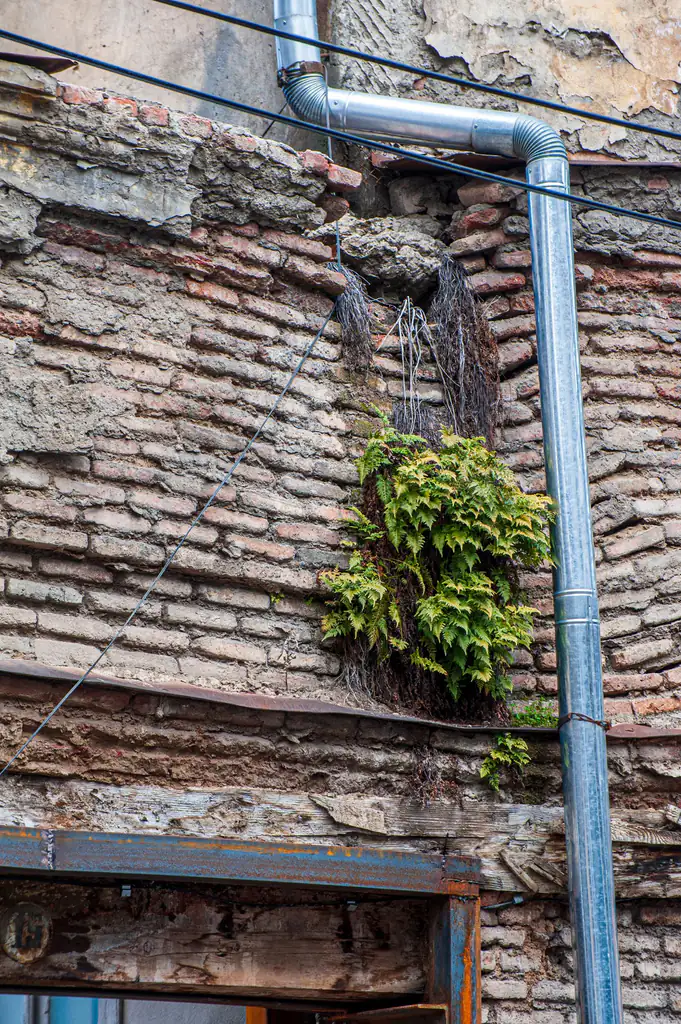
A downspout that isn't draining is usually clogged — at the top outlet, inside an elbow, down the vertical run, or in a buried underground line — or its outlet is blocked or frozen. The fix is to find where the blockage sits by working down from the top, not to assume the whole thing is bad.
A downspout that isn’t draining is almost always clogged in one specific place — at the top outlet, inside an elbow, somewhere down the vertical run, or in a buried underground line — or its outlet is blocked or frozen. The job isn’t to replace the downspout. It’s to find where the blockage actually sits by working down from the top, then clear that spot.
When water sheets over the top of a downspout in a storm, or you hear gurgling and nothing comes out the bottom, it’s tempting to assume the whole thing has failed. It almost never has. Metal and vinyl downspouts don’t wear out from the inside; they get plugged. And a plug lives in a predictable set of locations. Once you know where to look and how to listen, you can usually pin down the blockage in a few minutes and clear it with a hose and a hand snake.
Different symptoms point to different parts of the system. Read them before you touch anything.
If your gutters also overflow along their length in heavy rain — not just at the downspout — the issue may be bigger than one clog. That’s covered separately in why gutters overflow in heavy rain.
There are four common locations, and one that people consistently miss.
The drop outlet is the funnel where the gutter feeds the downspout, and it’s the first place debris packs in. Many outlets have a wire or plastic strainer basket sitting in them; those catch leaves and clog fast. This is the single most common spot, and the easiest to check.
Most downspouts have at least two elbows — one at the top to bring water off the gutter and against the wall, and one at the bottom to kick it away from the foundation. Those bends are where a loose clump of debris stops moving and starts collecting. A clog you can’t see from either opening is often sitting in an elbow.
The long straight section can hold a surprising amount of packed leaves, roof grit, and seed pods, especially if it’s a narrow profile carrying a large roof area. Undersized downspouts clog more often; if this is a recurring problem, it’s worth checking whether the downspout is right for the roof it drains — see downspout sizing and types.
If your downspout feeds into a pipe that disappears into the ground, the blockage may not be in the visible downspout at all. Underground lines collect silt, root intrusion, and debris that washes down, and they can hold water that has nowhere to go. When the vertical downspout is clear but water still backs up, look underground. This is common enough that it has its own guide: underground downspout drainage.
Underground lines end somewhere — either they daylight (open onto a slope or into a ditch) or they terminate in a pop-up emitter that opens under water pressure. Emitters get buried under grass and mud, jammed with debris, or frozen shut. A stuck outlet blocks the whole line behind it.
Work from the top down so you’re always testing the part above what you’ve already cleared.
Clearing the top of a downspout means working at height. Work at height risks falls; if you lack safe, stable access, hire a professional.
| Symptom | Likely blockage location | What to do |
|---|---|---|
| Overflow at the very top, at the drop outlet | Strainer or top of pipe / first elbow | Hand-clear the strainer, flush from the top |
| Gurgling, slow drainage | Partial clog in vertical run or an elbow | Flush from the top, then snake the run |
| Gutter overflows, nothing exits the bottom | Full clog in vertical run | Snake from the bottom or open a joint at the dull-sounding section |
| Downspout drains, but water pools at the base | Buried underground line or stuck emitter | Check the outlet, snake the underground line, clear the emitter |
| Ice at outlet, bulging seams (winter) | Frozen line | Let it thaw; do not force it (see below) |
| Clogs return within weeks | Debris source or undersized downspout | Clean gutters, add a strainer/guard, check downspout sizing |
Once you know where the blockage is, match the method to the location.
Avoid blasting a clog apart with a pressure washer. High-pressure water can separate crimped downspout joints and underground fittings, turning one clog into a leak or a disconnected line. Low-pressure water and a hand snake are safer and usually enough.
Buried lines are where clearing gets harder and where a stuck line is most likely to go unnoticed. Silt settles in low spots, roots find seams, and a buried or frozen emitter blocks everything upstream. If the visible downspout tests clear but water still backs up or pools, treat the underground line as the suspect and read the dedicated guide — including why accessible cleanouts make these lines maintainable instead of dig-only.
A frozen downspout or outlet is not a clog you can force. Ice expands, and a snake or high-pressure water against a frozen seam can split the pipe or blow apart a fitting.
Don't force a frozen line. Let it thaw naturally, or apply gentle warmth if you have safe access. If a downspout freezes again and again, there's usually standing water in a low spot or a partial clog holding water that shouldn't be there — worth addressing once it thaws.
Repeated winter freezing often travels with ice building up in the gutter itself. If you see ice ridges along the eave, that’s a related pattern worth understanding alongside the downspout problem.
A downspout that won’t drain is a location problem, not a replacement problem. Work top-down, listen for where the pipe goes dull, test from both ends, and don’t forget the buried line. Nine times out of ten the fix is a hand-clear, a flush, and a little patience — not a new downspout.
FAQ
Overflow at the top outlet almost always means the blockage is right there — at the drop outlet or strainer where the gutter feeds the downspout — or just below it in the first elbow. Debris packs into that transition first. Clear the strainer by hand and flush from the top before assuming the whole run is bad.
Run a hose into the bottom of the downspout. If water backs up and overflows out the top, the blockage is somewhere in the vertical downspout. If the downspout drains fine but water pools at the base or never reaches the outlet where it should daylight, the blockage is in the buried underground line or its emitter.
Be cautious. High-pressure water can blow apart crimped or sealed downspout joints and separate underground fittings, turning one clog into a leak or a disconnected line. A garden-hose flush and a hand-fed drain snake are safer and usually enough. If you do use pressure, keep it low and expect that joints may loosen.
Do not force a frozen line with a snake, sharp tool, or high pressure; you can split seams or fittings. Let it thaw naturally, or apply gentle warmth if you have safe access. A downspout that freezes repeatedly usually has standing water sitting in a low spot or a partial clog that should be addressed once it thaws.
Tap along the pipe with a screwdriver handle or knuckles from top to bottom. An empty section rings hollow; a section packed with wet debris or water sounds dull and full. The point where the sound changes from hollow to dull is roughly where the blockage begins.
Often no. Many clogs clear with a hand-clear of the top strainer plus a hose flush. If that fails, you can open a single crimped joint or an elbow near the blockage rather than removing the whole run, or feed a snake through an existing cleanout on an underground line.
Repeat clogs usually mean debris keeps arriving — overhanging trees dropping leaves, seeds, or needles into an unguarded gutter — or the downspout is undersized for the roof area it drains. Address the source with gutter cleaning, a strainer or guard, and confirm the downspout is sized appropriately for the runoff it carries.
Keep reading
Why downspouts drum, drip, and rattle in the rain, and the simple fixes that quiet them without replacing the whole run.
Whether you can bury a downspout, when it makes sense, and what a buried line needs to work — slope, an outlet, cleanable access — instead of just hiding the problem.
How to run a downspout underground the right way — solid pipe, continuous slope, a real outlet, and cleanouts — so the line stays hidden without turning into a buried clog.