How Far Should Downspouts Extend From the House?
A downspout that dumps water at the wall just moves the problem. Here is how far discharge should reach, the options for getting it there, and how soil and slope change the answer.
Downspouts
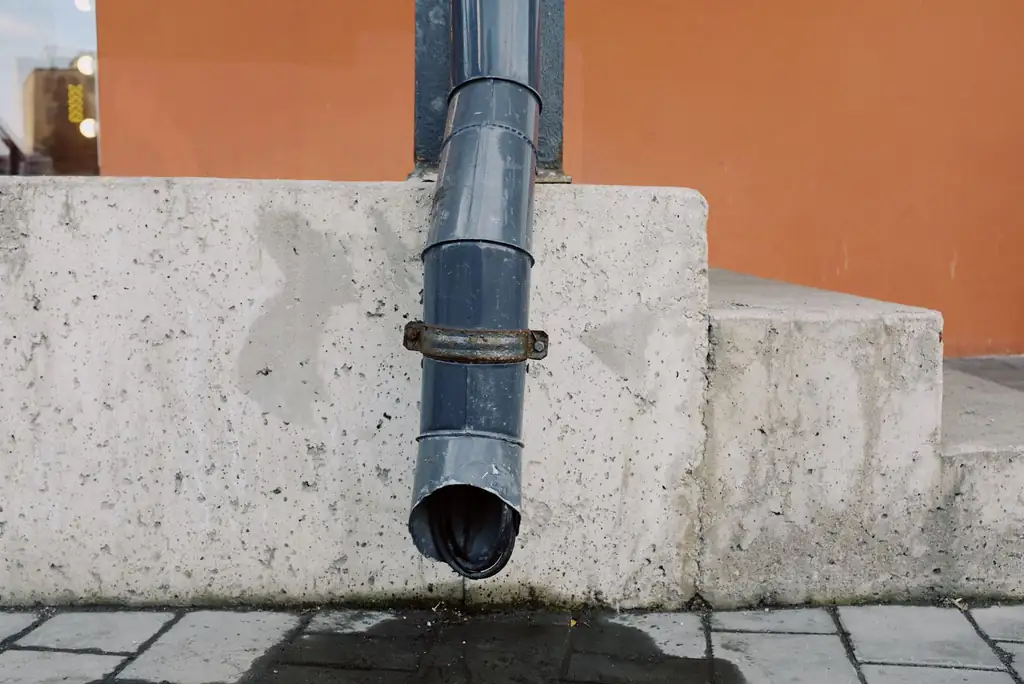
Downspout extensions carry roof water past the foundation — splash blocks nudge it a foot or two, above-ground extensions reach several feet, hinged/roll-out versions keep paths clear, and buried lines to a pop-up emitter hide it entirely. The right pick depends on your grade, climate and how much you mind visible pipe.
If roof water keeps ending up against your house, a downspout extension is usually the fix — it takes the water the downspout drops and carries it past the foundation before releasing it. The catch is that “extension” covers several very different things, from a molded plastic tray to a buried pipe you never see. This guide lines them up side by side so you can match one to your yard.
A downspout without an extension dumps a concentrated stream right where the wall meets the soil. Even a modest roof sheds a surprising volume in a hard rain, and that water goes straight down along the foundation. Over time that is how you get water pooling near the foundation, damp basements and eroded beds. The whole job of an extension is to break that pattern: move the release point out to where the ground can absorb or shed the water safely.
How far is “far enough” is the real question, and it depends on your grade and soil more than on any single number. We cover that in detail in how far downspouts should extend, but the short version is that flatter, clay-heavy lots need more reach than lots that already fall away from the house.
A splash block is a shallow sloped tray that sits under the downspout. It does not really carry water so much as spread it out and nudge it a foot or two downhill, so the stream stops digging a hole in one spot.
These are straight sections of pipe or corrugated tube that clip onto the downspout elbow and run out across the surface. They come in rigid and flexible styles and can reach several feet with a coupler or two.
Above-ground pipe is the workhorse of the group: cheap, effective and easy to adjust. The downside is that it stays visible and lies across the yard, which makes mowing and foot traffic awkward.
Hinged extensions flip up out of the way when you need to mow, then drop back down. Roll-out (accordion) sleeves stay coiled at the elbow and unfurl only when water pressure pushes through them. Both are aimed at the same annoyance — a permanent pipe in the middle of the lawn.
They keep the path clear, but the moving parts and thin materials tend to wear, and the roll-out style has a short, unpredictable reach.
Here the extension drops below grade and runs underground to a pop-up emitter — a small capped fitting that opens under water pressure and releases the flow out in the yard. When it works, the whole thing is invisible. This is essentially the entry point to underground downspout drainage, and it asks the most of your yard in return for the tidiest look.
A buried line only drains as well as its slope. Without a steady fall from the house to the emitter, water sits in the pipe, and in cold climates that standing water is what freezes.
The table below is a rough comparison, not a spec sheet — actual reach and effort vary with your setup.
| Method | Typical reach | Upkeep | Freezing risk | Looks |
|---|---|---|---|---|
| Splash block | About 1–2 ft | Low; reposition now and then | Low | Visible tray |
| Above-ground pipe | Several ft | Low–moderate; clear debris, reseat joints | Low–moderate | Visible pipe on lawn |
| Hinged / roll-out | Short to moderate | Moderate; moving parts wear | Moderate | Visible but flips away |
| Buried to pop-up | Several ft and up | Moderate; clear emitter, check slope | Higher near emitter | Hidden |
Start with your grade. If the ground already falls away from the house, a splash block or a short above-ground run may be all you need to keep water moving. If your lot is flat or slopes toward the house, you need more reach, which points to a longer above-ground pipe or a buried line.
Then weigh climate. In freeze-prone areas, above-ground extensions have the advantage that you can see and clear them, and they drain fully between storms. Buried lines are tidier but the shallow end near the emitter is vulnerable in a hard freeze, so they need proper slope and fall cleanouts.
Finally, be honest about how much visible pipe you can live with. Hidden lines look best and cost the most effort to install and maintain. Above-ground pipe is the opposite trade. Hinged and roll-out styles sit in between, buying you a clear lawn at the cost of flimsier hardware.
Every extension does the same basic job — get roof water past the foundation — but they land in different places on the reach-versus-effort curve. Splash blocks are the easy, low-reach starting point. Above-ground pipe adds distance for very little money. Hinged and roll-out styles keep the lawn clear. Buried lines hide everything but demand slope, upkeep and a real plan for where the water comes out. Match the option to your grade, your winters and your tolerance for visible pipe, and you will not have to redo it.
FAQ
A common rule of thumb is to move roof water at least four to six feet away from the foundation, and farther on flat or clay-heavy lots. The correct distance depends on your grade and soil, so treat any single number as a starting point rather than a guarantee.
On a lot that already slopes away from the house, a splash block may be enough to break the fall of the water and start it moving downhill. On flat ground or near a settled area, a splash block alone often leaves water too close to the wall, so many homeowners pair it with a longer extension.
They can, especially the shallow last few feet near a pop-up emitter in a cold climate. Burying the line below the frost line where practical, keeping a steady slope and clearing debris in fall all reduce the risk, but no buried line is completely freeze-proof.
Often yes. Many above-ground setups are meant as a first step, and you can transition to a buried line running to a pop-up emitter or dry well down the road. Plan the outlet location first so the buried run has somewhere safe to release water.
Loose friction-fit joints, frost heave and lawn equipment are common culprits. Check that connections are seated fully, consider a fastener or clamp at the elbow, and keep the discharge end clear so water is not backing up and pushing joints apart.
It depends on the downspout. Each downspout drains a section of roof, so each one needs its own path away from the house. One well-placed extension per downspout is typical, sized to the water that outlet actually carries.
It helps if the pooling comes from roof runoff dumping at the base of the wall. If the ground itself slopes toward the house or the soil drains poorly, an extension moves the discharge point but the grade still needs attention.
Keep reading
A downspout that dumps water at the wall just moves the problem. Here is how far discharge should reach, the options for getting it there, and how soil and slope change the answer.
Rain chains vs downspouts — how a rain chain moves water, how its capacity compares, the splash, wind and freeze tradeoffs, and where each one belongs.
Splash blocks vs pop-up emitters — how each disperses roof water, where each fits, and the reach, clogging and freezing tradeoffs that decide between them.