Where to Place Downspouts
How to decide where downspouts should go — low ends, corners, spacing, and safe discharge points — while balancing drainage against curb appeal.
Downspouts
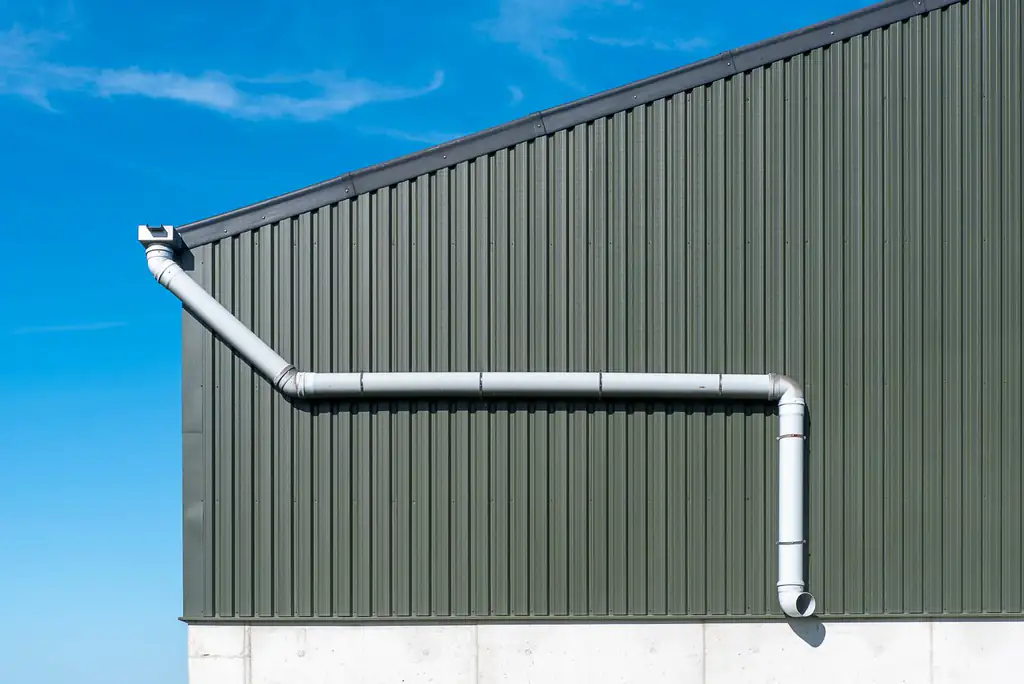
Redirecting a downspout off a buried or combined-sewer line and onto the yard can ease drainage, and some cities encourage it — but where the water then goes matters, and local rules vary. Done wrong it just dumps water at the foundation.
Disconnecting a downspout means taking it off whatever buried or sewer line it currently feeds and redirecting the roof water onto your own yard instead. Done thoughtfully, it can lighten the load on shared drainage and give you control over where the water goes — and some cities actively encourage it. Done carelessly, it just relocates the problem to the base of your foundation. The difference is entirely in where the water ends up.
In a lot of older neighborhoods, downspouts were plumbed straight into a buried pipe that ties into the same system carrying household wastewater — a combined arrangement. When a big storm hits, all that roof water surges into that shared line at once. Redirecting roof water back onto the surface, where it can soak into the ground, keeps it out of that system.
That is the general idea behind the stormwater programs some municipalities run. We are describing the concept, not any specific ordinance — the details differ a lot from place to place, and that variability is exactly why the local-rules step below matters. The point for a homeowner is simply that disconnecting is often a sanctioned, even encouraged move, provided the water is handled well afterward.
The mechanics are usually straightforward. The downspout drops into a standpipe or elbow that feeds the buried line. To disconnect, you separate the downspout from that standpipe, cap or plug the standpipe so it does not sit open, and add a new elbow and extension that turn the water out across the yard instead.
The work itself is modest — a cut, a cap, a new elbow, an extension. What takes real thought is the very next question: once the water is on the surface, where does it go?
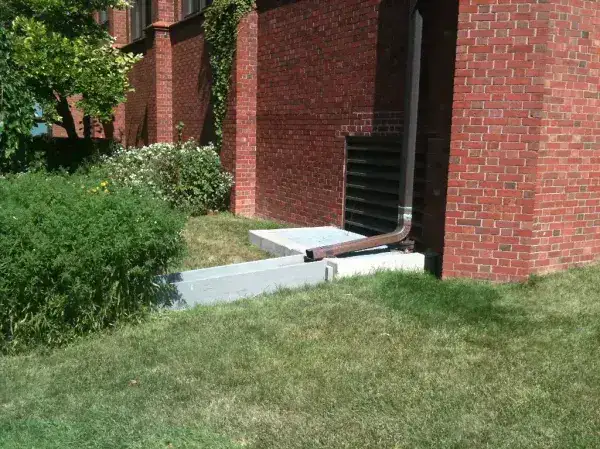
This is the whole game. The water you just freed has to travel away from the foundation to a spot that can absorb or shed it. Good destinations include:
What ties them together is that they move water away and spread it out. The failure mode is the opposite: releasing a concentrated stream right at the wall, which is a direct route to water pooling near the foundation and a damp basement.
A disconnect that ends at the base of the wall is worse than no disconnect at all. Before you cut anything, decide where the water will travel and confirm the ground there slopes away from the house.
Whether you may disconnect, how the old line must be capped, and where you are allowed to release the water are often regulated, and the rules vary widely by location. Check with your local authority before starting rather than assuming — some places encourage disconnection and some restrict it, and you cannot tell which from the outside.
You also cannot simply send the water onto a neighbor’s lot, toward a public sidewalk, or into an alley on the assumption that it is fine. Where stormwater ends up is exactly the kind of thing local rules address, so treat “it drains off my property” as a question to check, not an answer to assume.
Work off a stable ladder. Disconnects happen at the bottom of the downspout, but reaching brackets, seams and the upper elbow can put you on a ladder. Set it on firm level ground, keep three points of contact, and do not overreach — step down and move it instead.
Beyond the ladder, mind sharp cut edges on metal downspouts, and if the buried line ties into anything shared or you are unsure what it connects to, stop and confirm before you open it.
If your yard is flat or tilts toward the house, a plain disconnect will likely make things worse until you fix the path the water takes. In that case the disconnect is only step one; you also need to build the route — added grade, an extension, a rain garden or a dry well — that carries the water away. And if the downspout is currently feeding a buried system that is working well and draining far from the house, there may be no reason to disconnect at all.
Disconnecting a downspout can be a genuinely good move — it keeps roof water out of overloaded shared lines and hands you control over where it goes. But the value is entirely in the destination. Plan where the water will travel, make sure that ground slopes away from your foundation, cap the old line, check your local rules first, and work safely on the ladder. Get those right and a disconnect eases your drainage; skip them and you have simply moved the puddle to your own wall.
FAQ
The usual reason is that the downspout currently feeds a buried pipe or a combined sewer, and redirecting roof water onto the yard keeps it out of that system. Some cities run programs that encourage this to reduce load on shared storm and sewer lines. The catch is that the water then has to go somewhere safe on your own property.
It depends entirely on where you live. Some places encourage it and some restrict how and where you can redirect roof water. Where stormwater may be discharged is often regulated, so check your local rules before you cut anything rather than assuming.
Somewhere that slopes away from your foundation and does not dump onto a neighbor — a well-graded lawn, a rain garden, a dry well, or an above-ground extension leading to a safe outlet. The goal is to spread and absorb the water, not concentrate it against the house.
It can if the water is simply released at the base of the wall. That is the single biggest risk of a bad disconnect. Carrying the water several feet out to ground that slopes away is what prevents it.
Usually you plug or cap the standpipe you disconnected from so it does not become an open hole that collects debris or backs up. The exact method depends on the pipe, and some programs specify how they want it done.
The cutting and rerouting is often within reach of a careful homeowner, but the where-does-it-go decision is the hard part, and anything on a ladder carries fall risk. If the downspout ties into a shared or combined sewer, confirm local rules and requirements first.
Then a plain disconnect will likely make things worse, because the released water has nowhere to drain. You would need to add grade, an extension, or a feature like a rain garden or dry well to give the water a path away first.
Keep reading
How to decide where downspouts should go — low ends, corners, spacing, and safe discharge points — while balancing drainage against curb appeal.
Whether you can bury a downspout, when it makes sense, and what a buried line needs to work — slope, an outlet, cleanable access — instead of just hiding the problem.
A downspout that dumps water at the wall just moves the problem. Here is how far discharge should reach, the options for getting it there, and how soil and slope change the answer.