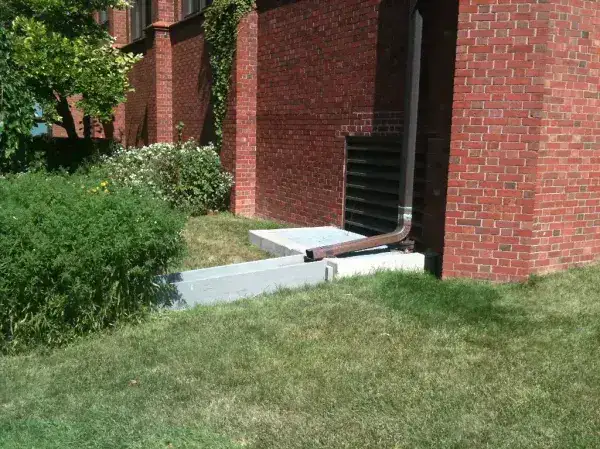
How to Disconnect a Downspout Safely
How to disconnect a downspout from a buried or sewer line and safely redirect roof water onto the yard — where the water must go, the caveats, and common mistakes.
Downspouts
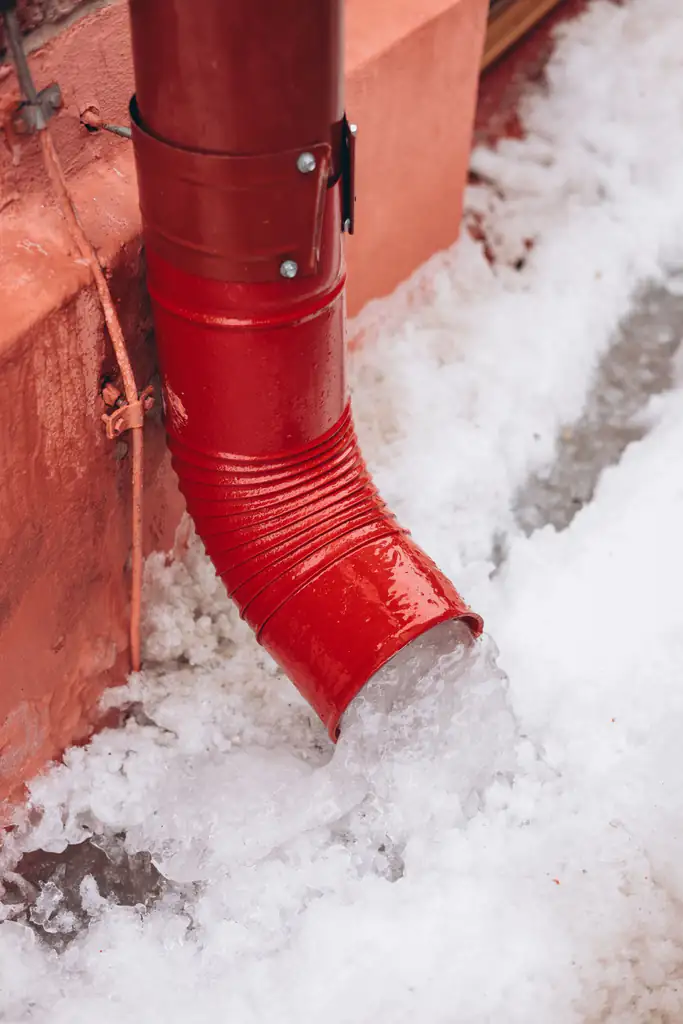
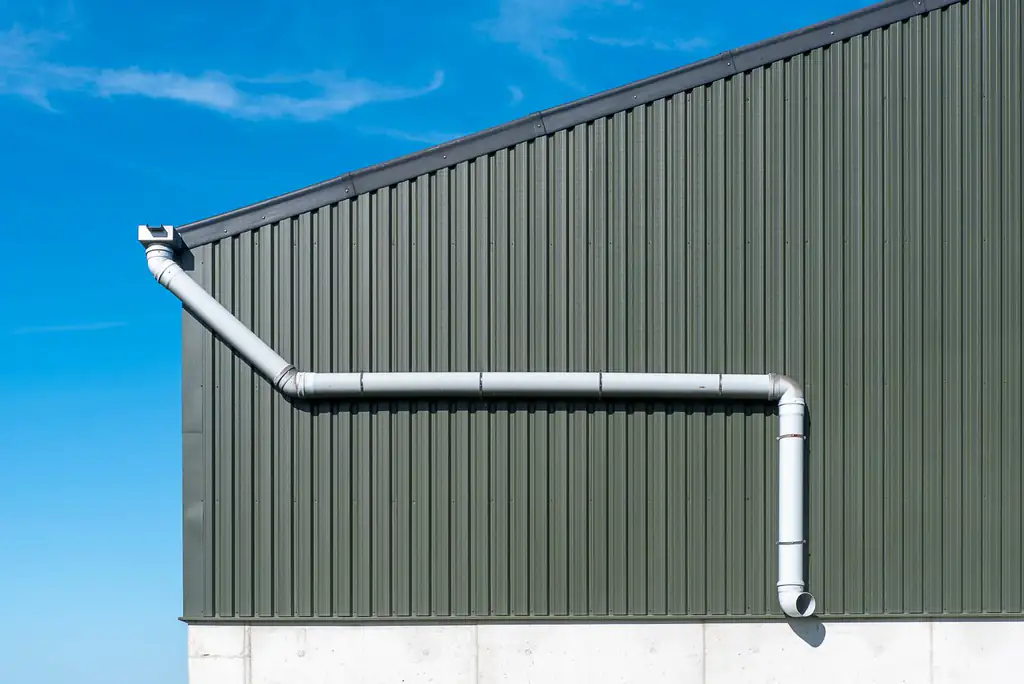
Downspouts go at the low ends of gutter runs, at inside corners, and spaced so no run is too long — while landing somewhere the water can be carried away from the foundation. Good placement balances drainage, looks and where water can safely go.
The short answer: put downspouts at the low ends of your gutter runs, at inside corners, and spaced closely enough that no single run has to move too much water — and make sure each one lands somewhere the water can be carried away from the foundation. Good placement is a balance between drainage, appearance, and where the water can safely go.
Gutters are sloped, even if you cannot see it, so that water runs toward an outlet. Placement is really the art of putting outlets where the water is already heading and where it can leave the system without causing trouble below. Get that right and the gutters drain freely; get it wrong and you end up with overflowing sections, ponding at the foundation, or a pipe in an awkward spot that still does not drain well.
Before deciding how many outlets you need, it helps to think about placement and quantity together — the companion question of how many downspouts you need leans on the same logic.
Because the gutter slopes toward its outlet, the natural home for a downspout is the low end of a run. Water collects there, so that is where you want to give it an exit. On a straight gutter that drains to one side, the downspout sits at that end; on a gutter pitched to both directions from a high point in the middle, you may want an outlet at each low end.
Where two roof planes meet at an inside corner, a lot of water funnels into a small length of gutter. That concentration makes inside corners a common and sensible place for a downspout, so the gutter there is not asked to carry more than it can handle.
The longer a gutter run, the more water a single downspout at the end has to move, and the more likely that section is to overflow in a downpour. Installers commonly space downspouts so no one run gets too long. There is no universal magic number — roof size, pitch, and local rainfall all push it around — but the principle holds: break up long runs with additional outlets rather than relying on one distant downspout.
A downspout is only as good as where it lets the water out. The bottom of the pipe should send water somewhere it can move away from the house — a graded slope, an extension, a splash block, or a drain. Placing the top of a downspout perfectly means little if the base dumps water against the foundation. How far that water should be carried is its own topic, covered in how far downspouts should extend.
Local building codes, HOA rules, and site conditions like a neighbor's property line or a walkway can all constrain where a downspout may go. Treat the principles here as a starting point and check what applies to your property.
Homeowners often want downspouts to disappear, and drainage does not always cooperate with curb appeal. The workable approach is to let drainage set the list of acceptable spots first, then pick the least conspicuous option from that list. Outside corners are popular for appearance because the pipe tucks against the building’s edge. Running a downspout down a line where trim already breaks up the wall, or choosing a color that blends with the siding, hides it further. What you should not do is move an outlet purely for looks to a spot where the water cannot leave safely.
| Situation | Typical placement | Why |
|---|---|---|
| Straight run draining one way | Downspout at the low end | Water collects at the sloped end |
| Run peaked in the middle | Outlet at each low end | Two directions of flow each need an exit |
| Inside corner | Downspout at or near the corner | Two roof planes concentrate water there |
| Long straight run | Add a mid-run or second outlet | Splits the load so no section overflows |
| Curb-appeal-sensitive wall | Nearest acceptable outside corner | Hides the pipe while keeping drainage sound |
Place downspouts where the water already gathers — the low ends of runs and inside corners — and add outlets so no run is asked to carry more than it should. Then make sure each one lets water out somewhere it can travel away from the foundation. Only after drainage is sound should appearance decide among the remaining options. Handle the placement in that order and the system drains well without becoming an eyesore.
FAQ
Downspouts generally belong at the low end of a gutter run, where the slope sends water. Inside corners and long runs often need one too. The goal is to give collected water a nearby, low exit rather than making it travel far along the gutter.
There is no single universal number, but installers commonly space downspouts so no single run gets too long, since long runs strain capacity. Longer or larger roofs usually call for more downspouts placed at sensible intervals along the gutter.
You can, and a mid-run outlet on a long stretch can help by splitting the water two ways. What matters is that the gutter slopes toward it and that the discharge point below is a place water can safely leave.
Not strictly, but corners — especially inside corners where two roof planes meet — collect a lot of water, so they are common and sensible spots. Outside corners are often chosen for looks because the pipe tucks neatly against the edge of the house.
Somewhere it can flow away from the foundation, such as onto a graded slope, an extension, a splash block, or a drain leading elsewhere. The exact distance matters, and where the water ends up is as important as where the pipe starts.
Yes. A downspout that dumps water right at the base of the wall can saturate the soil and pressure the foundation. Placing the outlet where water is carried away is a big part of protecting the foundation.
Start from where the water needs to go, then choose among the workable spots the one that is least conspicuous — an outside corner, an edge, or a line that follows a trim seam. Drainage sets the options; appearance picks among them.
Keep reading
How to disconnect a downspout from a buried or sewer line and safely redirect roof water onto the yard — where the water must go, the caveats, and common mistakes.
Whether you can bury a downspout, when it makes sense, and what a buried line needs to work — slope, an outlet, cleanable access — instead of just hiding the problem.
A downspout that dumps water at the wall just moves the problem. Here is how far discharge should reach, the options for getting it there, and how soil and slope change the answer.