Roof Rakes for Ice Dams
A roof rake pulls snow off the lower roof from the ground, starving an ice dam of the snow that feeds it. How to use one safely and where it helps.
Ice Dams & Winter Water
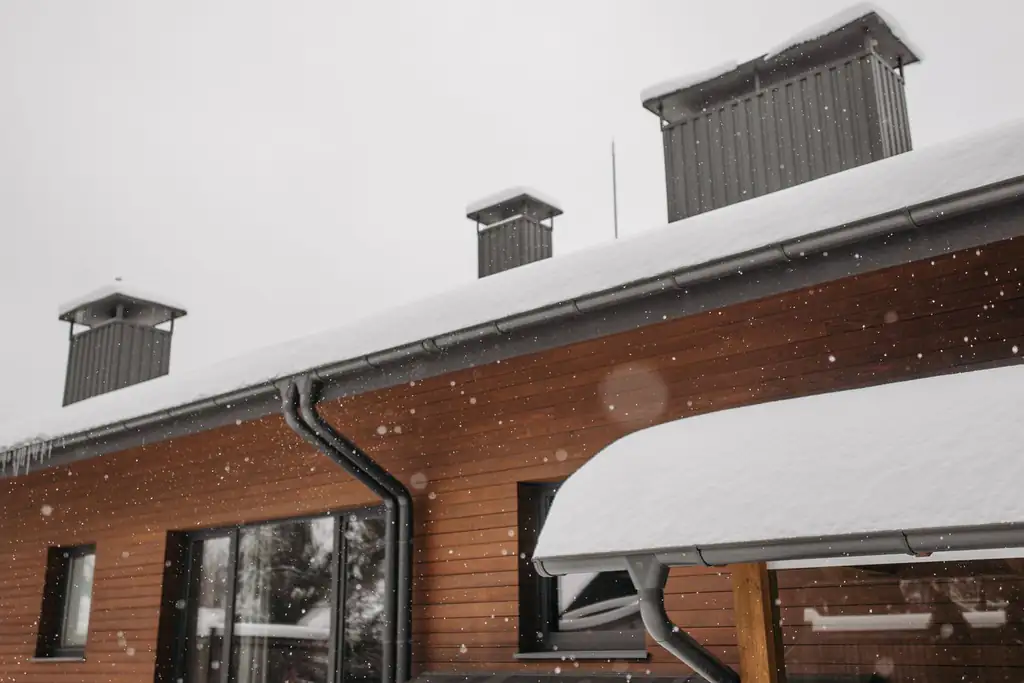
Snow guards hold snow on a roof so it melts and sheds gradually instead of sliding off in a dangerous avalanche onto people, plants or gutters below. They are common on metal and steep roofs, and they do not prevent ice dams, which are an attic-heat issue.
Snow guards are small devices mounted across a roof to hold the snowpack in place so it melts and sheds gradually instead of releasing all at once in a dangerous slide. They are common on metal and steep roofs, where a smooth surface can dump an entire load without warning. Importantly, snow guards do not prevent ice dams. Dams come from heat escaping into the attic, and holding snow on the roof does nothing to change that.
Picture a full winter’s worth of snow sitting on a slick metal roof. As the surface warms slightly, the bond between snow and roofing can break all at once, and the whole slab slides off the eave in a sudden avalanche. That falling mass can injure a person on the walkway below, crush shrubs, dent vehicles, and tear gutters right off the fascia.
Snow guards interrupt that release. By adding points of resistance across the roof plane, they hold the snowpack so it stays put and melts in place, draining away as water rather than launching as a slab. The point is control: turning an unpredictable dump into a slow, managed thaw.
They show up most on metal roofing because smooth, painted or coated metal is exactly the kind of low-friction surface that sheds in slabs. Steep roofs of any material are also candidates, since a sharp pitch speeds the slide. You will also see them placed strategically above doorways, walkways, driveways, and lower roof sections that a sliding load could damage. If your home has a metal roof, our guide to metal roof runoff and gutters covers related drainage considerations.
Snow guards are a safety and property-protection device, not an ice-dam treatment. If a salesperson pitches them as a cure for ice dams, that is a misunderstanding of what causes dams. The two problems overlap on the same roof but have different solutions.
This is the point most worth understanding, so it is worth being direct. An ice dam forms when warmth from the living space leaks into the attic, melts the underside of the snowpack, and that meltwater refreezes at the cold overhanging eave. The dam is a symptom of heat loss. You can read the full mechanism in how ice dams form.
Snow guards do not touch that chain of events. They do not warm or cool the attic, they do not change where meltwater refreezes, and they do not seal air leaks. All they do is decide whether the snow slides off in a slab or stays put to melt. A roof can have a tidy row of snow guards and still grow a thick ice dam if the attic below it is warm.
| Concern | Snow guards | Ice dams |
|---|---|---|
| Root problem | Snow sliding off in a slab | Heat escaping into the attic |
| What the fix targets | The roof surface | The attic and air barrier |
| Common location | Metal and steep roofs | Any cold-climate roof |
| Snow guards help? | Yes, that is their job | No effect on dam formation |
| Real ice-dam fix | Air sealing, insulation, ventilation | Same |
The comparison is general; specifics depend on your roof, climate, and attic condition.
Because the two problems are independent, plenty of roofs benefit from snow guards and still need proper attic work. On a metal roof in snow country, guards protect the people and property below while air sealing and insulation keep the deck cold enough to avoid dams. Neither substitutes for the other.
The right type, size, and spacing depend on the roofing material, the roof pitch, and how much snow the area gets. Pad-style guards adhere or fasten to the surface; bar or rail systems span across the roof. Fastening method matters a great deal on metal roofing, where the wrong attachment can penetrate a panel or void a finish warranty. Spacing that is too sparse may let snow release between guards. Because load, attachment, and layout all interact, this is generally a job to design and install with a roofing professional rather than improvise.
Do not climb onto an icy or snow-covered roof. It is extremely dangerous; serious ice-dam work is a job for professionals with the right equipment.
Installing or inspecting snow guards means being up on the roof, which is precisely where you should not be in winter conditions. Metal roofs are slippery even when dry, and a dusting of snow over a glaze of ice removes all footing. Plan any snow-guard work for a safe, dry season, and hire out the installation.
Snow guards are a smart, well-understood tool for one specific job: keeping snow from avalanching off a slick or steep roof onto whatever is below. They protect people, plants, gutters, and vehicles. What they do not do is prevent ice dams, which are a heat-loss problem solved in the attic through air sealing, insulation, and ventilation. If you have a metal or steep roof in snow country, snow guards and proper attic work often belong on the same house, each doing its own separate job.
FAQ
They hold the snowpack in place on the roof so it melts and releases gradually rather than sliding off all at once. The goal is to prevent a sudden roof avalanche that could injure someone or damage gutters, landscaping, or anything parked below the eave.
No. Ice dams form when heat escaping into the attic melts snow that refreezes at the cold eave. Snow guards do not change attic temperature, so they neither cause nor prevent dams. They solve a different problem, which is sliding snow.
Smooth metal is slippery, so an entire snow load can let go at once in a sudden slide. Snow guards break that release into a slow, controlled melt, which is why they are a standard accessory on metal and other slick roofing.
They do not cause dams, but by holding snow on the roof they keep a snowpack in place that can still melt from below if the attic is warm. The fix for dams is the same with or without guards: keep the roof deck cold.
Many systems can be added later, though the right type and spacing depend on the roofing material, pitch, and expected snow load. Fastening and placement matter, so this is usually a job for a roofing professional.
Possibly. Guards manage how snow releases, not how much accumulates. In heavy snow country you may still watch roof snow load and use a roof rake from the ground where you can reach safely.
Keep reading
A roof rake pulls snow off the lower roof from the ground, starving an ice dam of the snow that feeds it. How to use one safely and where it helps.
How ice dams really form — attic heat loss melts snow that refreezes at the cold eave. Why gutters aren't the cause, and what to do safely.
An ice melt sock can open a small drainage channel through an ice dam so water escapes. Whether it works, how to use one safely, and its real limits.