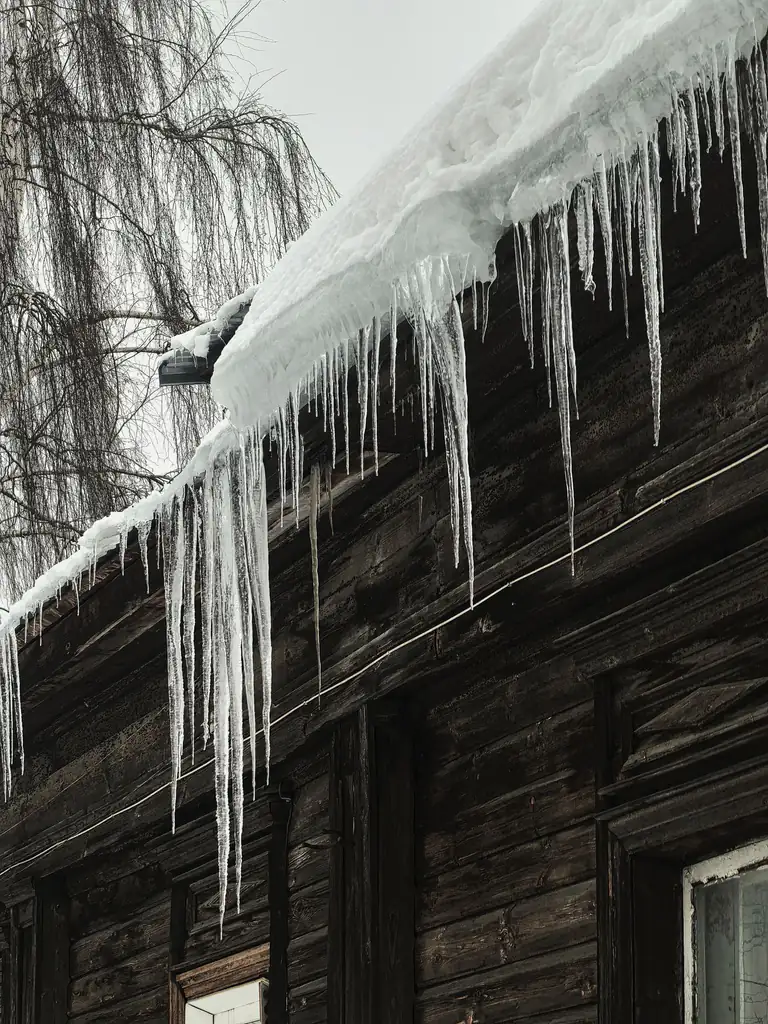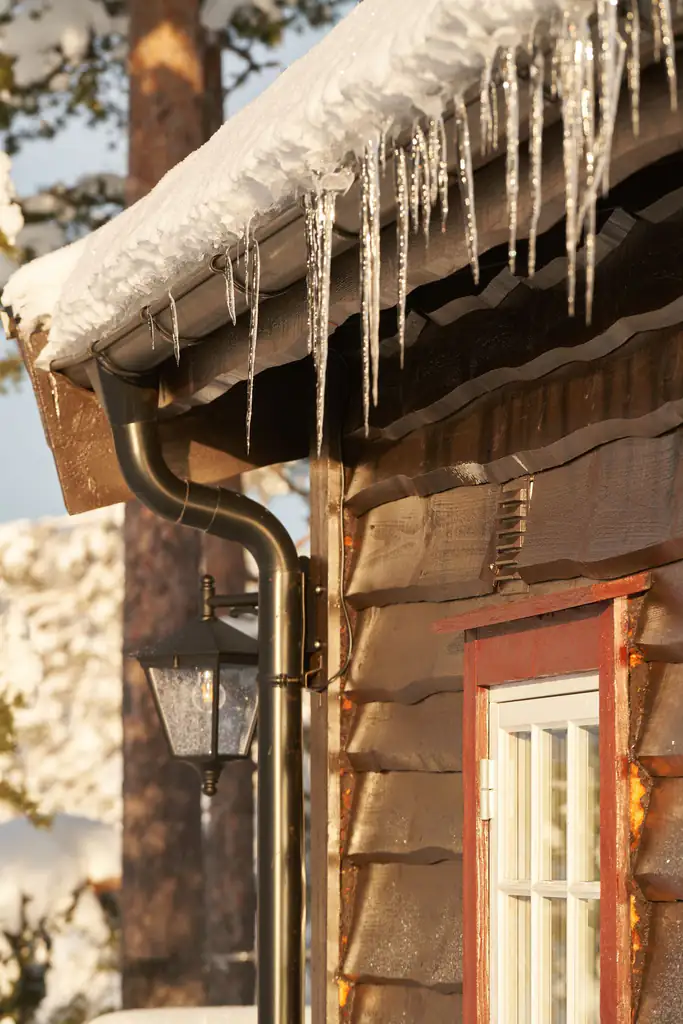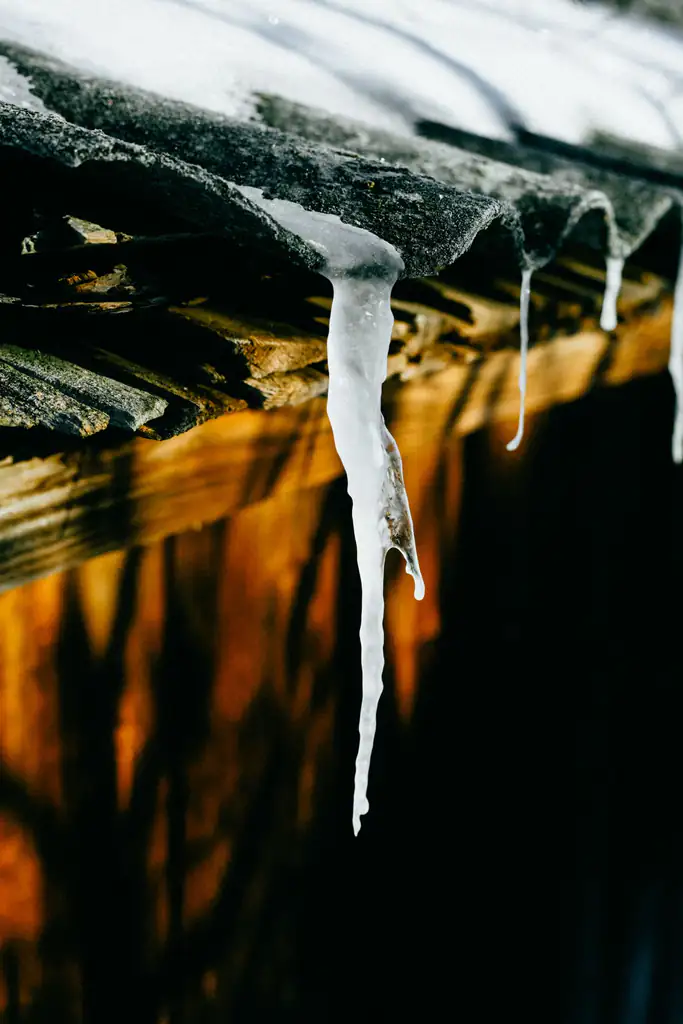
Gutter Ice-Melt Products and Safety
What gutter ice-melt products can and cannot do, how salt and calcium chloride differ, and how to use them sparingly and safely.
Ice Dams & Winter Water
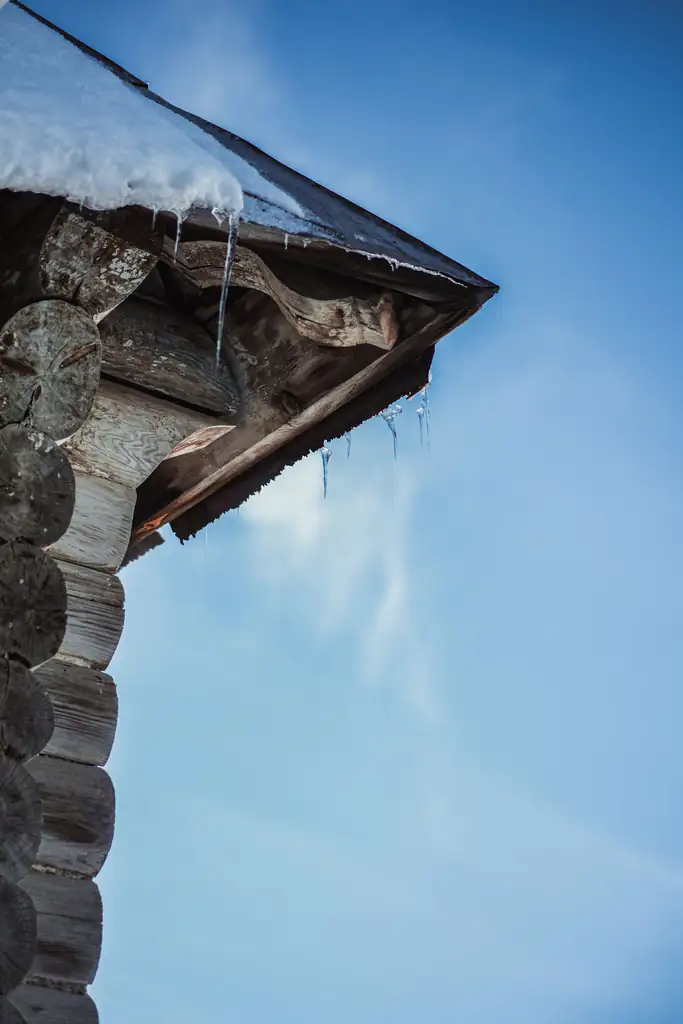
An ice melt sock — calcium chloride in a fabric tube laid across a dam — can melt a small drainage channel so trapped water escapes. It is short-term triage, only worthwhile if placed from a safe position, and its runoff can corrode metal and harm plants. It does not remove the dam or stop it returning.
An ice melt sock — calcium chloride packed into a fabric tube and laid across an ice dam — can work, but only in a narrow sense. It melts a small vertical channel through the ice so meltwater pooling behind the dam has a path to drain off the roof instead of backing up under the shingles. That relieves the immediate pressure. What it does not do is remove the dam or stop the next one. It is short-term triage, worthwhile only if you can place it from a safe position, and its runoff can corrode metal and harm plants. Treated as a quick relief measure, it earns its place; treated as a fix, it disappoints.
To see why a sock helps, picture the problem it addresses. Water melting off the upper roof runs down and freezes into a ridge at the cold eave. More water arrives and pools behind that ridge, and because shingles shed water but are not watertight, the trapped water works its way underneath and into the house — the damage path covered in ice dam damage to your home.
A sock laid vertically across the dam melts a narrow slot through the ice from the roof side down to the gutter. That slot becomes a drain: the pooled water finds the channel and runs off instead of building up. The dam is still there on either side of the channel. You have not removed it — you have given the water an exit, which is often enough to stop an active or threatened leak while you arrange something more permanent.
A sock opens a drainage channel; it does not remove the dam. The ice remains on both sides of the melted slot. Its whole value is buying time and relieving water pressure — not clearing the roof and certainly not preventing the next dam.
Making one is simple: fill an old nylon stocking or a cloth sleeve with calcium-chloride ice melt, tie it off, and lay it across the dam so it runs vertically from the roof down toward the gutter. As it melts, it opens the channel. Calcium chloride is the usual fill because it melts ice at lower temperatures than rock salt and works reasonably fast.
The critical part is how you place it.
Only place a sock from a safe position. That means the ground or a securely footed spot — never by climbing onto an icy roof or balancing on a ladder to reach a dam. Falls from icy roofs cause serious injury, and no drainage channel is worth that risk. If the dam is out of safe reach, do not use a sock; rake from the ground or, for an active leak, call a pro to steam it.
Some people use a roof rake or a long pole to slide a sock into place from the ground, which keeps you safely down. If you cannot get it positioned safely, the sock simply is not the right tool for that dam.
A sock is a compromise, and it is worth naming what you are trading.
| Consideration | The reality |
|---|---|
| What it does | Opens a drainage channel through existing ice |
| What it does not do | Remove the dam or prevent a new one |
| Best fill | Calcium chloride; avoid rock salt |
| Runoff risk | Can corrode gutters and flashing, stain masonry, harm plants |
| Safety | Only worthwhile placed from a safe position |
| Time horizon | Short-term triage, not a season-long solution |
The runoff deserves particular attention. Calcium-chloride meltwater dripping off the eave can, over time, corrode metal gutters, flashing, and fasteners, stain concrete and masonry, and damage the plants or grass directly below. Rock salt is harsher on all of these, which is why calcium chloride is preferred even though it is not free of impact. For a fuller look at these products and their downsides, see gutter ice melt products and safety.
A sock is one tool in a short list of things you can safely do about a dam. It fits between raking and professional steam:
Use the sock when a dam is holding back water but not yet pouring inside and you can reach it safely. If it is already leaking into the ceiling, that is past the sock’s usefulness — call a professional. The full decision map is in how to remove an ice dam safely.
Everything above is triage. A sock melts a channel in ice that already exists; it has no effect on why the ice formed. The dam appeared because heat escaping into your attic warmed the roof deck, melted the snow, and let the water refreeze at the cold eave — the mechanism in how ice dams form. Until the roof deck stays cold, dams will keep forming and you will keep reaching for socks every cold snap.
The lasting fix is in the attic: air-seal the leaks where warm air escapes, add insulation, and improve ventilation so the deck stays cold. That work stops dams forming in the first place and lowers your heating bill besides. Our guide to how to prevent ice dams covers it.
Do ice melt socks work on ice dams? Yes, in the narrow, useful sense of melting a drainage channel so trapped water escapes and relieves pressure on the roof. They are short-term triage, worth using only when you can place them from a safe position, and their runoff can corrode metal and harm plants. They do not remove the dam or stop it returning. For that, the answer is always the same: keep the roof deck cold with the attic work in how to prevent ice dams.
FAQ
They can open a small drainage channel through the ice so water pooling behind the dam has somewhere to escape, which relieves pressure on the roof. What they do not do is remove the dam or prevent a new one. Think of a sock as short-term triage that buys time, not a fix — and only worthwhile if you can place it from a safe position without climbing an icy roof.
Fill a fabric tube — an old nylon stocking or a cloth sleeve — with calcium-chloride ice melt and tie it off. Lay it vertically across the dam so it crosses the ice from the roof down toward the gutter. As it melts, it opens a channel that lets trapped water drain. Place it from the ground or a securely footed position; never venture onto the roof to position one.
Calcium chloride is the usual choice because it melts ice at lower temperatures and works reasonably fast. Avoid rock salt (sodium chloride), which is harsher on metal gutters and flashing and worse for plants. Whatever you use, treat it as triage and mind the corrosion and plant-damage caveats.
The runoff can. Calcium-chloride meltwater can corrode metal gutters, flashing, and fasteners over time, stain masonry and concrete, and harm plants and grass below the eave where it drips off. Rock salt is worse on all counts. That is part of why a sock is a short-term measure rather than something to rely on all winter.
Only if you can do it from the ground or a stable, secure position. It is not worth climbing an icy roof or balancing on a ladder to place one — falls from icy roofs cause serious injury, and no drainage channel is worth that. If the dam is out of safe reach, skip the sock and consider raking or, for an active leak, professional steam removal.
Use a sock as interim relief when a dam is pooling water but not yet pouring inside and you can place it safely. Call a professional when a dam is actively leaking into your ceilings or walls, when the ice is thick and established, or any time reaching it would put you on a ladder or the roof. Steam removal is the safe way to clear an established, leaking dam.
No. A sock only opens a channel in existing ice. The dam formed because heat escaping into the attic warmed the roof and melted snow that refroze at the eave. Until you air-seal, insulate, and ventilate the attic so the roof deck stays cold, dams will keep forming and you will keep reaching for socks.
Keep reading
What gutter ice-melt products can and cannot do, how salt and calcium chloride differ, and how to use them sparingly and safely.
The safe way to remove an ice dam is limited — rake from the ground and call a pro to steam an active leak. Never climb, chip, or use flame. A step guide.
Safe ice-dam removal is limited — rake snow from the ground and call a pro to steam an active leak. Never climb an icy roof, chip the ice, or use a flame.