Attic Insulation and Ice Dams
Attic insulation helps stop ice dams by keeping the roof deck cold — but only after air-sealing. The right order of air-seal, insulate, ventilate, explained.
Ice Dams & Winter Water
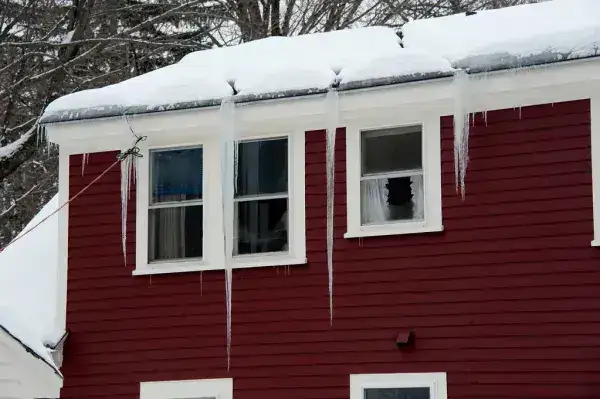
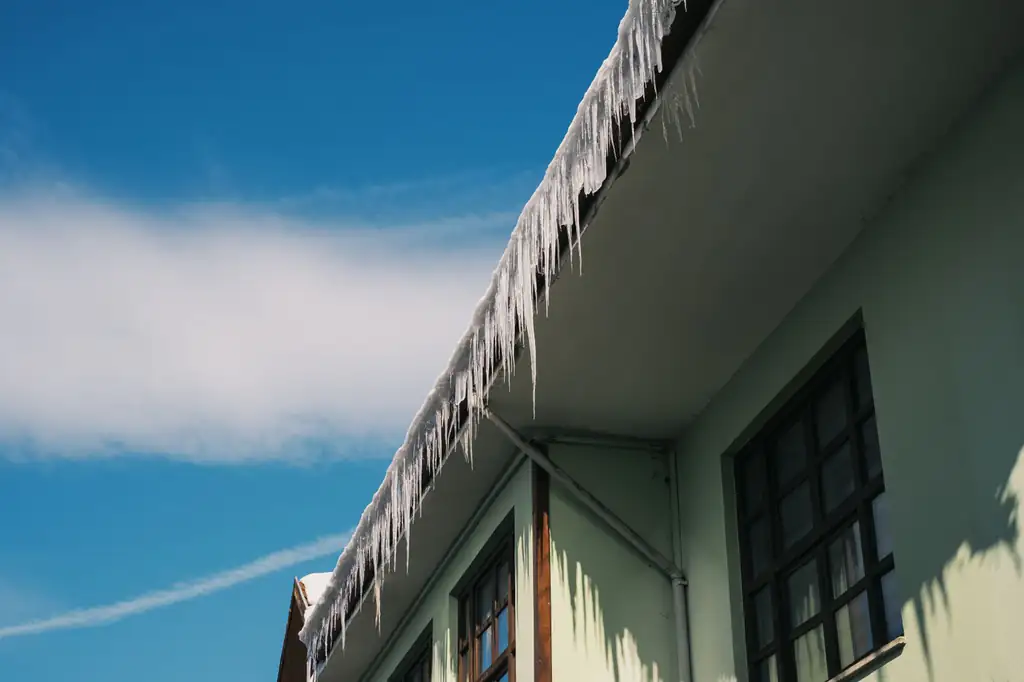
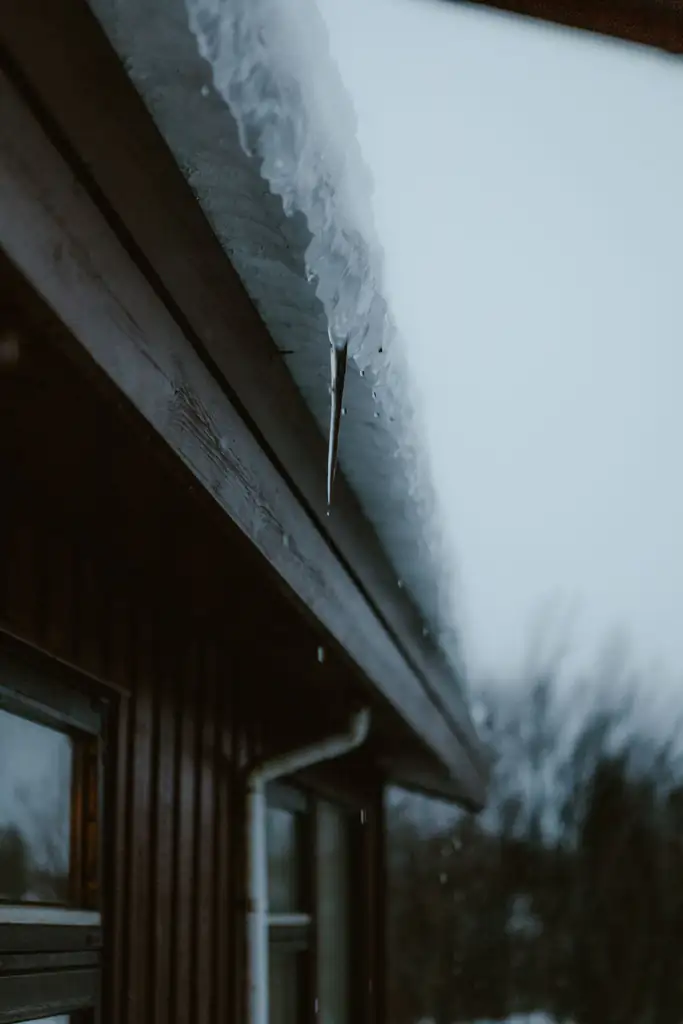
Ice dams form when heat escaping through the roof melts snow, the meltwater runs down to the cold eave and refreezes into a ridge of ice that traps more water behind it — which can back up under the shingles. The root cause is attic heat loss and ventilation, not the gutters.
Ice dams form when heat escaping through your roof melts the snow sitting on top of it. That meltwater trickles down to the colder edge of the roof — the overhang, where there’s no warm attic underneath — and refreezes into a ridge of ice. As more snow melts above and hits that ridge, water pools behind it and can back up under the shingles and into the house. The gutters get blamed because that’s where the ice and icicles pile up, but the real cause is heat and ventilation in the attic, not the gutter.
An ice dam is a wall of ice that builds up along the lower edge of a roof in winter. Behind it sits a pool of trapped meltwater. Shingles are designed to shed water that runs downhill over the top of them — they are not built to hold back standing water. So when water pools behind a dam and creeps upward, it can work its way beneath the shingles, through the roof deck, and into the attic, ceilings, and walls.
The frustrating part is that ice dams are a sign of a warm roof, and a warm roof in winter usually means heat is leaking out of your living space and going to waste. In other words, the same problem that raises your heating bill is the one soaking your ceiling.
It helps to picture the roof in two zones: the upper roof, which sits over the warm attic, and the eave or overhang, which hangs out past the exterior wall over open air.
The temperature split between the warm upper roof and the freezing eave is the whole engine. Remove that split — keep the entire roof cold — and dams have a hard time forming.
Gutters take the blame because they’re where you see the trouble: ice packed into the trough, icicles hanging off the front, the gutter sagging or pulling away. But the gutter is a bystander. A house with no gutters at all can still grow a thick ice dam right at the roof edge, because the edge itself is the cold zone where refreezing happens.
What gutters do is get caught in the crossfire. A gutter full of ice is heavy and can bend, pull loose from the fascia, or crack. Ice sitting in the trough also gives the dam a head start by holding meltwater right at the cold edge. So keeping gutters clear before winter is worth doing — a clogged gutter full of leaves and standing water freezes into a solid block fast. If you’re not sure of your seasonal timing, see our guide on how often to clean gutters. Just don’t expect clean gutters to prevent ice dams. That’s not what causes them.
To understand where all this meltwater is trying to go in the first place, it helps to know how roof runoff works — gutters and downspouts are the drainage path, not the temperature control.
| What people believe | What’s actually going on |
|---|---|
| “My gutters caused the ice dam.” | The roof edge is the cold zone where meltwater refreezes; gutters just fill with the ice. |
| “If I clean my gutters, no more ice dams.” | Clean gutters don’t change roof-deck temperature. Ice dams are a heat problem. |
| “Bigger gutters would fix it.” | Gutter size doesn’t stop melting snow from refreezing at a cold eave. |
| “Icicles are harmless winter decoration.” | Big icicles at the eave often signal a warm roof and an active melt-refreeze cycle. |
| “It’s just this cold winter’s fault.” | Snow load matters, but a well-sealed, well-ventilated attic sheds most of the risk. |
If the gutter isn’t the culprit, what is? Almost always some combination of these:
Every house is a little different. A home can have great insulation and still get dams from a single warm-air leak over a bathroom, or from a north-facing valley that never sees sun. If dams keep coming back, an energy audit or an infrared attic inspection can pinpoint exactly where the heat is escaping.
Ice dams rarely stay a cosmetic problem. Once water gets under the shingles, it can lead to:
Interior water stains are the alarm bell. By the time you see a brown spot on the ceiling, meltwater has already made it through the roof.
This is where people get hurt or wreck their roofs. Skip all of the following:
Do not climb onto an icy or snow-covered roof. It is extremely dangerous, and chipping at ice can damage the roof and cause falls. Serious ice-dam removal is a job for professionals with the right equipment.
There are things you can do that don’t involve a ladder and an ice axe.
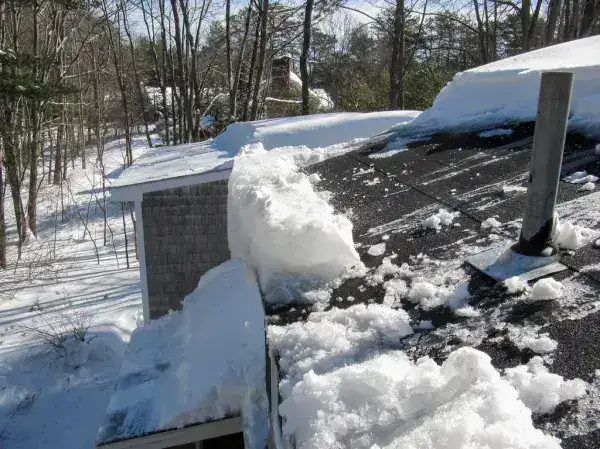
Rake the snow from the ground. A roof rake is a long-handled tool that lets you pull snow off the lower few feet of the roof while standing safely on the ground. Removing the snow near the eave takes away the material that feeds the dam. Keep both feet on the ground, watch for power lines, and stand clear of snow sliding off.
Fix the attic — the long-term cure. Air-sealing leaks between the living space and attic, adding insulation on the attic floor, and improving soffit-to-ridge ventilation keep the roof deck cold so snow doesn’t melt in the first place. This is the only approach that actually prevents dams rather than reacting to them.
Call a pro for an active dam. If a dam is already leaking, professionals can remove it with low-pressure steam, which melts the ice without damaging shingles. This is far safer and gentler than chipping.
Calcium chloride, with caveats. As a short-term stopgap, some people lay calcium-chloride ice melt in a sock or stocking across the dam to melt a drainage channel. It can work, but the runoff may harm plants below the eave, and over time it can corrode metal gutters and flashing or stain masonry and concrete. Avoid rock salt (sodium chloride), which is harsher on both metal and vegetation. Treat any chemical melt as temporary triage, not a solution.
If you spot interior staining, treat it as urgent — water is already getting in.
Ice dams are a heat-and-cold story: a warm upper roof melts snow, and a cold eave refreezes it into a ridge that traps water. The gutters just happen to be sitting in the splash zone. The durable fix isn’t at the roof edge at all — it’s in the attic, where sealing air leaks, adding insulation, and improving ventilation keep the whole roof cold enough that dams never get started. For more on winter roof issues, browse our full ice dams section.
FAQ
No. Ice dams form because heat escaping through the roof melts snow that refreezes at the cold eave. Gutters do fill with ice and can be bent or torn loose, but a home with no gutters at all can still get ice dams. The real driver is attic heat loss and ventilation.
Because clean gutters don't change the temperature of your roof. Ice dams are a heat problem, not a debris problem. If warm air is leaking into your attic and melting snow on the roof deck, that meltwater will still refreeze at the cold overhang regardless of how clean the gutters are.
No. Chipping at ice with a hammer, chisel, or shovel can gouge the shingles and shorten the roof's life, and climbing an icy roof risks a serious fall. If an active dam is causing leaks, the safe route is professional steam removal.
A roof rake is one of the safer tools because you use it from the ground to pull snow off the lower part of the roof. Keep both feet on the ground, watch for overhead power lines, and stay clear of sliding snow and ice. Never use one from a ladder or the roof itself.
Calcium chloride can melt channels through ice, but it comes with caveats. Runoff can damage plants below the eave and, over time, may corrode metal gutters and flashing or stain masonry. Avoid rock salt (sodium chloride), which is harder on metal and vegetation. Treat it as a short-term stopgap, not a fix.
Reducing the heat that reaches the roof deck. That usually means air-sealing gaps between the living space and the attic, adding insulation on the attic floor, and improving attic ventilation so the underside of the roof stays cold. These are the long-term fixes; the rest is triage.
Watch for large icicles along the eaves, ice building up behind or inside the gutter, and — the most important sign — water stains or damp spots on interior ceilings and walls near exterior walls. Interior staining means meltwater has already found its way under the shingles.
Keep reading
Attic insulation helps stop ice dams by keeping the roof deck cold — but only after air-sealing. The right order of air-seal, insulate, ventilate, explained.
The attic cure for ice dams — air-seal leaks first, insulate the attic floor, then balance soffit-to-ridge ventilation to keep the roof deck cold. Why all three matter.
Prevent ice dams by keeping the roof deck cold — air-seal, insulate, and ventilate the attic. Snow management and clear gutters help, but the real fix is the attic.