Gutter Maintenance for Two-Story Homes
Why two-story gutters change the maintenance plan, and how ground tools, guards, and hiring out the high work keep you off a dangerous ladder.
Seasonal Maintenance
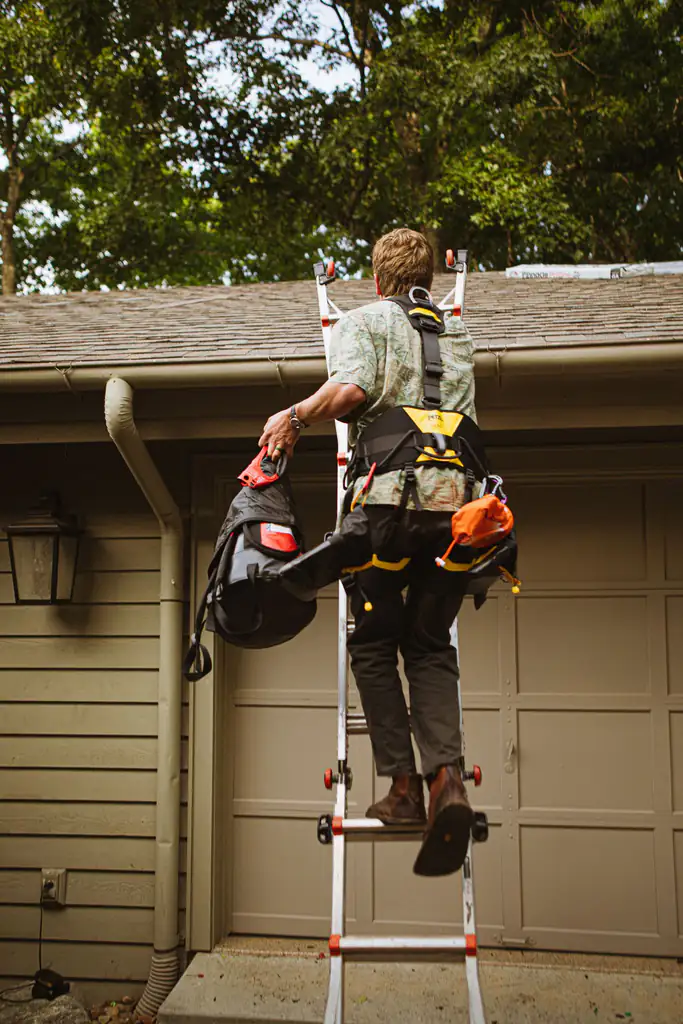
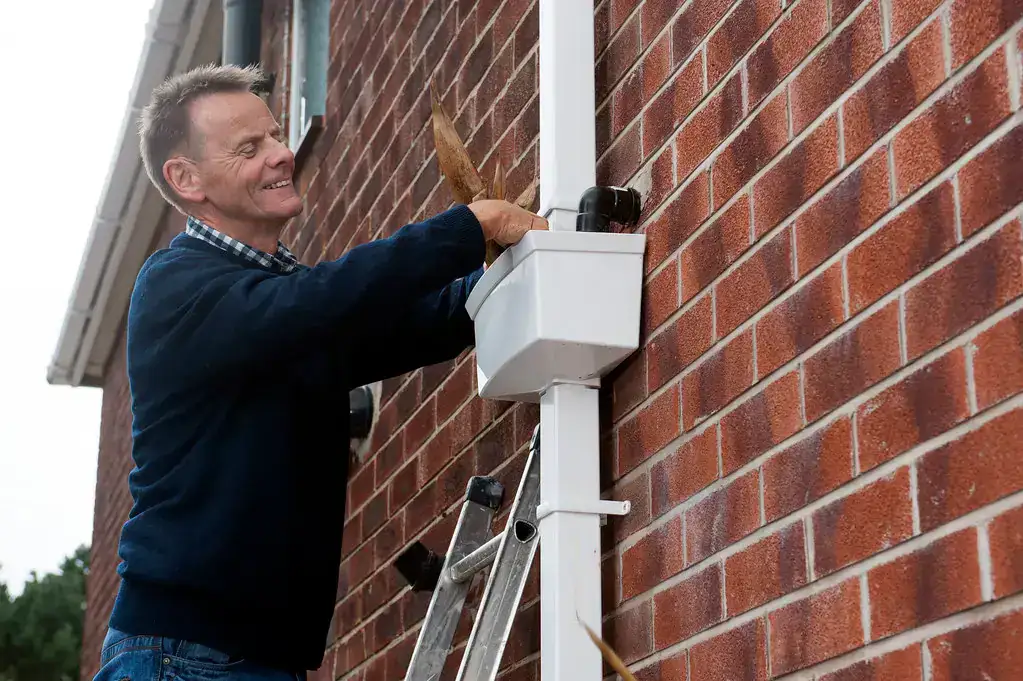
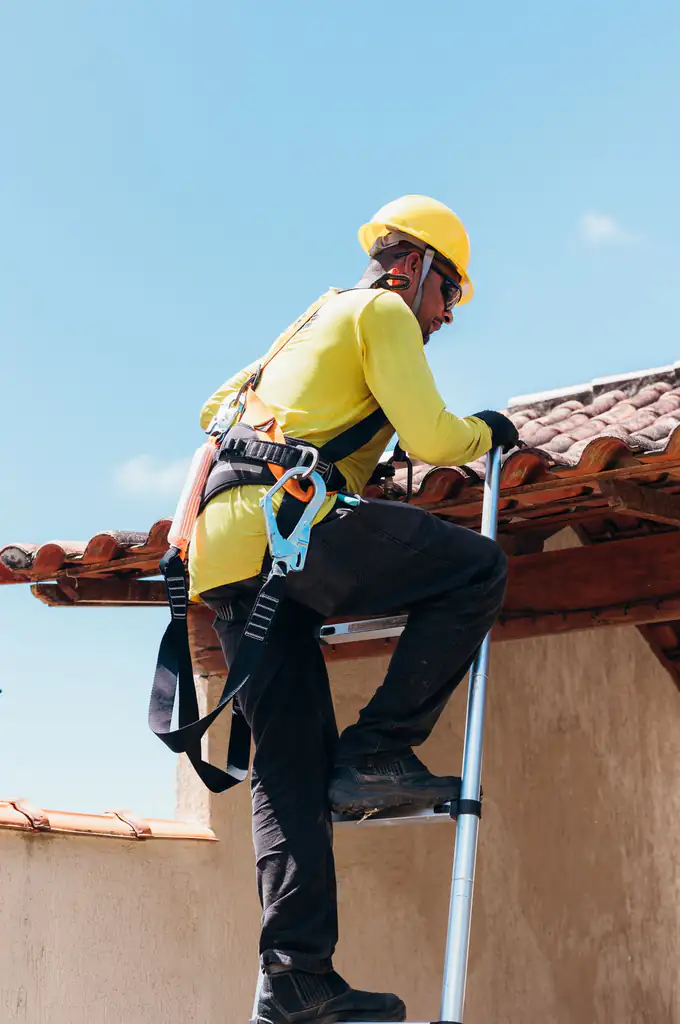
Most gutter-cleaning injuries are ladder falls. Safe cleaning means a stable, correctly angled ladder on firm ground, never overreaching, not working alone or on a wet roof, and knowing when the job's height means hiring a pro instead.
Short answer: most gutter-cleaning injuries are ladder falls, so safety is mostly ladder discipline. Set a stable ladder at the right angle on firm ground, never overreach, do not work alone or on a wet roof, and recognize when the height of the job means the right call is to hire a professional. The chore is routine; the fall is not.
It is worth being blunt about where the danger lives. Scooping leaves is harmless. The injuries come from the ladder — from falls caused by unstable footing, a bad angle, or a stretch too far to avoid climbing down and moving it. Once you accept that the ladder is the hazard, the safety rules stop feeling like fussiness and start feeling like the whole point.
Working at height is dangerous. Ladder and roof work risks serious falls, worse on wet or icy surfaces; if you lack safe, stable access, hire a professional.
A safe ladder starts on the ground. Place the feet on firm, level footing — not soft soil, not a slope, not a stack of boards. If the ground is uneven, level it properly or use a ladder with adjustable feet or a stabilizer rather than improvising.
Angle matters as much as footing. A widely cited guideline is the 4-to-1 rule: for every four feet of height up to where the ladder rests, set the base one foot out from the wall. Too steep and the ladder can tip backward; too shallow and the base can kick out. Treat the rule as a starting point and always follow the manufacturer’s instructions for your specific ladder.
Extend the ladder so it reaches well above the resting point when you can, keep three points of contact as you climb, and make sure the upper section rests against something solid rather than the gutter itself, which can bend under the load.
If there is one habit behind the most falls, it is stretching sideways to clean “just a little more” instead of climbing down and repositioning. Keep your belt buckle inside the rails. The moment you have to lean past that line, your center of gravity is leaving the ladder with you.
Moving the ladder ten times is tedious. It is also the single most protective thing you can do. Every reposition is a fall you did not take.
A partner changes the odds. Someone at the base can steady the ladder, hand up tools so you are not carrying them while climbing, and — most importantly — get help immediately if something goes wrong. Working at height alone means a fall could leave you hurt with no one aware.
If you truly must work solo, stack the deck in your favor: tell someone what you are doing and when you expect to finish, keep a phone in your pocket rather than on the ground, and be even more conservative about reach and conditions than you would with a spotter present.
Conditions decide whether a safe setup stays safe. Wet rungs are slick, muddy ground shifts, and a wet or icy roof edge is treacherous. Ice is worse still. None of it is worth pushing through. If the surfaces are not dry and stable, postpone the job — the gutters will keep, and a fall will not.
The same logic applies to walking the roof to reach a gutter. A roof carries its own serious fall risk, and for most homeowners a properly set ladder is the safer of the two. In poor conditions, neither is a good idea.
| Do | Don't |
|---|---|
| Set the ladder on firm, level ground | Prop it on soft soil or a slope |
| Follow the 4-to-1 angle and the maker's instructions | Set it too steep or too shallow |
| Keep your body between the rails | Overreach past your belt line |
| Work with a partner who steadies the base | Climb high with no one aware |
| Wait for dry, calm conditions | Work in rain, wind, or on ice |
| Climb down and move the ladder | Stretch to save a reposition |
Some jobs should not be DIY at any price. Multi-story access, a steep or slick roof, or any ground you cannot make stable are all signals to bring in someone equipped for the height. There is no prize for doing it yourself, and the cost of hiring out is trivial next to the cost of a fall. If you are weighing the trade-offs generally, our look at DIY versus professional gutter cleaning walks through where that line usually falls for a given house.
Whatever you decide, it helps to understand the limits of any general safety advice, including this article. Our safety disclaimer lays out why the final judgment about your own conditions rests with you.
No article can assess your ladder, your roof, or your footing. Treat this as general guidance, judge your own conditions honestly, and hire a professional whenever safe access is in doubt.
Gutter cleaning is a manageable chore, but it is done on a ladder, and the ladder deserves respect. Stable footing, the right angle, no overreaching, a partner, dry conditions, and the honesty to hire out when a job is beyond safe reach — that is the whole of it, and it is enough to keep a routine task from becoming a serious one.
FAQ
Ladder falls, by a wide margin. The common threads are unstable footing, a ladder set at the wrong angle, and overreaching to avoid moving it. Nearly all of these are preventable with setup and patience.
A widely cited guideline is the 4-to-1 rule — for every four feet of height to the resting point, set the base one foot out from the wall. It is a starting point, not a guarantee; always follow the ladder manufacturer's instructions.
It is safer with a partner who can steady the ladder and get help if something goes wrong. If you must work alone, tell someone, keep a phone on you, and be even more conservative about reach and conditions.
Working from a roof carries its own serious fall risk, especially on a pitch or when surfaces are wet. For most homeowners a properly set ladder is safer than walking the roof edge, and neither is worth doing in poor conditions.
When the height, roof pitch, or ground conditions push past what you can manage safely — typically multi-story access, steep or slick surfaces, or any setup you cannot make stable. Paying for the job is cheaper than a fall.
Never overreach past your belt line, never stand on the top rungs, never place a ladder on soft or uneven ground without stabilizing it, and never work in wind, rain, or on ice. Move the ladder instead of stretching.
Yes. Wet rungs, muddy ground, and slick roofs all raise the fall risk sharply, and ice makes it worse still. Wait for dry, stable conditions, even if it means postponing the job.
Keep reading
Why two-story gutters change the maintenance plan, and how ground tools, guards, and hiring out the high work keep you off a dangerous ladder.
The gutter-cleaning mistakes that cause falls, missed clogs, and repeat work — from overreaching on a ladder to ignoring downspouts and rushing the job.
DIY gutter cleaning saves money on an accessible single-story home, but height and roof access make it risky. The deciding factor is safe access.