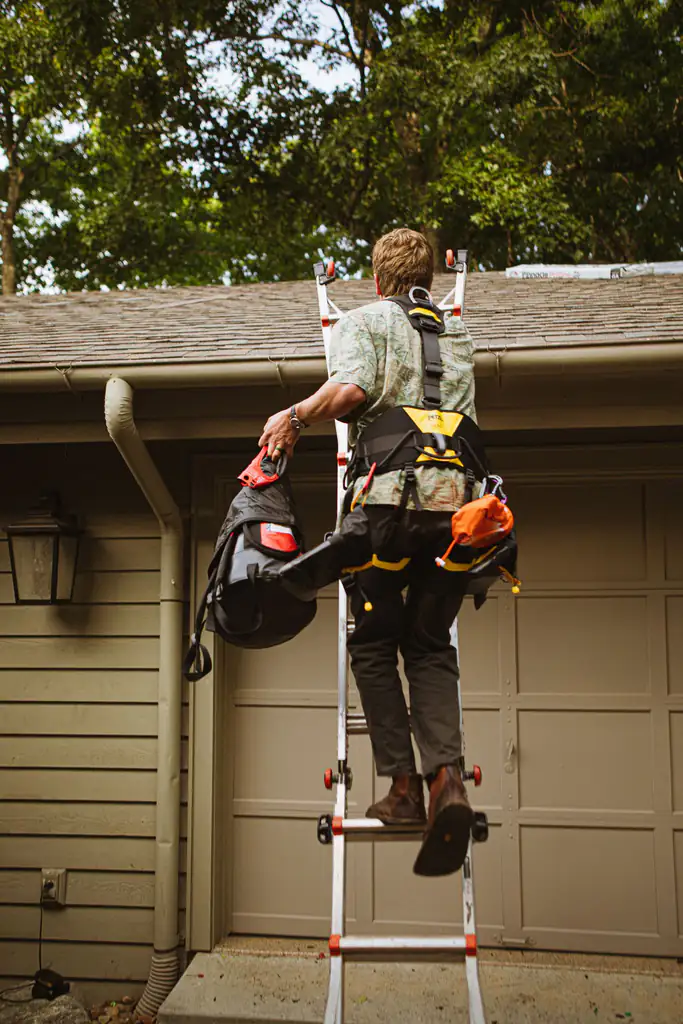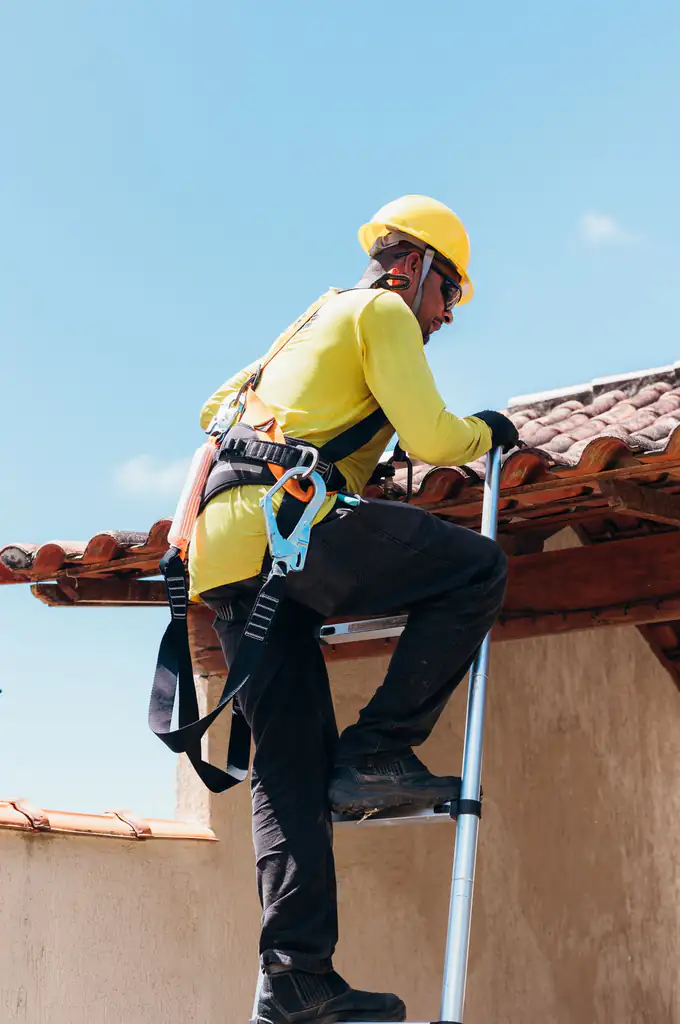
Gutter Cleaning Mistakes to Avoid
The gutter-cleaning mistakes that cause falls, missed clogs, and repeat work — from overreaching on a ladder to ignoring downspouts and rushing the job.
Seasonal Maintenance
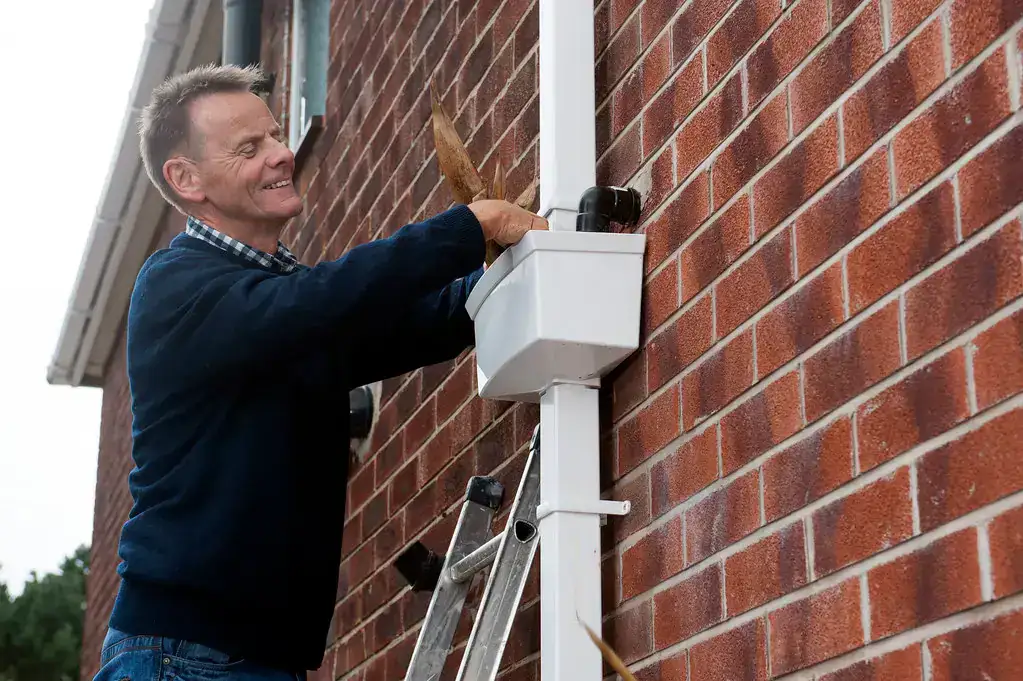
Cleaning gutters yourself saves money and is reasonable on an accessible single-story home, but height, roof pitch and multi-story access make it genuinely dangerous. Pros bring equipment, speed and safety. The real deciding factor is safe access, not cost alone.
Doing it yourself saves money and is perfectly reasonable on a single-story home you can reach from stable ground. But once you add height — a second story, a steep roof, or a ladder that has nowhere level to stand — gutter cleaning becomes genuinely dangerous, and that is where hiring a professional earns its price. The honest deciding factor is not cost. It is whether you can reach every section of gutter safely.
This guide walks through what DIY cleaning actually involves, when it is a sensible weekend job, when it clearly is not, what a pro brings that you cannot, and how to think about cost without chasing a number that will not match your house.
The job itself is not complicated. The gear is basic and the method is repetitive. What makes it demanding is that all of it happens on a ladder.
Here is the short version of a DIY pass:
That last step matters more than people expect. If you are unsure how often this whole routine should happen, how often to clean gutters lays out a sensible baseline.
DIY makes sense when the access is genuinely safe and the conditions are mild. In practice that means most of the following are true:
When those line up, DIY is inexpensive, quick, and lets you inspect the gutters up close while you are there — catching a loose hanger or a sagging section before it becomes a repair.
Working at height is dangerous. Falls from ladders and roofs cause serious injury, and the risk rises on wet, icy, or damaged surfaces. If you do not have safe, stable access, this is a job for a professional.
The moment safe access becomes doubtful, the math changes. Hiring a professional is the clear call when:
None of these is about being handy. They are about physics. A fall from a second-story gutter does not care how careful you are, and the cost of a professional visit is trivial next to a serious injury.
Paying for the job buys more than someone else’s time on the ladder.
While they are up there, a good crew will often flag whether what they are seeing is routine buildup or something worse. If you are noticing recurring overflow or sagging, signs your gutters are failing helps you tell normal debris apart from damage that needs repair rather than just a cleaning.
Anyone who quotes a flat price sight unseen is guessing. What a cleaning costs — whether you value your own time or pay a pro — depends on the house, and the honest answer is a range that only firms up once someone looks at your specifics.
The factors that move it:
For DIY, the cash outlay is small and one-time — the tools pay for themselves — but the true cost is your time and the risk you take on. For a pro, ask for an itemized quote based on your actual home rather than trusting a figure you read somewhere.
| Factor | DIY | Professional |
|---|---|---|
| Out-of-pocket cost | Low; basic reusable tools | A service fee that varies by home |
| Safety risk | Carried by you, and it is real | Carried by an insured crew |
| Best suited to | Accessible single-story homes | Multi-story, steep, or hard-to-access homes |
| Speed | Slower, one ladder position at a time | Fast; the right equipment and practice |
| Equipment | You supply ladder, scoop, hose | They bring tall ladders and specialty tools |
| Inspection | You learn your gutters up close | Trained eye may catch early problems |
| Right conditions | Dry, calm, firm ground | Any, including height and ice |
Most gutter-cleaning injuries trace back to a handful of avoidable errors — nearly all of them about the ladder, not the gutters.
This is general guidance, not a safety certification. Every home and ladder setup is different. If anything about the access feels unsafe when you are actually standing there, trust that and stop.
Cost is the question most people start with, but it is the wrong deciding factor. Cleaning your own gutters is a fair, money-saving job on a single-story home you can reach from firm ground on a dry day. The instant height, pitch, ice, or a shaky ladder setup enters the picture, the calculation is no longer about a service fee — it is about a fall you cannot afford. Safe access decides it. When you have it, DIY is reasonable; when you do not, that is precisely when a professional is worth every dollar. For more on why we treat height work this seriously, see our safety disclaimer.
FAQ
Usually, yes. Doing it yourself means no labor charge, and the basic tools — gloves, a scoop, a bucket, a hose, and a stable ladder — are inexpensive and reusable. The real cost is time and, more importantly, the risk of working at height. On a low, single-story home with firm ground, DIY makes sense. On a tall or steep house, what you save is rarely worth the fall risk.
Hire out when access is not safe — a multi-story home, a steep or high roof, no firm level ground for a ladder, or icy conditions. Also consider a pro if you have mobility or health limits, are uneasy on a ladder, or have nobody to spot you. The deciding factor is whether you can reach every section safely, not the cost.
A stable extension or step ladder rated for your weight, sturdy work gloves, a gutter scoop or small trowel, a bucket or bag for debris, and a hose to flush the troughs and check that downspouts run clear. A ladder stabilizer or standoff that rests against the roof rather than the gutter is a worthwhile add.
Working at height is a leading cause of serious home-maintenance injuries. Falls from ladders and roofs cause fractures, head injuries, and worse, and the risk climbs on wet, icy, or damaged surfaces. The danger is real enough that it, not price, should drive the decision. If you cannot set up safe, stable access, treat it as a job for a professional.
It varies by company, but a typical visit clears leaves and debris from the troughs, checks and flushes the downspouts so water runs through, and often includes a quick look at hangers, seams, and outlets. Because it involves specifics, confirm exactly what a given service covers before booking.
Avoid it whenever you can. Roof surfaces are slick when wet or covered in grit, steep pitches offer little to catch you, and a slip near the edge is exactly the kind of fall that causes severe injury. Work from a properly set ladder instead, and if the gutters can only be reached from the roof, that is a strong sign to hire a professional.
There is no flat number, and any quote depends on your home. The main factors are size and number of stories, the length and complexity of the roofline, how easy the gutters are to access, how much debris has built up, and your region. Get itemized quotes for your specific house rather than relying on a generic figure.
Keep reading
The gutter-cleaning mistakes that cause falls, missed clogs, and repeat work — from overreaching on a ladder to ignoring downspouts and rushing the job.
Practical gutter-cleaning safety — ladder setup and angle, avoiding overreach, working with a partner, staying off wet roofs, and knowing when to hire out.
Why two-story gutters change the maintenance plan, and how ground tools, guards, and hiring out the high work keep you off a dangerous ladder.