Why Does My Sump Pump Keep Running?
A sump pump keeps running when it faces more water than usual or cannot shut off — from a high water table, backflow, a stuck switch, or a discharge fault. Find out which before it burns out.
Problem–Solution Hub
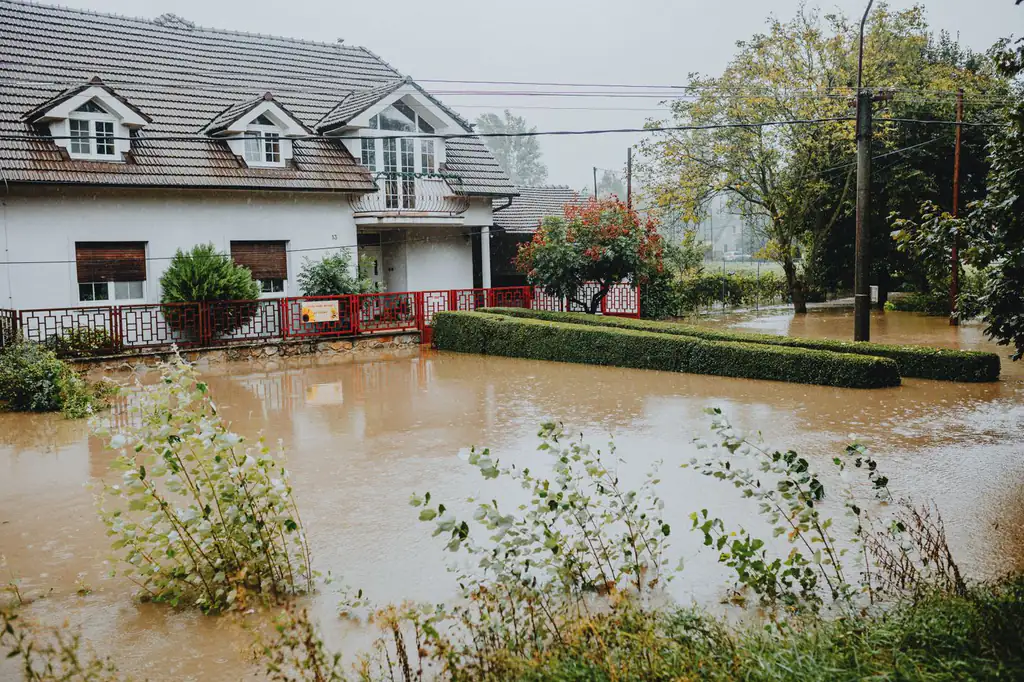
A basement that leaks only in heavy rain is almost always a surface-water problem — gutters overflowing, downspouts at the wall, or grading sending storm runoff to the foundation — not a constant groundwater issue. The fix is outside, uphill of the leak.
A basement that stays dry for weeks and then leaks during a heavy storm is telling you something specific: this is a surface-water problem, not a groundwater one. The water arriving is storm runoff — from the roof, the gutters, the downspouts, and the yard — being delivered to the foundation faster than the ground can absorb or shed it. A true groundwater issue would seep in year-round, wet weather or dry. The rain-only timing points the finger squarely outside, uphill of where the water shows up.
Groundwater rises and falls slowly. If your basement leaked because the water table was high, you would see dampness across seasons, not a sudden appearance keyed to a single storm. When leaking switches on with heavy rain and switches off soon after, the driver is the rain itself: a large volume of water hitting the ground near the house over a short time.
That reframes the whole diagnosis. You are not looking for a flaw deep in the foundation so much as a delivery problem at the surface — water being concentrated against the wall instead of carried away.
This article is about the rain-only pattern specifically. If your basement gets damp more generally after rain, including lighter rain, the broader walkthrough in why a basement gets wet after rain covers more of the possibilities.
Nearly every rain-triggered basement leak traces back to one or more of three surface-water failures. They often stack together.
When gutters clog or overflow in a storm, the roof’s runoff — a large volume of water — sheets down the wall and pools at the base of the foundation instead of being collected and routed away. That concentrated soak against the wall is a leading cause of storm-only leaks.
Even gutters that catch every drop do harm if the downspout dumps it right at the foundation. All that collected roof water goes straight into the soil against the wall, saturating exactly the spot you most want to keep dry.
If the ground slopes toward the foundation, or has settled over the years into a shallow trough against the wall, storm runoff from the yard flows to the house and ponds there. The soil stays saturated through the storm, and the pressure finds any crack or the wall-floor joint.
| Symptom | Likely cause | Fix |
|---|---|---|
| Water at the wall-floor joint after a storm | Saturated soil from overflow or poor discharge | Fix gutters and extend downspouts away from the wall |
| Leak worst below a downspout | Downspout discharging at the foundation | Add an extension carrying water well away from the house |
| Pooling against the wall during rain | Grade sloping toward the house or a settled low spot | Regrade so the ground falls away from the foundation |
| Overflow visible at the gutters during the storm | Clogged or undersized gutters | Clear, repair, or reassess gutter capacity |
| Leak persists after all exterior fixes | Possible structural crack or waterproofing failure | Bring in a professional to evaluate |
The logic of a surface-water leak is that the cheapest, most effective fixes are the ones farthest from the basement. Work from the outside in.
Downspout discharge distance is one of the most under-appreciated pieces of this. A downspout emptying too close to the wall can undo good gutters and good grading — see how downspout discharge relates to water pooling near the foundation.
Clearing gutters and checking downspouts up top means working at height. Work at height risks falls; if you lack safe access, hire a professional.
Exterior fixes solve a large share of rain-only basement leaks, but not all. If you have corrected the gutters, downspouts, and grading and water still comes in, or if you see cracks that appear to be widening, walls that look bowed, or water that persists despite good drainage, the question has moved from surface water to structure. That is the point to bring in a foundation or waterproofing professional. Structural concerns are not a DIY diagnosis — get a trained evaluation rather than guessing.
A basement that leaks only in heavy rain is a surface-water story with a hopeful ending: the fix is almost always outside, and often within reach — clear the gutters, carry the downspout water away, and grade the ground so it falls from the house. Work outside-in, solve the delivery problem before reaching for the expensive interior remedies, and route any genuine structural doubt to a professional.
FAQ
Rain-only timing almost always points to surface water. Storm runoff from the roof and yard is being delivered to the foundation faster than the soil can handle, and it finds a way in. A constant groundwater problem would leak in dry weather too.
Not usually as the first step. Interior systems manage water that has already reached the foundation. A rain-triggered leak is often solved more cheaply by fixing gutters, downspouts, and grading outside first.
Overflowing or clogged gutters dump concentrated water at the base of the wall instead of carrying it away. That water saturates the soil against the foundation and can seep through cracks or the joint where the wall meets the floor.
Well away from the foundation, so water spreads out on grade or into a drain that carries it off, rather than soaking the soil right against the wall. Extensions and proper discharge distance make a big difference.
Yes. If the ground slopes toward the house, or has settled into a low spot against the wall, storm runoff pools there and pushes against the foundation. Regrading so the ground falls away from the house is a core fix.
If exterior fixes do not stop it, if you see cracks that are widening, bowing walls, or persistent water despite good drainage, treat it as a structural or waterproofing question and bring in a professional.
Keep reading
A sump pump keeps running when it faces more water than usual or cannot shut off — from a high water table, backflow, a stuck switch, or a discharge fault. Find out which before it burns out.
Water comes through a wall when saturated soil outside pushes moisture through the concrete — via pressure, cracks, or weak points. The cause is usually drainage, not the wall itself.
A basement smells musty after rain because moisture is getting in and feeding mold and mildew. The smell is a symptom of a water or humidity problem — find the source before masking it.