Water Eroding Soil Near the House
Soil eroding beside the house comes from concentrated water — overflow, a downspout at the wall, or runoff. Here is how to spread the flow and stop it.
Problem–Solution Hub
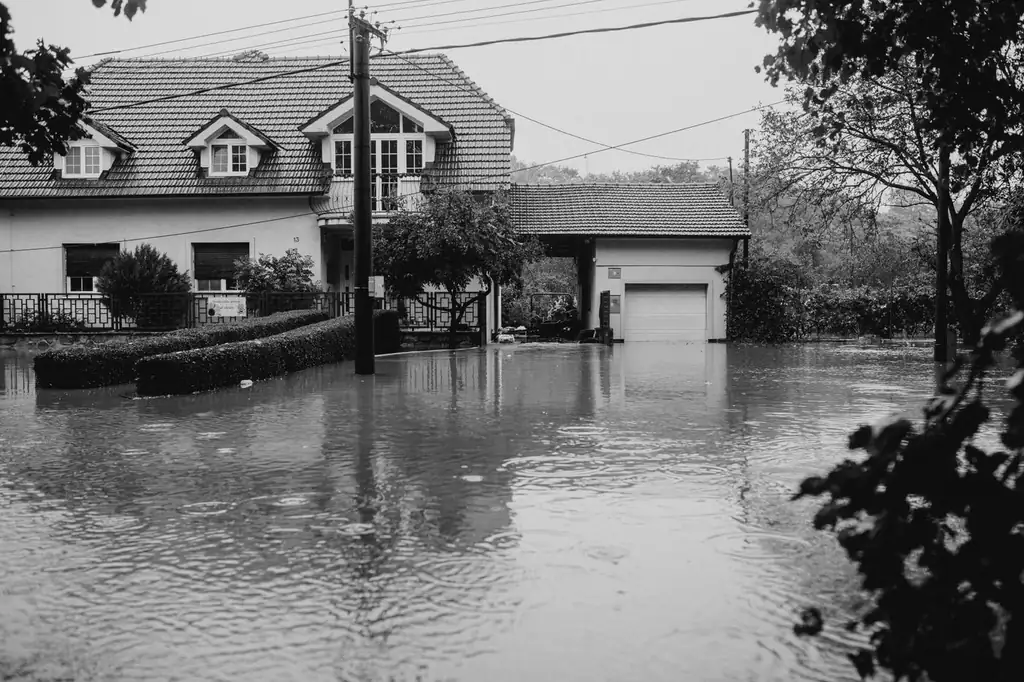
Where a downspout dumps, concentrated water splashes soil, carves channels and can spatter the siding. A splash block, an extension to disperse the flow, or a pop-up emitter farther out fixes it — and protects the foundation the erosion is warning about.
Where a downspout empties, all the rain that fell on that section of roof comes out in one concentrated stream. That focused flow hits the ground hard — splashing soil aside, carving a channel across the bed, sometimes spattering mud back onto the siding. The fix is straightforward: break the force and carry the water away with a splash block, an extension, or a pop-up emitter. And it is worth doing for more than the tidy landscaping, because the erosion is a visible warning about water soaking the ground right next to your foundation.
Erosion at the discharge is a matter of concentration. Rain that fell spread across the whole roof gets funneled by the gutters into a single downspout and released at one point. What was a gentle sheet becomes a jet. That jet carries enough energy to move soil, and bare ground under the outlet has nothing to resist it. Over a few storms you get a crater, a channel snaking away downhill, and mud splashed up the lower siding.
The heavier the rain and the barer the soil, the faster it happens. Slopes make it worse, because the water keeps its energy as it runs off. But the root cause is always the same: a lot of water arriving fast at one small spot.
The same concentrated discharge that erodes soil at the outlet also relates to the broader pattern of runoff carving away ground near the house. If you are seeing washouts in several spots, read this alongside water eroding soil near the house.
The three common fixes are a ladder of increasing effectiveness. You can start simple and add more if the water still lands too close.
A splash block is a sloped tray placed under the outlet. It takes the impact of the stream, breaks its force, and spreads the water out over a wider area so it no longer drills into one point. A splash block is the quickest fix and stops the worst of the splashing at the outlet — but on its own it does not move water far from the house.
A downspout extension is a length of pipe or a hinged accordion that carries the discharge past the foundation zone before releasing it. This is the workhorse fix: instead of dispersing water at the wall, it delivers it out onto ground that can shed it. Extensions can lie on the surface or be buried and run underground.
For a cleaner look and better dispersal, a buried extension can end in a pop-up emitter — a fitting that sits flush with the lawn and opens under water pressure to release the flow out at a distance, then closes again so it stays hidden and mowable. It disperses the discharge well away from the foundation.
| Symptom | Likely cause | Fix |
|---|---|---|
| Crater and splashed soil right at the outlet | Concentrated stream hitting bare ground | Add a splash block to break and spread the flow |
| Water lands near the foundation and pools | Discharge too close to the wall | Add an extension to carry water past the foundation |
| Channel carved across the yard downhill | Concentrated flow running over a slope | Extend and disperse discharge onto stable ground |
| Mud spattered on the lower siding | Splash-back off bare soil at the outlet | Splash block plus extension to move the release point |
| Surface extension looks messy or gets in the way | Above-ground pipe across the lawn | Bury the extension and finish with a pop-up emitter |
How far the water needs to travel depends on your grade and soil, but the principle is fixed: it should land where the ground carries it away, not back toward the wall. The guidance in how far downspouts should extend covers this in detail.
Here is why discharge erosion is worth treating as more than a cosmetic nuisance. The water that is carving your flower bed is also saturating the soil against the foundation. Concentrated discharge at the wall keeps that ground wet, and saturated soil against a foundation is a leading contributor to seepage, hydrostatic pressure, and the storm-triggered basement leaks that so often trace back to downspouts dumping too close. The erosion you can see is a proxy for the wetting you cannot. Fix the discharge, and you protect both the landscape and the foundation the washout is warning you about.
If solving the erosion also means inspecting or clearing the gutter and the top of the downspout, that is work at height. Work at height risks falls; if you lack safe access, hire a professional.
Most discharge fixes are within reach of a homeowner, but call a pro if a buried extension needs to be run with proper fall through difficult ground, if the erosion has undermined a walkway, patio, or the soil against the foundation itself, or if you suspect the concentrated discharge has already contributed to foundation seepage or a basement leak. Any concern that reaches the foundation is a structural question and deserves a trained evaluation rather than a guess.
Downspout discharge erosion is one of the more satisfying problems to fix, because a modest change at the outlet solves a visible, worsening mess and quietly protects the most expensive part of the house at the same time. Break the force, carry the water away, and let it land where the ground can handle it.
FAQ
A downspout collects all the roof runoff from its section and releases it in one concentrated stream. That focused force hits bare soil hard enough to splash it aside and carve a channel, especially in heavy rain.
A splash block helps by breaking the force of the water and spreading it out, which reduces splashing right at the outlet. But if water still lands close to the foundation, you usually also need an extension to carry it farther away.
It is a fitting at the end of a buried downspout extension that sits flush with the lawn and pops open under water pressure to release the flow out at a distance from the house, then closes again. It disperses discharge away from the foundation.
It can be a warning. The same concentrated water that erodes the soil is soaking the ground near the foundation. Fixing the discharge protects both the landscaping and the foundation it is warning you about.
Far enough that it discharges onto ground that slopes away and does not pool against the wall. The exact distance depends on your grade and soil, but the goal is to move water clear of the foundation zone.
Gravel or a splash block can absorb some impact and reduce the crater, but neither carries water away. If discharge is landing near the foundation, you still need an extension or emitter to move it out.
Keep reading
Soil eroding beside the house comes from concentrated water — overflow, a downspout at the wall, or runoff. Here is how to spread the flow and stop it.
Mulch and soil washing out of garden beds is concentrated runoff — a downspout or roof valley nearby, or beds sloped too steeply. Redirect and slow the flow.
Water pools at a downspout when it dumps more water than the ground can take right there — from short discharge, flat soil, or a blocked line. Diagnose the cause before adding drainage.