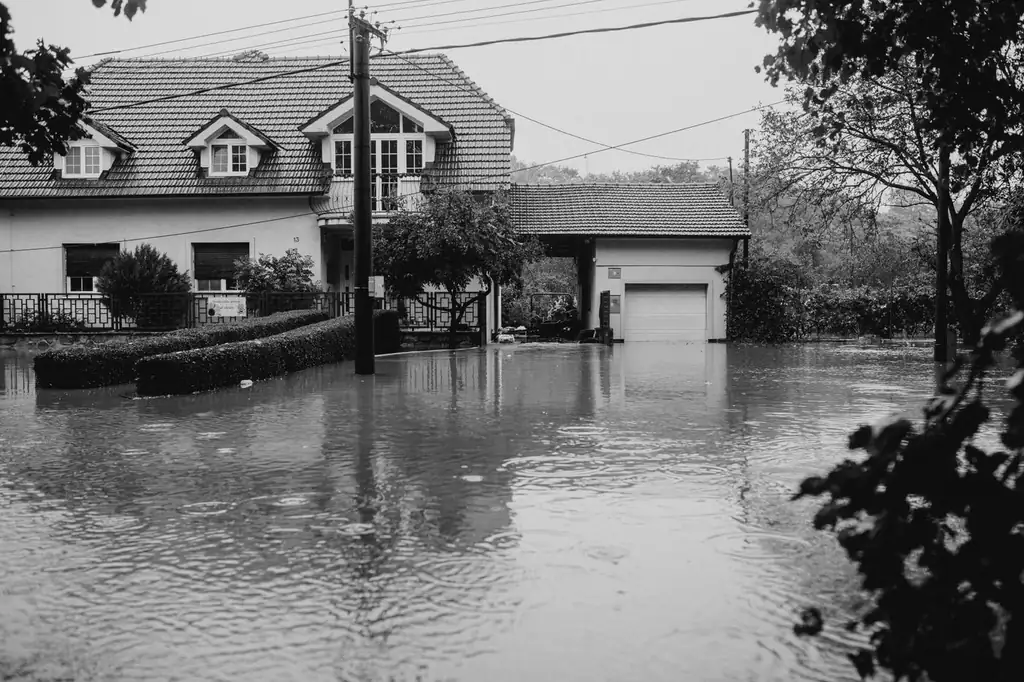
Water Eroding Soil Near the House
Soil eroding beside the house comes from concentrated water — overflow, a downspout at the wall, or runoff. Here is how to spread the flow and stop it.
Problem–Solution Hub

Mulch and soil washing out of beds is concentrated runoff at work — usually a downspout or roof valley dumping nearby, or beds sloped so water races through. Redirecting the discharge and slowing the flow keeps the beds, and warns you where water is going.
Waking up after a storm to find your mulch piled in fans across the lawn and bare soil showing in the bed is a familiar frustration. What you are seeing is concentrated runoff at work. Rain falling evenly on a bed rarely floats the mulch away; what does the damage is water gathered from a large area and funneled into or across the planting — usually a downspout or a roof valley dumping nearby, or a bed sloped so water races through it. The short answer is to redirect that discharge and slow the flow. Do both, and the beds hold — and along the way the washout tells you exactly where your water is going.
The key word is concentrated. A gentle rain spread over a bed is not enough to move mulch; the water simply soaks in. Trouble starts when water from a much larger surface is collected and delivered to the bed as a single, energetic stream. A roof is the usual source. A downspout takes the rain from a whole roof plane and empties it in one place; a roof valley channels two roof slopes together and sheds the combined flow off one edge. Point either of those at a bed and the mulch does not stand a chance.
Slope adds to it. A bed that falls away steeply lets whatever water enters it pick up speed, and fast water carries far more material than slow water. So the two things to look for are where the water is coming from and how quickly it moves once it is in the bed.
There is a silver lining. Mulch is light and moves easily, which makes it an early-warning sign. The fans and channels it leaves behind are a map of where concentrated runoff is traveling — information you can use before that same water does quieter damage against a foundation or in a low spot.
The first and most effective move is to get the concentrated water out of the bed. If a downspout empties into the planting, extending or rerouting it so it discharges beyond the bed — onto ground that can absorb the water — removes the source of the problem outright. This is usually the single highest-value fix, because it addresses the water where it is being concentrated rather than fighting it after it spreads.
Where that discharge should ultimately go is its own question, and getting it right keeps you from simply moving the erosion somewhere else. The reasoning behind carrying roof water far enough from the house is in how far downspouts should extend, and the specific problem of water tearing up the ground at a downspout outlet is covered in downspout splashing and erosion at discharge.
Once the concentrated source is handled, the remaining goal is to lower the water’s energy as it crosses the bed, so it carries less with it. Fast, focused water has the power to lift mulch and soil; slower, more spread-out water does not.
| Symptom | Likely cause | Fix |
|---|---|---|
| Mulch fanned out below a downspout | Downspout discharging into the bed | Extend or reroute the downspout beyond the bed |
| Washout along a line under the roof edge | Roof valley shedding concentrated flow onto the bed | Redirect the roof discharge and spread it out |
| Channels cut through a steeply sloped bed | Water accelerating across the slope | Ease the slope and slow the flow |
| Light mulch floats away in every storm | Fine mulch with too little weight to resist | Switch to a heavier, coarser mulch |
| Mulch escapes past the border | No edge to hold it once water moves | Add edging after addressing the water |
| Bed keeps washing out despite redirection | Runoff from a larger area than the bed can shed | Bring in a pro for proper drainage |
Reading the mulch fans and tracing the runoff are rough, homeowner-grade diagnostics, not precise measurements. They are enough to tell you where concentrated water is coming from and roughly how fast it moves, which is what you need to choose a direction. If the bed keeps washing out after you redirect the discharge and slow the flow, it may be catching runoff from a larger area than it can handle, and that is a drainage question worth a professional look.
The short version: mulch and soil leave your beds because concentrated runoff is racing through them, usually from a downspout or roof valley, made worse by a steep slope. Redirect the discharge out of the bed, slow whatever flow remains, and let the mulch fans point you to where your water is going. If the bed keeps washing out after that, it is catching more runoff than it can shed, and that is the moment to bring in a professional.
FAQ
Because more water is moving through the bed than the mulch can withstand, and it is usually moving fast. Rain falling evenly on a bed rarely floats mulch away; what does it is concentrated runoff — water gathered from a large area, such as a roof, and funneled into or across the bed. A downspout emptying nearby or a roof valley shedding onto the bed delivers that concentrated flow, and beds sloped steeply let the water pick up speed. Find where the water is coming from and how fast it moves, and the fix follows.
It can be a useful warning. Mulch is light and moves easily, so it shows you where water is running before that water does quieter damage elsewhere — against a foundation, into a low spot, or down a path it will keep following. Fan-shaped piles of mulch and channels cut through a bed are a map of concentrated runoff. Rather than just an annoyance, treat the washout as information about where roof and surface water is going on your property.
Get the discharge out of the bed. A downspout concentrates a whole roof's worth of rain, and emptying it into a planting bed overwhelms the mulch and soil there. Extending or rerouting the downspout so it discharges beyond the bed, onto ground that can take the water, removes the source of the problem. Where that water should end up is its own question worth getting right, but the first move is simply getting the concentrated flow out of the bed.
Edging can help hold mulch at the bed's border and define where it stays, but it does not address why the mulch is moving. If concentrated runoff is racing through the bed, edging alone tends to get overtopped or undercut, and the washout continues. Edging works best as part of the picture — after you have redirected the discharge and slowed the flow — rather than as the sole fix. Treat the cause first, then use edging to tidy the boundary.
It means giving the water less speed and more chance to soak in as it crosses the bed, so it carries less material with it. Fast, concentrated water has the energy to lift and move mulch and soil; slower, more spread-out water does not. In practice slowing the flow can involve reducing how steeply the bed sheds water, spreading the discharge over a wider area instead of one channel, or using heavier mulch that resists floating. The goal is to lower the water's energy before it reaches the plantings.
It does, though it is secondary to the water. Lighter, finer mulches float and move more readily, while heavier, coarser materials resist being lifted and carried. Switching to a heavier mulch can reduce washout at the margins. But if strong concentrated runoff is crossing the bed, even heavy mulch will eventually move, so the mulch choice helps most once you have redirected the discharge and slowed the flow. Address the water first; treat the mulch as a supporting measure.
When the runoff is more than you can redirect on your own, when the water is heading toward the foundation or a problem area, or when you need real drainage to handle the volume, it is worth bringing in a pro. A bed that keeps washing out despite redirecting the downspout and slowing the flow may be catching runoff from a larger area than it can shed. That is a drainage question, and getting the discharge routed to a proper outlet safely and correctly is where an expert helps.
Keep reading
Soil eroding beside the house comes from concentrated water — overflow, a downspout at the wall, or runoff. Here is how to spread the flow and stop it.
A downspout that dumps concentrated water splashes soil, carves channels, and spatters siding. Splash blocks, extensions, and emitters fix it.
Water pools at a downspout when it dumps more water than the ground can take right there — from short discharge, flat soil, or a blocked line. Diagnose the cause before adding drainage.