Rain Barrels Explained
How rain barrels work, what they actually do for runoff and watering, and their real limits — fast fill-up, overflow that must go away from the foundation, mosquitoes, and winter draining.
Rain Gardens & Stormwater
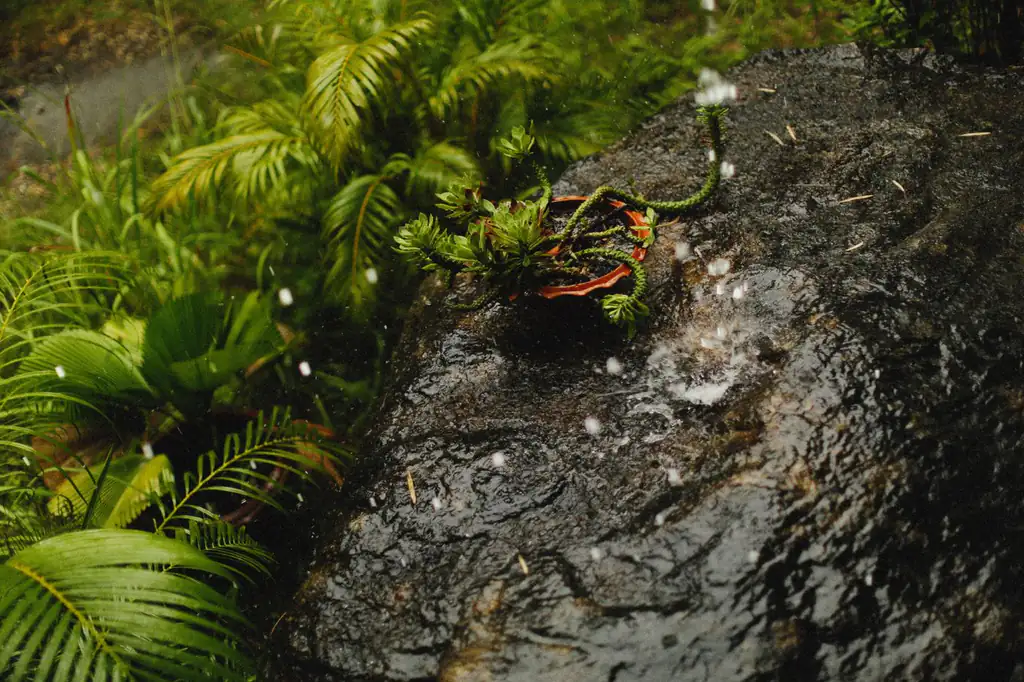
Rainwater harvesting captures roof runoff — from a simple rain barrel to larger cisterns — for garden or non-potable use. It eases a bit of runoff and saves tap water, but storage fills fast in storms and local rules on collection and use vary, so plan the overflow and check locally.
Rainwater harvesting means capturing the runoff from your roof, usually straight from the downspouts, and storing it for later use on the garden or other non-potable needs. It runs from a single rain barrel to a much larger cistern. Done well, it trims a bit of stormwater runoff and saves some tap water, but storage fills fast in a real storm and the rules on collecting and using rainwater vary by location, so you have to plan the overflow and check what is allowed where you live.
Harvesting is not one thing. It is a range, and where you land depends on how much water you want to keep and what you will do with it.
At the simple end sits the rain barrel, a single container under a downspout. It is inexpensive, easy to install, and holds a modest amount, enough to water nearby beds between rains. Its limitation is capacity: roof runoff can fill a barrel within a single decent storm. For a fuller treatment of the simple end, see rain barrels explained.
In the middle, homeowners often link several barrels together to multiply capacity while keeping the low cost and easy installation.
At the larger end sits the cistern, a much bigger tank, above or below ground, holding far more water for sustained garden use or other non-potable purposes. Cisterns store meaningfully more but cost more, take more planning, and are more likely to fall under local regulation.
| System | Typical capacity | Best for | Main limitation |
|---|---|---|---|
| Single rain barrel | Modest | Watering nearby beds | Fills fast in one storm |
| Linked barrels | Moderate | A larger garden area | Still limited; more overflow to manage |
| Cistern | Large | Sustained non-potable use | Cost, space, and likely local rules |
Rainwater harvesting is genuinely useful, but it is easy to oversell, so it helps to be clear-eyed about both sides.
The honest summary: harvesting saves water and helps at the margins of runoff, but it is not a flood-control system. Tanks are small compared with what a roof sheds in a storm, so the biggest runoff benefit comes from pairing storage with something that infiltrates, like a rain garden.
Local and state rules on rainwater collection and use vary considerably, from encouragement to limits on storage volume or permitted uses. Check what applies where you live before installing storage, especially for larger cisterns, and treat harvested water as non-potable unless properly treated.
The single most overlooked part of a harvesting system is what happens when it is full, which happens fast. Every barrel and cistern needs a planned overflow that carries excess water safely away from the foundation. A full barrel with no overflow simply pours water at the base of your house, which is worse than not harvesting at all.
The best overflow destination does more work for you: route it to a rain garden that catches and infiltrates the excess, or to a suitable drainage area away from the house. This is also why harvesting and infiltration pair so naturally, the storage handles the first flush, and the rain garden absorbs the overflow. Where the overflow and downspouts go is closely tied to how far runoff should be carried from the house; see how far should downspouts extend.
A few basics keep harvested water usable and the system trouble-free:
Rainwater harvesting is a satisfying way to keep some rain on site, from a single barrel to a full cistern, and to save tap water for the garden. Just size your expectations honestly: storage fills quickly, harvested water is non-potable without treatment, and local rules vary, so check them. Above all, plan the overflow, ideally into a rain garden or a safe drainage area away from the house. For the entry point to the whole idea, start with rain barrels explained, and get the discharge distance right with how far should downspouts extend.
FAQ
It is capturing runoff from your roof, usually via the downspouts, and storing it for later use on the garden or other non-potable needs. It ranges from a single rain barrel under a downspout to larger cisterns that hold much more. The idea is to keep some rain on site instead of sending all of it down the storm drain.
Rules on rainwater collection and use vary considerably by location. Some places encourage it, some regulate how much you can store or what you can use it for, and a few restrict it. Always check your local and state guidance before installing storage, especially for larger systems.
Treat harvested rainwater as non-potable unless it has been properly filtered and treated to a drinking-water standard, which is a significant undertaking. For most homeowners it is best used for gardens, lawns, and other non-potable purposes rather than drinking.
A single barrel holds a modest amount, and roof runoff fills it surprisingly fast, often within one decent storm. That is why overflow planning matters and why people who want meaningful storage move up to multiple barrels or a cistern.
The overflow takes over. Every barrel or cistern needs an overflow that directs excess water safely away from the foundation, ideally toward a rain garden or a suitable drainage area. Without a planned overflow, a full barrel just dumps water at the base of your house.
It helps at the margins. Storage captures the first portion of a storm and eases some runoff, but tanks fill quickly and large storms overwhelm them. For real runoff reduction, harvesting works best paired with infiltration features like a rain garden.
Screening keeps leaves and debris out of the storage, and many systems use a first-flush arrangement to divert the dirtiest initial runoff. These keep the stored water cleaner and the system working, and are worth including even on simple setups.
Keep reading
How rain barrels work, what they actually do for runoff and watering, and their real limits — fast fill-up, overflow that must go away from the foundation, mosquitoes, and winter draining.
How big a rain garden should be, and what actually sets the size — drainage area, soil infiltration, and basin depth — plus a factors table and common sizing mistakes.
A numbered, step-by-step guide to building a rain garden, from calling for utility locates and running a perc test through digging, amending, planting in zones, and setting an overflow.