Hip Roof vs Gable Roof Runoff
Hip vs gable roof runoff, compared. How each roof shape sheds water, where it concentrates, and what that means for gutter placement and capacity.
Roof Runoff
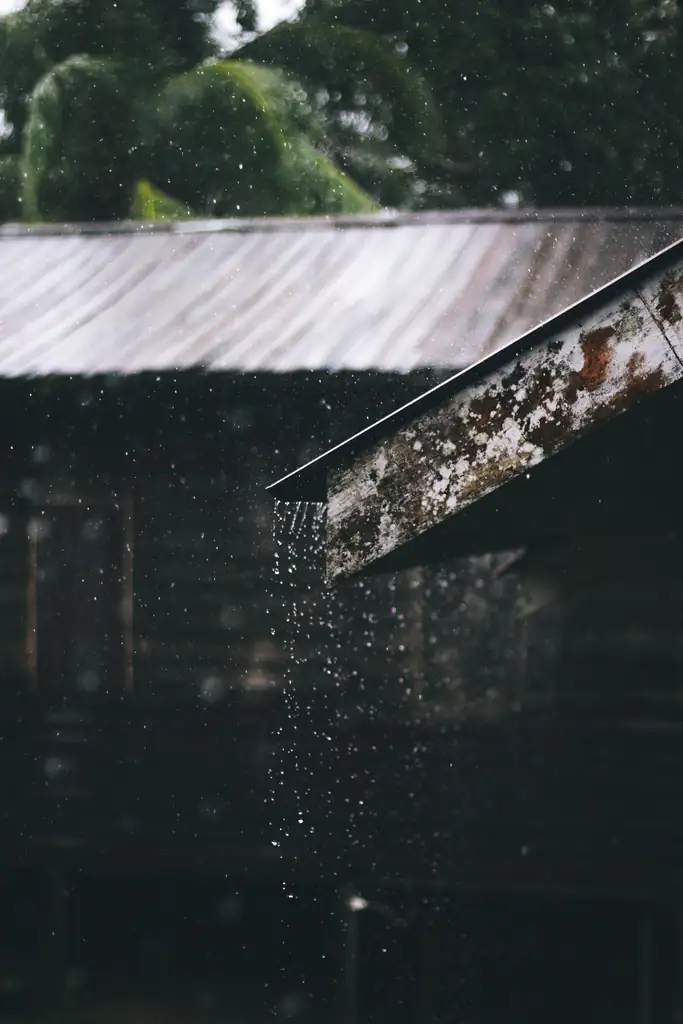
Flat and low-slope roofs drain through internal drains or scuppers rather than eave gutters. They rely on a slight built-in slope to a drain point; a clogged drain or scupper ponds water, which is the main enemy of a flat roof.
Flat and low-slope roofs do not drain the way a pitched roof does. Instead of shedding water off an eave into a gutter, they rely on internal drains or scuppers, and on a slight slope built into the roof itself to move water toward those points. The main thing that goes wrong is ponding: when a drain or scupper clogs, water sits, and standing water is the number one enemy of a flat roof.
The first thing to understand is that a flat roof is almost never truly flat. It is built with a gentle, deliberate slope toward its drainage points so that water moves rather than sits. That slope can be subtle enough that you would not notice it standing on the roof, but it is doing constant work. For the general principles of how water moves off any roof, how roof runoff works sets the foundation.
From there, flat roofs use one of two main strategies, and sometimes both.
Internal drains sit at the low points of the roof and carry water down through pipes inside the building. Water flows across the sloped surface to the drain, passes through a strainer or dome that keeps out debris, and exits through the plumbing. Internal drains are common on larger buildings and on roofs surrounded by a parapet wall, where sending water out the edge is not practical.
A scupper is an opening in the parapet wall or roof edge that lets water escape to the outside. Water crosses the roof to the scupper and drains out, often into a conductor head and downspout mounted on the exterior wall. Scuppers are simple and visible, which makes them relatively easy to check.
Good flat-roof design includes a backup. An overflow scupper or overflow drain sits a bit higher than the primary one and stays dry in normal rain. If the main path clogs and water starts to back up, the overflow gives it an escape route before the water gets deep enough to overload the roof. If you ever see water pouring from an overflow scupper, that is a signal the primary drainage is blocked and needs attention.
| Drainage type | Where it sits | How water leaves |
|---|---|---|
| Internal drain | Low point of the roof field | Down through pipes inside the building |
| Scupper | Opening in the parapet or edge | Out through the wall, often to a downspout |
| Overflow scupper | Higher than the primary opening | Only when the main path backs up |
Ponding is water that stays on the roof after the rain has stopped and everything should have drained. It is the central threat to a flat roof for several reasons. Standing water is heavy, and that weight stresses the structure. It sits directly on the membrane, accelerating wear and giving any small weakness time to let water through. It can also encourage debris, algae, and in cold climates a freeze-thaw cycle that works at the roof surface.
A little water immediately after a downpour is normal; it should drain away within a reasonable time. Water that is still standing long after the storm, or that leaves rings of dried sediment marking where it pooled, is a sign the drainage is not keeping up, whether from a clog, a low spot, or a failing slope.
Not all ponding means the same thing. A single shallow puddle that clears slowly is different from water that stands for days across a large area. Because the membrane, slope, and structure all interact, persistent ponding is worth having a roofing professional evaluate rather than diagnosing from the ground.
Most flat-roof drainage trouble comes down to blockage. Leaves, grit, and debris collect at drains and scuppers, and once the opening is choked, water has nowhere to go. Keeping those points clear is the single most valuable habit. Strainers and domes over internal drains help but can themselves get packed with debris, so they need checking too.
Beyond clearing debris, watch how the roof behaves after rain. Ponding that lingers, sediment rings, or water backing up toward an overflow all point to a drainage path that is not working. Membrane and flashing condition matters as well, since a flat roof’s waterproofing is only as good as its weakest seam.
Flat roofs still mean working at height, often near a parapet edge. Clearing drains, inspecting membranes, and checking scuppers usually happen on the roof itself. The surface can be slick and the edges are a fall hazard. Membrane and flashing repairs in particular are best left to a roofing professional with the right equipment.
Flat roofs drain through drains and scuppers, not eaves, and they lean on a slight built-in slope to move water to those points. The whole system is about keeping water moving so it never gets a chance to sit, because ponding is what wears out a flat roof. Keep the drains and scuppers clear, watch how the roof behaves after a storm, and bring in a roofing professional for anything involving the membrane or work near the edge.
FAQ
A flat roof is never truly flat. It is built with a slight slope toward drainage points, which are usually internal roof drains that run through the building or scuppers that let water out through the parapet wall.
A scupper is an opening in a parapet wall or roof edge that lets water drain off the roof. Water flows across the slightly sloped roof to the scupper and exits, often into a downspout or conductor head on the outside of the wall.
An overflow scupper is a second, higher opening that stays dry in normal rain. If the main drain or scupper clogs and water starts backing up, the overflow lets it escape before it gets deep enough to threaten the roof or structure.
Standing water is the main enemy of a flat roof. It adds weight, stresses the membrane, speeds up wear, and can find its way through the smallest weakness. Persistent ponding after a rain is a warning sign.
Keep drains and scuppers clear of leaves and debris, check strainers and screens, watch for ponding that lingers after storms, and have the membrane and flashing inspected periodically. Much of the work up top is best done by a professional.
Some low-slope roofs use edge gutters, but many drain through internal drains or scuppers instead. The drainage strategy depends on the roof design, the parapet, and how the building was constructed.
Flat roofs are built with a slight pitch toward drains so water moves rather than sits. The exact slope depends on the design and local code, but the goal is always to keep water moving to a drain point instead of pooling.
Keep reading
Hip vs gable roof runoff, compared. How each roof shape sheds water, where it concentrates, and what that means for gutter placement and capacity.
Open vs closed roof valley, explained. How each handles heavy runoff, debris and durability, and why both still concentrate water on the gutter below.
Roof runoff concentrates rain onto a few points that can erode beds and drown plants — or feed them. Learn how to work with runoff in your landscaping.