Dampness Under a Finished Basement Floor
How to recognize dampness trapped under a finished basement floor, why it usually traces back to slab moisture or seepage, and why prep comes first.
Basement & Crawl Space
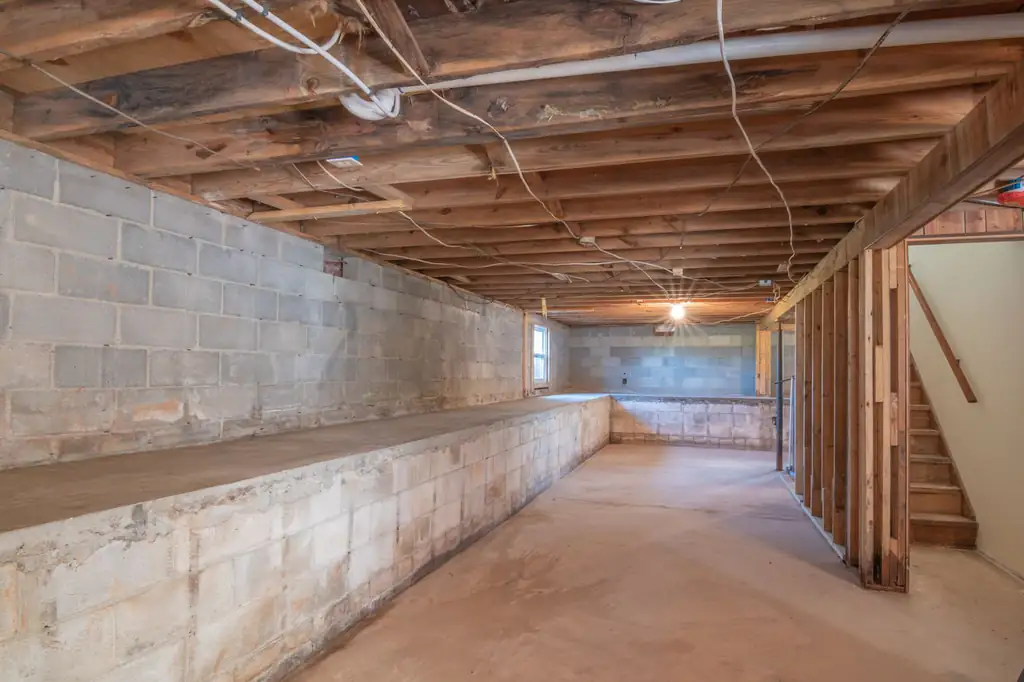
A damp basement is either condensation (humid indoor air meeting cool surfaces) or seepage (water entering from outside). They look alike but have opposite fixes — ventilation and dehumidifying vs exterior drainage — so telling them apart comes first. A simple foil-square test helps.
If your basement feels damp, the moisture is coming from one of two very different places: either humid indoor air is condensing on cool surfaces, or water is seeping in from outside. The two can look nearly identical on the wall, but they have opposite fixes — condensation is solved by ventilation and drying the air, seepage by moving water away from the house. So the first job isn’t to fix anything. It’s to figure out which one you have.
This guide is about diagnosing a water path — where the moisture is coming from — not about diagnosing a structural failure. Tracing timing and location and correcting the water path are things many homeowners can do. Cracks that leak, walls that move, water through the floor slab, or large mold growth are different matters that belong to a professional, and we’ll flag them below.
The confusion is understandable, because on a basement wall a film of condensation and a damp patch of seepage can both just read as “wet.” Underneath, though, they’re nothing alike.
Condensation happens when warm, humid air touches a surface cooler than the air’s dew point. The moisture in the air gives up its water onto the cold surface — the same thing that fogs a cold drink on a summer afternoon. In a basement, the cold surfaces are the below-grade walls, the floor slab, and cold-water pipes. The water was already in the room’s air; it just changed where it lives. Condensation is a humidity problem.
Seepage is water arriving from outside the house and passing through, or in at, the below-grade structure — through a wall, at the wall-floor joint, or up through the slab. The water was never in your air; it came from rain, snowmelt, or saturated soil pressing against the foundation. Seepage is a water-path problem, and it connects directly to why a basement gets wet after rain.
Because the water in condensation starts inside the room and the water in seepage starts outside the house, the fixes point in opposite directions. That's why guessing is expensive: the effort you spend on the wrong mechanism does nothing for the right one.
You have three good clues before you touch anything: timing, location, and a simple test.
When the dampness shows up narrows the cause faster than anything else.
Before chasing an outside leak, it’s worth ruling condensation in or out with a rough field check. Tape a square of aluminum foil tightly to the wall, sealing all four edges, and leave it a day or two.
This is a rough check, not a lab measurement, and a wall can do both at once. But it points you in a direction, which is what you need.
| What you observe | Points toward | Where the fix lives |
|---|---|---|
| Even film of droplets on walls, floor, and pipes | Condensation | Inside the air: ventilate, dehumidify, insulate cold surfaces |
| Worse in humid summer weather, no rain needed | Condensation | Reduce indoor humidity |
| Damp streak or stain tied to storms, then dries | Seepage | Outside: gutters, downspouts, grading |
| Wet patch at the wall-floor joint or under a window | Seepage | Correct the exterior water path |
| Moisture on the room side of taped foil | Condensation | Air and humidity |
| Moisture behind taped foil against the wall | Seepage | Exterior drainage |
| Water rising up through the floor slab | Below-grade pressure | Professional evaluation |
Once you know which mechanism you have, the response is clear — and the two lists barely overlap.
You’re working on the air, not the wall.
You’re working on the water path outside.
Two more words worth keeping separate. Drainage moves surface water away from the house so it never sits against the wall — gutters, downspouts, grading, swales. Waterproofing seals the below-grade structure so water that does reach it can’t pass through. For seepage, drainage almost always comes first; sealing the inside while a downspout still dumps at the wall treats the symptom and leaves the cause running.
Tracing timing and location, running the foil test, and correcting gutters, downspouts, and grading are homeowner-friendly. Stop and bring in a pro if you find cracks that leak or are widening, walls that appear to bow or move, water rising up through the floor slab, any sewage or sewer smell, large or persistent mold, or seepage that continues after the exterior water path is corrected. Those point to structural or below-grade problems this kind of troubleshooting isn’t meant to diagnose.
Don’t fix first — diagnose first. Let timing and location lead, confirm with the foil check, and decide whether you’re dealing with humid indoor air (condensation) or water from outside (seepage). Then take the matching path: ventilate and dehumidify for condensation, correct the exterior water path for seepage. Keep drainage and waterproofing separate in your mind, and if you find cracks, movement, water through the floor, or spreading mold, hand it to a professional.
FAQ
Look at where the moisture sits and when it appears. Condensation forms an even film of droplets on cool surfaces — walls, pipes, the floor — and gets worse in humid weather regardless of rain. Seepage tends to show up as damp streaks, stains, or wet patches tied to storms or snowmelt, often at a specific spot low on a wall. A taped square of aluminum foil is a rough way to check: moisture on the room side points to condensation, moisture trapped behind it points to water coming through.
Tape a square of aluminum foil tightly to the wall, sealing all four edges, and leave it a day or two. If moisture collects on the room-facing side, humid indoor air is condensing on the cool wall, which is a condensation problem. If moisture collects behind the foil against the wall, water is moving through from outside, which is seepage. It is a rough field check rather than a lab test, and a wall can do both, but it tells you which direction to spend your effort.
Because the two have opposite causes. Condensation is humid air meeting a cold surface, so the fix works on the air — ventilation, a dehumidifier, insulating cold surfaces, cutting indoor moisture sources. Seepage is water arriving from outside, so the fix works on the water path — gutters, downspouts, grading, and drainage. Running a dehumidifier against real seepage wastes effort, and sealing an exterior wall against condensation solves nothing. Getting the diagnosis right is what keeps you from fixing the wrong problem.
Yes, and many do. A basement wet from a storm can also run humid all summer, so you may be looking at two problems layered together. That is one reason timing and location matter — a wall can show a seasonal condensation film and a rain-triggered damp streak in different spots. When both are present, it usually makes sense to correct the exterior water path first, then manage whatever humidity remains with ventilation and a dehumidifier.
No. A dehumidifier pulls moisture out of the air, which is exactly what a condensation problem needs, but it does nothing about water entering through a wall or floor from outside. If the basement is seeping, the dehumidifier is running against a source it cannot reach and the dampness returns with the next storm. It is a useful companion to good drainage once the water path is corrected, not a substitute for fixing it.
Persistent dampness of any kind can encourage mold and mildew and make a basement smell musty, so it is worth controlling rather than ignoring. That said, this guide is about telling condensation from seepage and finding the moisture path, not about assessing health risk. If you see large or spreading mold growth, water that keeps coming despite exterior fixes, cracks that leak, or any sewage, treat those as beyond routine moisture control and bring in a professional.
Tracing timing and location, running the foil test, and correcting gutters, downspouts, and grading are homeowner-friendly. Call a pro when you find cracks that leak or are widening, walls that appear to bow or move, water rising up through the floor slab, any sewage or sewer smell, or seepage that continues after the exterior water path is corrected. Large or persistent mold is also a job for a specialist. Those point to structural or below-grade issues this kind of troubleshooting is not meant to diagnose.
Keep reading
How to recognize dampness trapped under a finished basement floor, why it usually traces back to slab moisture or seepage, and why prep comes first.
A basement can stay damp from humidity alone, no leak required. What a dehumidifier does and doesn't do, and how to pair it with drainage and ventilation.
A musty basement smell is a symptom of mold or mildew feeding on moisture. How to trace the source — seepage, condensation, or a damp crawl space — and what to leave to a pro.