What Drives the Cost of Repairing Gutters
Gutter repair cost depends on the fault, how much run is affected, roof height and hidden fascia damage. Learn the drivers and when repair beats replacement.
Cost & Planning
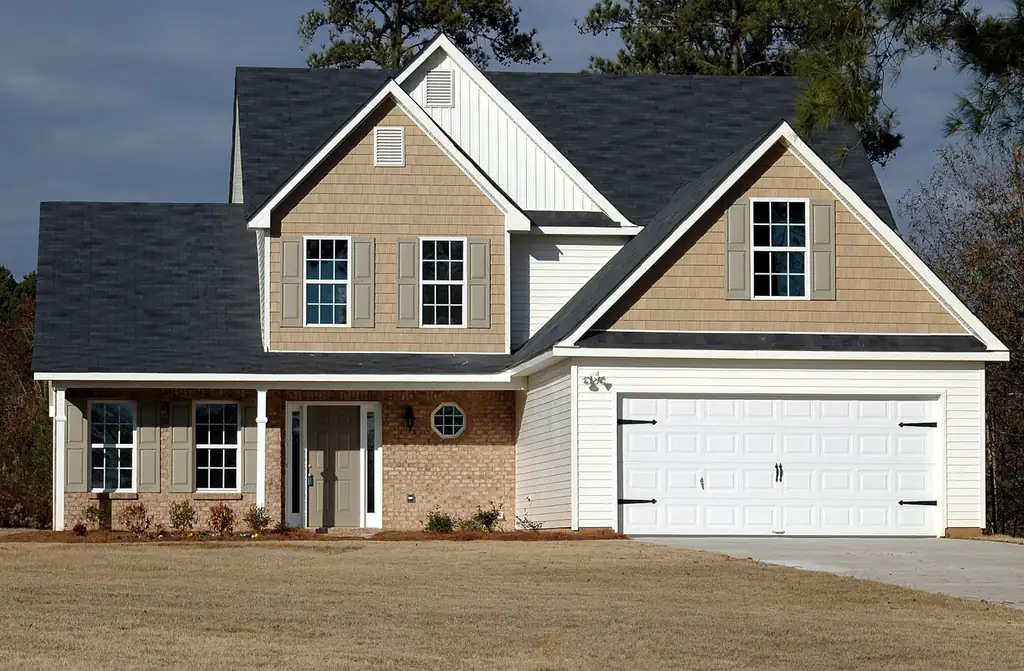
There is no single price for new gutters — cost is driven by the length of the run, the material, gutter and downspout size, the number of stories and roofline complexity, access, fascia condition, and your local labor market. Understanding these factors lets you judge a quote instead of chasing a number.
There is no universal price for replacing gutters, and any number you find online is a national average stretched across wildly different houses. What a job actually costs is driven by a handful of factors: how much gutter your roofline needs, the material, the size of the gutters and downspouts, how many stories the crew has to work at, how complex the roofline is, how easy the house is to reach, what condition the fascia is in, and what labor costs in your area. Learn those factors and you can judge a quote instead of chasing a figure that was never meant for your home.
Search for gutter replacement cost and you will get a tidy range. The problem is that the range averages a single-story ranch with a plain roofline against a three-story house with steep valleys, tight landscaping and hidden rot. Those are not the same job, and no average describes either one honestly.
A price you can trust comes from someone looking at your roofline, your access and your fascia — not from a chart. That is why this article walks through the factors rather than quoting dollars. Once you understand what moves the number, an estimate stops being a mystery and becomes something you can read.
We deliberately do not quote prices here. Gutter costs vary too much by region, house and material to put a responsible number on — the same length of gutter can differ severalfold between two homes a mile apart. What stays consistent is the set of factors below.
The length of gutter your roofline needs is the foundation of every estimate. More footage means more material, more hardware, more hangers and usually more downspouts. It is the first thing any installer measures, and it scales almost everything else on the quote.
Material may be the largest multiplier after length. Aluminum is the affordable, rust-proof default most homeowners choose. Steel is stronger but heavier and can rust. Copper sits at the premium end — far more expensive per foot and usually installed by skilled hands with soldered joints. The same roofline priced in aluminum versus copper produces very different totals. Our aluminum vs copper comparison breaks down the trade-off.
Sectional gutters come in stock lengths and snap together; seamless gutters are formed on-site from a coil to the exact length of each run. Seamless costs more in labor and equipment but leaves far fewer joints to leak. The choice affects both price and long-term reliability — see seamless vs sectional for the full picture.
Gutters are commonly 5-inch or 6-inch. A 6-inch gutter moves more water, matters on large or steep roofs, and costs more per foot in both material and the larger downspouts it feeds. Sizing up is sometimes the right call for capacity, but it is a real cost factor, not a free upgrade.
Downspouts are priced separately from the horizontal runs, and the number you need depends on roof area and layout, not just gutter length. More downspouts, or larger ones paired with 6-inch gutters, add to both material and labor. Too few downspouts saves money up front and overwhelms the system in heavy rain.
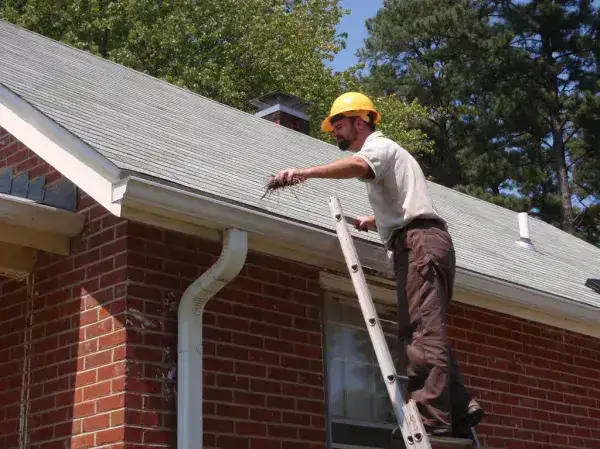
A single-story ranch is quick and safe to work; a two- or three-story house means more ladder work, staging, and time spent moving equipment and working carefully at height. Height raises labor cost and, on tall or awkward homes, can be one of the bigger swings in a quote.
A simple rectangular roof is fast to gutter. Multiple gables, dormers, valleys, inside and outside corners, and short disconnected runs all add cutting, fitting and sealing. Each corner and transition is a labor step and a potential leak point, so a complex roofline costs more than its raw footage suggests.
Old gutters often hide the problem they caused. Once they come off, installers can see the fascia board behind them, and years of overflowing water may have left it soft or rotted. New gutters cannot hang securely on bad fascia, so any repair has to happen first. This is one of the hardest items to price in advance and a common source of change orders — the signs your gutters are failing often point to fascia damage waiting to be found.
Someone has to take the old gutters down and haul them away. Reputable quotes include removal and disposal; cheaper ones sometimes leave it out, which either becomes an add-on or your weekend.
Gutter guards are a legitimate add-on but vary enormously by type and should always be a separate line. Some jurisdictions require permits for exterior work, which adds a fee and a little time. And access matters more than people expect — dense landscaping, sloped ground, fences, decks and other obstacles slow a crew down and add labor. A house the crew can walk around freely costs less to work than one they have to squeeze past.
Finally, the same job costs different amounts in different places. Local wage levels, demand, licensing and even weather windows shape what installers charge. This is a large part of why national averages fail: labor is priced locally, and it is often the biggest single line on the estimate.
| Factor | Why it changes the cost |
|---|---|
| Total linear footage | Sets the base quantity of gutter, hangers and downspouts; scales nearly everything else. |
| Material | Aluminum, steel and copper carry very different unit costs and installation methods. |
| Seamless vs sectional | Seamless adds on-site forming labor but removes joints; sectional is cheaper with more seams. |
| Gutter size (5” vs 6”) | Larger gutters use more material and need bigger downspouts to match. |
| Downspout count and size | Priced separately; more or larger downspouts add material and labor. |
| Stories / height | Taller houses mean more ladder and staging time and more careful work. |
| Roofline complexity | Corners, valleys and dormers add cutting, fitting and sealing at each transition. |
| Fascia repair | Hidden rot must be fixed before hanging; hard to price until gutters are off. |
| Removal and disposal | Taking down and hauling old gutters is labor and dump fees. |
| Guards / permits | Optional or jurisdictional add-ons that belong on their own lines. |
| Access difficulty | Landscaping, slopes and obstacles slow the crew and raise labor. |
| Regional labor market | Local wages and demand set the largest, most variable line on the quote. |
Not every failing gutter needs full replacement. A short run with a single leak, a loose hanger or one bad joint may be a repair. But when gutters sag along their length, leak at many seams, or hang on fascia that is already soft, patching tends to buy a little time at the cost of doing the job twice. Weighing repair against replacement is itself a cost decision — spending a little now can be the right move, or it can delay an inevitable replacement while water keeps working on the fascia behind it.
A quote you can actually judge is itemized. Look for material and gauge, gutter and downspout size, the number of downspouts, whether removal and disposal are included, and whether fascia repair is at least acknowledged. When two estimates are itemized this way, you can compare like for like.
The most common mistake is comparing on the headline number alone. A low bid may use thinner material, fewer downspouts, or skip fascia inspection entirely — differences that do not show until the first hard rain or the next inspection. Match the scope first, then let price decide. Sometimes the lowest bid is genuinely the best value; sometimes it is the most expensive job on the street once the shortcuts surface.
You cannot shop for gutters by chasing a single number, because that number does not exist. What exists is a set of factors — length, material, size, height, roofline, access, fascia and local labor — that together explain any honest quote. Learn them, ask installers to itemize against them, and compare like for like. Do that and you will know whether a price is fair, which is far more useful than knowing what someone else paid for a different house.
FAQ
Because a per-foot figure hides the factors that actually move the total. The same length of gutter costs very differently on a single-story ranch with easy access than on a three-story house with steep roof valleys, tight landscaping and rotted fascia. A responsible estimate prices your house, not a national average.
For most homes it is total linear footage combined with material choice. Length sets how much gutter, hardware and downspout you need, and material multiplies that quantity by very different unit costs. Height, roofline complexity and hidden fascia repair then adjust the figure up or down.
Not reliably. A low bid can reflect thinner material, fewer downspouts, no fascia inspection, or old gutters left for you to dispose of. Compare what each quote includes item by item. The cheapest headline number sometimes becomes the most expensive job once corners show up later.
Often. Once old gutters come off, installers can see the fascia and roof edge behind them. Soft or rotted fascia has to be repaired before new gutters can be hung securely, and that work is hard to price precisely until the gutters are down. A good estimate flags this as a possibility rather than ignoring it.
It is a reasonable time to consider them because the system is already being worked on, but guards are an added cost that varies widely by type. Treat them as a separate line so you can judge them on their own merits rather than letting them blur the base gutter price.
Put them side by side and match like for like — same material and gauge, same gutter and downspout size, same number of downspouts, removal and disposal included, and fascia repair addressed. Once the scope matches, the price difference reflects real differences in labor market and workmanship rather than different jobs.
Keep reading
Gutter repair cost depends on the fault, how much run is affected, roof height and hidden fascia damage. Learn the drivers and when repair beats replacement.
Seamless gutter cost depends on footage, material, size, roof height and on-site forming labor. Learn the drivers so you can judge the premium over sectional.
Repair or replace gutters? It hinges on how widespread the problems are. Learn which faults are simple fixes and which point to a full replacement.