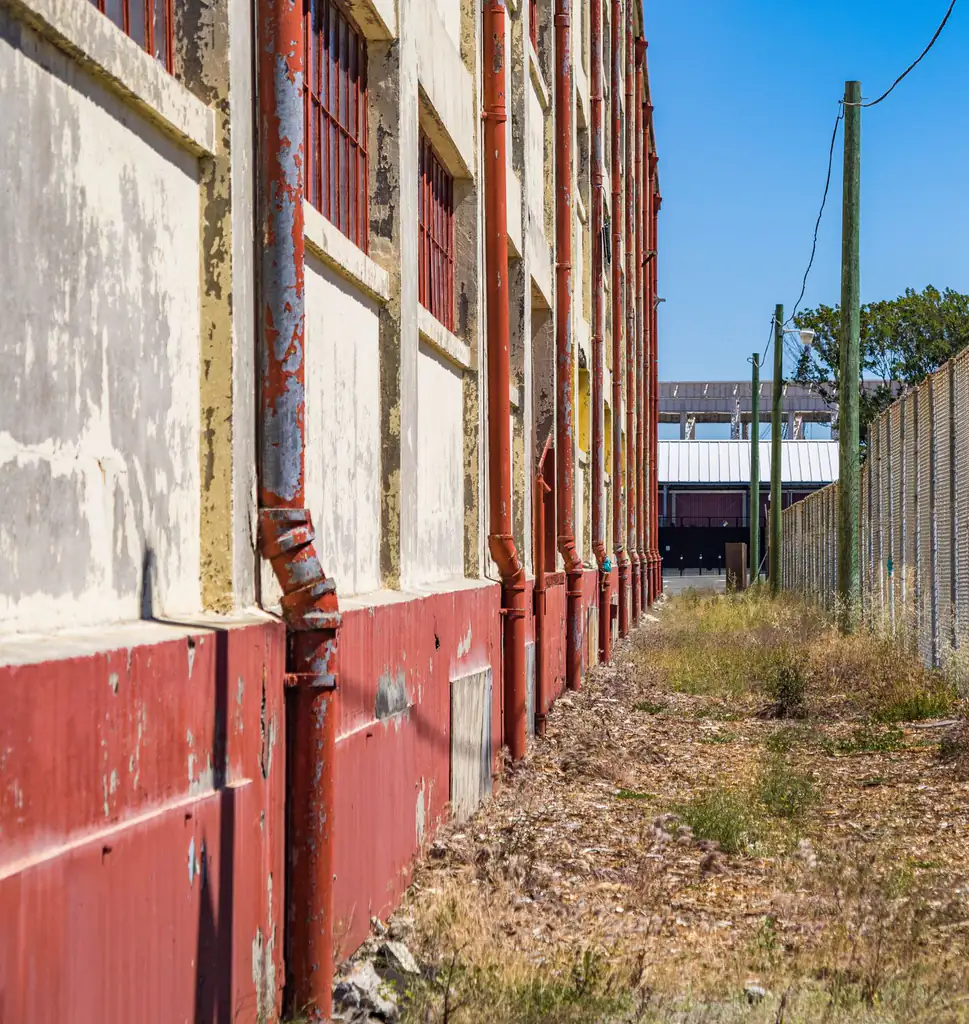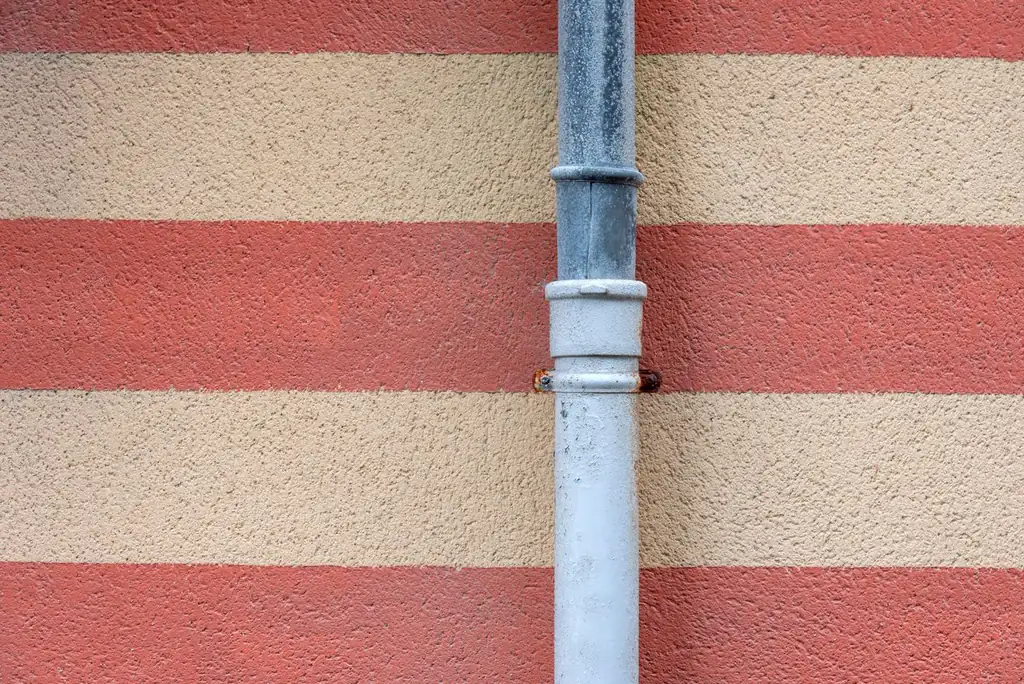
Downspout Pulling Away From the House
Why a downspout pulls away from the house and how to fix it — loose straps, working joints, and the fastening and spacing that keep the run tight to the wall.
Downspouts
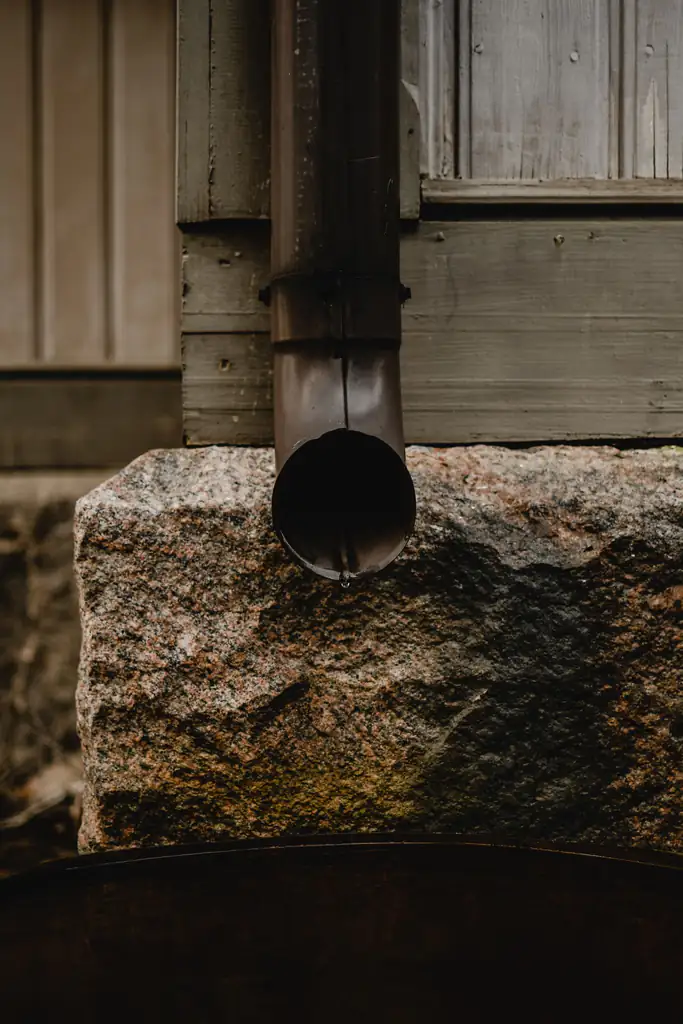
Brackets and straps hold a downspout tight to the wall so wind and the weight of moving water do not loosen it. Spacing them correctly and fastening into solid material keeps the pipe from rattling, sagging or pulling away at the joints.
The short answer: brackets and straps are what keep a downspout pinned to the wall so wind and the weight of fast-moving water cannot work it loose. Space them correctly, fasten them into solid material rather than into siding alone, and the pipe stays quiet and tight instead of rattling, sagging, or pulling away at its joints.
A downspout is not self-supporting once it climbs past a story or two. During a downpour it carries a surprising weight of moving water, and in a storm the wind pushes on the exposed pipe. Brackets and straps resist both forces. They transfer that load into the wall so the downspout does not sway, and they keep the pipe close enough that it cannot flap or bang.
The terms get used loosely. A strap generally wraps around the pipe and fastens on each side; a bracket often cradles or backs the pipe. Functionally they do the same thing — hold the downspout to the wall — so this guide treats them together and calls out differences only where they matter.
Supports matter most exactly where the pipe changes direction, which is why they go hand in hand with elbows and offsets: a bend that is not supported becomes the weak point that loosens first.
There is no single code-universal number for spacing, and local requirements can apply, but the working logic is consistent.
Taller runs and windy, exposed walls call for more supports, not fewer. A short one-story downspout may need only a couple of straps; a run climbing two or three stories on a wind-facing wall benefits from several, spaced closely.
Spacing guidance varies by region, wall type, and product. Use the top-bottom-intervals-and-bends principle as your baseline, and check any local code or manufacturer instructions that apply to your situation.
A strap is only as strong as what it is fastened into. The fastener has to reach solid material, and what “solid” means depends on the wall.
| Wall type | Where to anchor | Notes |
|---|---|---|
| Brick / masonry | Into the mortar joint, using masonry-rated fasteners | Anchoring the joint is common; match the fastener to the surface |
| Vinyl or aluminum siding | Through the siding into sheathing or a stud behind it | Siding alone is not a firm anchor and can loosen |
| Wood / fiber-cement | Into the solid board or the framing behind | Aim for a firm bite, not just the surface skin |
| Stucco | Into the solid backing behind the stucco layer | The finish coat by itself will not hold reliably |
The theme across all of them: do not trust the outer skin of the wall to hold the pipe. Siding, stucco finish, and a brick’s outer face can all give way under repeated wind load if the fastener never reaches something firmer.
Because straps and their fasteners stay wet in rain, pairing a different metal against the downspout can set up galvanic corrosion, where the more reactive metal slowly corrodes at the contact point. The simple habit is to use hardware compatible with the pipe material — matching the metal where practical, or isolating the connection if you cannot. It is the same reasoning that keeps a full downspout system to one metal.
A downspout that is not held tightly enough will move — and a moving pipe knocks against the wall and vibrates as water rushes through it. That is a frequent source of the banging and drumming homeowners notice in a storm. Tightening or adding supports near the section that moves is usually the first thing to try, and it overlaps with the broader question of why a downspout makes a loud noise. A pipe held firm at sensible intervals simply has far less room to make sound.
Brackets and straps do quiet, essential work: they keep the downspout tight to the wall so wind and the weight of moving water cannot loosen it. Support the top, the bottom, the spans in between, and every bend; fasten into solid material rather than siding alone; and match the hardware metal to the pipe. Do that and the downspout stays put, drains cleanly, and does not turn into the thing that rattles every time it rains.
FAQ
Both secure the pipe to the wall. A strap typically wraps around the downspout and fastens on each side, while a bracket often holds the pipe from behind or cradles it. The job is the same — keep the downspout tight to the wall — and the terms are sometimes used loosely.
There is no single universal figure, but a common approach is to place a strap near the top and bottom of each run and at intervals in between, plus support near elbows. Taller runs and windy sites generally call for more supports rather than fewer.
At minimum, support near the top, near the bottom, and at any offsets or elbows, with additional straps spaced along longer runs. The taller the downspout and the more exposed the wall, the more supports it benefits from.
Usually because it is not held tightly enough — a loose or missing strap lets the pipe move and knock against the wall. Adding or tightening supports, especially near the section that moves, is the common fix.
Vinyl siding itself is not a strong anchor. The fastener generally needs to reach solid material behind the siding, such as sheathing or a stud, so the strap has something firm to hold. Siding alone can loosen and let the pipe pull away.
Brick and mortar usually call for masonry-rated fasteners, often driven into the mortar joint rather than the brick face. The aim is a firm hold in solid material; the right fastener depends on the wall, so match it to the surface.
Ideally the fastening hardware should be compatible with the pipe metal. Pairing dissimilar metals where they stay wet can invite galvanic corrosion, so matching or isolating the connection helps the system last.
Keep reading
Why a downspout pulls away from the house and how to fix it — loose straps, working joints, and the fastening and spacing that keep the run tight to the wall.
A step-by-step look at installing a downspout — cutting the outlet, running the pipe with elbows, strapping it to the wall, and getting the discharge far enough from the house to matter.
How downspout elbows and offsets work, the difference between A and B style, why every turn catches debris, and how to keep the run as simple as your roof allows.