How to Fix a Leaking Downspout
Find where a downspout is really leaking and fix it — reversed joints, loose seams, a leaking outlet, or a cracked section — with the causes and fixes for each.
Downspouts
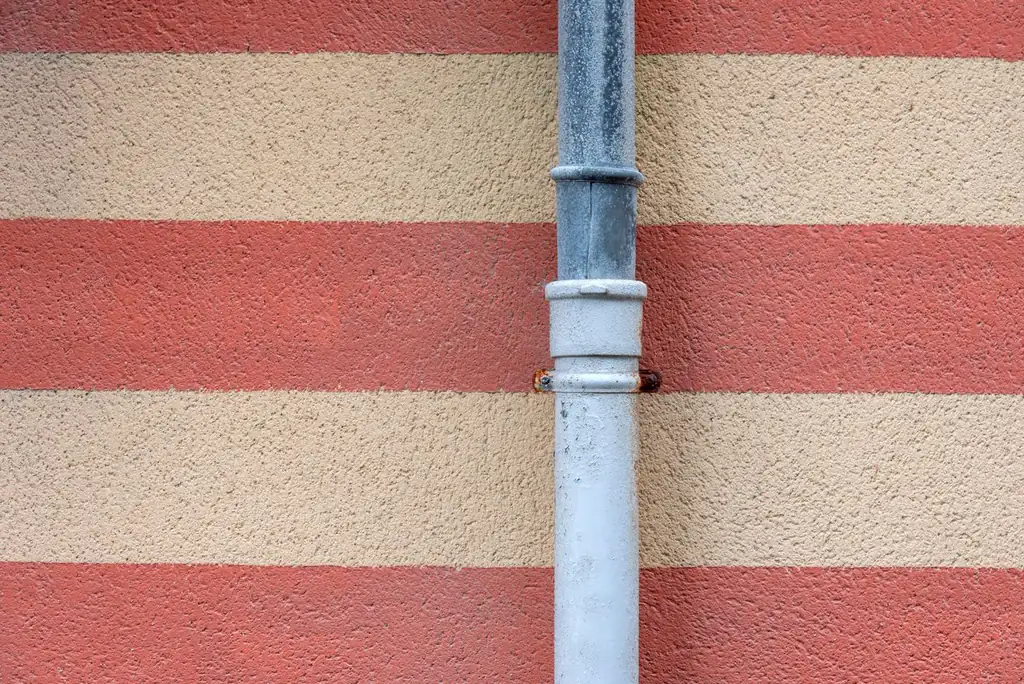
A downspout pulls away from the wall when its straps or brackets loosen, when the weight of water and wind work the fittings apart, or when the joints were never nested and strapped correctly. The fix is to re-secure it with properly spaced straps driven into solid material and to make sure each section nests inside the one below, so the run is not fighting gravity at every seam.
A downspout that has bowed or peeled away from the wall almost always comes down to one of two things: the straps holding it have let go, or the joints were never fastened tightly enough and the run has slowly worked itself loose. Water is heavy and wind is persistent, and together they pull relentlessly on anything not firmly anchored. A downspout is only as secure as whatever holds it to the wall, so the fix is about re-securing the run properly — not just pushing it back and hoping.
Three causes account for nearly every case:
Often it is a combination — a marginal strap, a joint slowly opening, and one bad storm that finishes the job.
Before re-fastening anything, look over the whole run so you fix the real cause and not just the symptom.
| Check | What you are looking for | What it means |
|---|---|---|
| The straps | Loose, missing, corroded, or torn-out supports | Re-fasten or add straps into solid material |
| The joints | Sections separating or fitted the wrong way | Re-seat so each upper piece nests inside the lower |
| The anchor material | Soft, hollow, or rotted wood or siding | The wall itself may need attention before re-strapping |
| The spacing | Long gaps with no support | Add straps so no stretch is left unsupported |
| The top elbow and outlet | A loose connection at the gutter | Re-seat the elbow so the top is not hanging on the straps alone |
Once you know what failed, the repair is straightforward. Push the run flat back against the wall and fasten fresh straps where they are needed. The spacing most installations follow is one near the top, one near the bottom, and one every few feet in between, with extra support on long runs and in windy or freeze-prone regions — the same approach laid out in our guide to downspout brackets and straps. Add supports wherever there is an unsupported gap, and do not rely on the original spacing if it clearly was not enough.
The anchor matters as much as the strap. Fasteners need to bite into something solid — trim, sheathing, or framing behind the cladding — not just thin siding that will pull loose again under the next storm’s load. A strap driven into soft or hollow material is a repair that fails on schedule.
Much of a downspout run is near the ground and easy to reach, but the top strap and the elbow at the gutter mean working at height, sometimes from a tall ladder. Set the ladder on firm, level ground, keep three points of contact, and reposition it rather than leaning out to reach a fastener. If the run climbs a second story, have a helper steady the ladder. The straps are forgiving; a fall is not.
Re-strapping a run whose joints are still separating just delays the next failure. As you push the downspout back, make sure each section nests inside the one below it — the upper section fits inside the lower one — so water stays captured on the inside and the sections are not being levered apart. This is the same seam rule that governs downspout elbows and offsets and it is easy to overlook when you are focused on the straps. A run that is both nested and firmly anchored has nothing left to pull it off the wall.
Most of the time the pipe is fine and only the fastening let go, so re-strapping and re-seating the joints is all it takes. Rebuild only when the sections themselves are damaged or the run keeps coming loose no matter how you anchor it.
If the fascia, trim, or wall material behind the straps is rotted or failing, no strap will hold for long — the loose downspout is really a symptom of deteriorated material behind it. Water escaping a downspout that has pulled away can itself feed that rot, and it also stops carrying roof water where it should, so the loose pipe may be contributing to problems like a downspout backing up in heavy rain. In that case, address the underlying wood or substrate first. A downspout can only be as secure as what it is fastened to.
A downspout pulls away because its supports let go or its joints worked apart, and usually a bit of both. Re-seat the joints so each section nests inside the one below, then fasten well-spaced straps into solid material that will actually hold. Check that the wall behind those anchors is sound, and give the finished run a firm push — if it does not flex, rattle, or sag, it will stay tight to the house through the next storm.
FAQ
Usually because the straps or brackets holding it have loosened or pulled out, and the weight of water plus wind has done the rest. It can also start at the joints — if sections were not nested and secured properly, they work apart and let the run sag and bow off the wall. In short, either the supports let go or the pipe was never held firmly to begin with.
Push the run back flat against the wall, re-seat any joints that have separated so each upper section sits inside the lower one, and fasten fresh straps into solid material — not just soft siding. Add supports where they are missing, typically near the top, near the bottom, and every few feet between. The goal is that the pipe cannot rattle, sag, or bow when you push on it.
A common guideline is one near the top, one near the bottom, and one every few feet in between, with more on long runs or in windy, freeze-prone areas. There is no single correct number because it depends on the length and the material. The real test is whether the run feels solid when you give it a firm push, with no flex or rattle.
Into something solid enough to hold — the fasteners need to bite into structure, not just thin siding that will let go under load. On many homes that means reaching the trim, sheathing, or framing behind the cladding. Driving a strap into soft or hollow material is a big reason downspouts pull away in the first place, so the anchor matters as much as the strap.
Two common reasons. Either the straps are anchored into material too soft to hold, so they work out again, or the joints are still separating and the moving pipe keeps loosening the supports. Check that the fasteners reach solid material and that every section nests correctly inside the one below. A run that is sealed tight and firmly anchored should stay put.
Sometimes. If the fascia, trim, or wall material the straps anchor into is rotted or failing, no strap will hold for long, and the loose downspout is really a symptom of deteriorated material behind it. In that case the fix is the underlying wood or substrate first. A downspout can only be as secure as whatever it is fastened to.
Keep reading
Find where a downspout is really leaking and fix it — reversed joints, loose seams, a leaking outlet, or a cracked section — with the causes and fixes for each.
What downspout brackets and straps do, how far apart to space them, and how to fasten into different wall types so the pipe stays tight and quiet.
How downspout diverters connect a rain barrel — what they do, the main types, how they handle overflow automatically, and the winter step people forget.