DIY vs Professional Pressure Washing
DIY or hire a pro for pressure washing? A comparison by surface, height, and risk — when driveway cleaning is a safe weekend job and when height and siding call for a professional.
Exterior Cleaning
Brick and masonry look tough but their mortar is not — high pressure erodes joints and drives water into the wall. Low pressure, the right cleaner and patience handle most dirt, efflorescence and organic growth without damaging the mortar.
Brick reads as one of the toughest surfaces on a house, which is why so many people aim a pressure washer at it and regret it later. The brick face may shrug off the spray, but the mortar between the bricks is softer by design, and weathered mortar is softer still. High pressure scours those joints out and drives water into the wall. The safe way to clean masonry is almost the opposite of what instinct suggests: low pressure, a cleaner suited to the job, and enough patience to let the solution work. Done that way, ordinary dirt, efflorescence and organic growth come off without touching the mortar.
A masonry wall is a system of two materials with very different jobs. The brick or stone units carry the load and face the weather. The mortar joints bind them, and crucially, mortar is meant to be softer and more sacrificial than the units it holds. That is not a flaw; it lets the joints absorb movement and, when the time comes, be replaced without disturbing the brick.
The trouble for cleaning is that soft, weathered mortar has very little resistance to a concentrated stream of water. A pressure washer that leaves the brick face untouched can carve visible grooves into aged joints, wash out the outer layer of mortar, and open gaps that let water straight into the wall. Once water is inside masonry it has plenty of ways to cause harm: it feeds efflorescence, it fuels freeze-thaw damage in cold climates, and it can reach framing behind the wall.
So the risk in cleaning brick is rarely the brick. It is eroding the mortar and pushing water where it does not belong. Every choice below flows from protecting the joints.
If parts of your mortar are already loose, crumbling or missing, cleaning is not the first job — repointing is. Washing a wall with failing joints only drives more water inside. Fix the mortar first, then clean, not the other way around.
The reliable approach borrows from soft washing: let a cleaning solution do the chemical work, use gentle mechanical help, and keep water pressure low throughout.
Start by protecting the surroundings. Pre-wet plants near the wall and cover the ones you cannot move, and rinse them again afterward, because cleaner runoff can scorch landscaping. Our guide to protecting plants during exterior cleaning covers this in detail.
Rinse the wall gently with plain water first to clear loose dust. Then apply the masonry cleaner from the bottom up to avoid streaking, keep it wet, and give it the dwell time on the label so it can loosen dirt and kill growth. Work a section with the soft brush, following the joints and the brick face without scrubbing hard. Rinse from the top down at low pressure and check the result before moving on.
If you use a pressure washer at all, use it only as a rinse on a low setting with a wide-angle tip, held well back from the wall, and never point a narrow tip at the joints. The choice of tip matters enough that our nozzle guide is worth reading before you start.
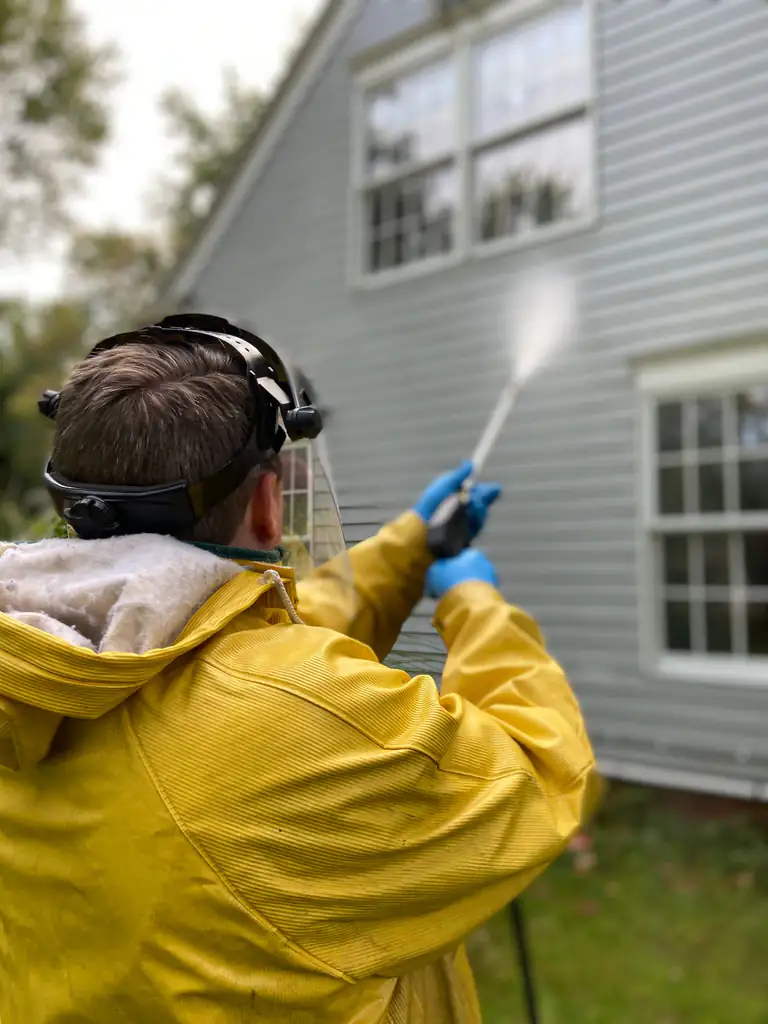
Pressure washing carries real risks. High-pressure spray can injure, wet surfaces cause falls, and water near power lines is dangerous. Roof and second-story work is best left to professionals.
Two specific problems come up on masonry often enough to treat on their own.
The chalky white bloom on brick and foundation walls is efflorescence: mineral salts left on the surface as water that carried them evaporates. It is a symptom of moisture moving through the masonry, not a stain sitting on top of it. Light efflorescence often brushes off dry with a stiff natural or nylon brush, and a masonry-safe cleaner handles heavier deposits. The catch is that it returns as long as water keeps moving through the wall, so lasting relief comes from managing that moisture. We cover the full picture in efflorescence on foundation walls.
Shaded, damp walls, especially north-facing ones, grow green and black film and sometimes moss. The fix is chemical, not mechanical: a masonry-safe solution applied at low pressure, allowed to dwell, then gently rinsed, kills and lifts the growth without grinding the joints. Scrubbing hard or blasting it wastes effort and endangers the mortar. Improving airflow and cutting back nearby plants slows regrowth.
| Problem | Safe approach | What to avoid |
|---|---|---|
| General dirt and grime | Masonry cleaner, soft brush, low-pressure rinse | Narrow high-pressure tips on the joints |
| Efflorescence (white bloom) | Dry brushing first, then masonry-safe cleaner; address the moisture source | Sealing over damp brick, trapping water inside |
| Algae and mildew | Soft-wash solution, dwell time, gentle rinse | Scrubbing hard or blasting the growth off |
| Moss in the joints | Cleaning solution, careful hand removal | Digging it out with wire tools that gouge mortar |
| Loose or missing mortar | Repoint before cleaning | Washing a wall with open joints |
Cleaning brick safely comes down to respecting the mortar. The brick face can take more than the joints between it, and the joints are what hold the wall together and keep water out. Skip the high-pressure blast, reach for a masonry cleaner and a soft brush, give the solution time, and keep any rinse gentle and well back from the joints. Handle efflorescence as the moisture signal it is rather than a stain to scrub away, and treat algae chemically instead of mechanically. Do that, protect the plants below, and your masonry comes clean with its mortar and its water resistance intact.
FAQ
The brick face often is, but the mortar between the bricks usually is not, and the wall is only as sound as its joints. Mortar is softer than the brick around it by design, and years of weather leave the surface of the joints even softer. A high-pressure stream scours that mortar out, opens gaps, and drives water deep into the wall. The brick can look fine while the thing holding it together is being quietly eroded, so treating the wall as indestructible is exactly the mistake to avoid.
That powder is efflorescence, salts that were dissolved in moisture inside the masonry and left behind on the surface as the water evaporated. It signals that water is moving through the wall. Light efflorescence often brushes off dry with a stiff natural or nylon brush, and a masonry-safe cleaner handles more stubborn deposits. But because it is a moisture symptom, it tends to return until the underlying water source is addressed, so cleaning treats the surface while the real fix is drainage and keeping water out.
Both call for real caution. Chlorine bleach can lighten organic stains but harms plants in the runoff and can leave its own residue, so it is used sparingly, well diluted, and with landscaping protected. Strong acids are sometimes sold for masonry but can burn skin, etch the brick, discolor it and damage mortar if misused, and they are easy to misuse. For routine dirt and growth, a cleaner made for masonry is safer and usually enough. Leave aggressive acid work to people who do it for a living.
Shaded, damp walls grow algae, mildew and sometimes moss, and the answer is chemical rather than mechanical. A masonry-safe cleaning solution applied at low pressure, given time to work and then gently rinsed, kills and lifts the growth without grinding at the mortar. This is essentially soft washing, and it is the right approach for masonry because it does the work with the solution instead of force. Improving airflow and cutting back nearby plants slows how fast the growth returns.
Not if you keep the pressure low and let cleaners do the work. Damage comes from force and from harsh chemicals, not from cleaning itself. A gentle wash with the right solution, a soft or natural-bristle brush and a low-pressure rinse removes dirt and growth while leaving sound mortar intact. The joints that fail during cleaning were usually already weak, which is worth knowing before you start, because cleaning can reveal repointing that the wall needed anyway.
Sometimes, but not automatically. A breathable masonry sealer can help certain walls shed water while still letting trapped moisture escape, but the wrong sealer traps moisture inside and makes problems like efflorescence and freeze damage worse. Sealing is a decision that depends on the specific wall, its exposure and its condition, so it is worth understanding what a sealer will and will not do before applying one, rather than treating it as a default finishing step.
Height is the clearest line. Anything above the first story, on a ladder over uneven ground, or on a large multi-story facade is genuinely hazardous and worth handing off. Delicate or historic masonry, soft old brick, and walls that need acid work or repointing also belong with someone experienced, because the cost of a mistake on masonry is high and hard to reverse. Low, sound, ground-level brick with ordinary dirt is the realistic DIY zone.
Keep reading
DIY or hire a pro for pressure washing? A comparison by surface, height, and risk — when driveway cleaning is a safe weekend job and when height and siding call for a professional.
Clean a wood deck without wrecking the boards — why to skip high pressure, the brush-and-cleaner method, drying time, and how to time resealing.
The pressure-washing mistakes that cause the most damage and injuries — wrong surfaces, spraying behind siding, too much pressure, too close, wrong tip — and how to avoid each.