Pressure Washing Mistakes to Avoid
The pressure-washing mistakes that cause the most damage and injuries — wrong surfaces, spraying behind siding, too much pressure, too close, wrong tip — and how to avoid each.
Exterior Cleaning
DIY pressure washing makes sense for ground-level hardscape you can reach safely; professionals earn their place on height, delicate surfaces, and large soft-wash jobs. The deciding factors are not price but access, surface, and risk — if the job means a ladder, a roof, or spraying the house itself, lean professional.
DIY pressure washing is a reasonable weekend job for ground-level hardscape you can reach on solid footing — a concrete driveway, a walkway, a patio. Professionals earn their place the moment the work involves height, delicate surfaces, or soft-washing the house itself. The honest deciding factors are not price but access, surface, and risk: if the job means a ladder, a roof, or spraying the walls of the house, lean toward hiring it out.
People frame this as a cost question, but cost is the least reliable guide. A DIY driveway cleaning is genuinely cheaper than hiring one out. A DIY roof cleaning that ends in a fall, or a DIY siding wash that traps water behind the panels, is far more expensive than any quote. So the useful comparison sorts jobs by what they demand, not by the sticker.
| Factor | Points to DIY | Points to a professional |
|---|---|---|
| Height | Ground level, no ladder | Ladder, roof, or second story |
| Surface | Dense hardscape (concrete, pavers) | Roof, siding, wood, delicate surfaces |
| Method | Straightforward pressure washing | Large-area soft washing |
| Size | Small, single area | Whole house or extensive |
| Your comfort | Confident and equipped | Any real doubt or inexperience |
| Consequence of error | Minor, cosmetic | Costly damage or injury |
Read the table top to bottom and a pattern appears: DIY wins when the job is low, hard, small, and forgiving. A professional wins when it is high, delicate, large, or unforgiving.
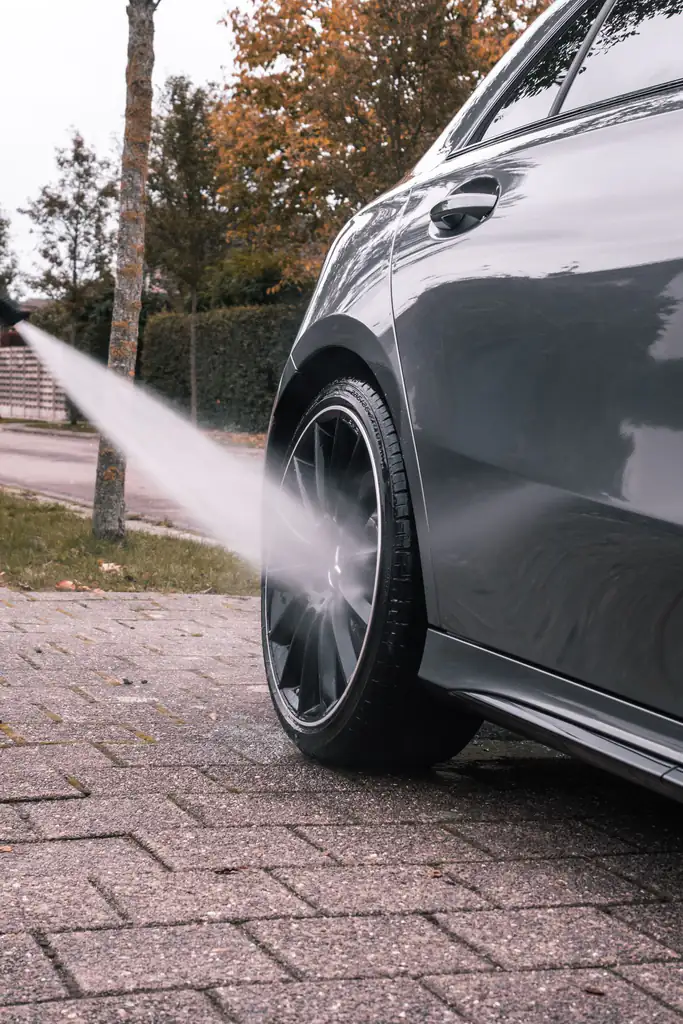
Ground-level hardscape is the natural DIY zone. Concrete driveways, walkways, and patios are dense masonry with no gaps water can slip behind, they tolerate real pressure, and cleaning them keeps you standing on stable ground. With the right tip, a steady distance, and even overlapping passes, this is a satisfying job to do yourself. The driveway and patio cleaning guide covers the technique, and knowing which nozzle to fit — from the nozzles and tips guide — prevents most of the accidental etching that trips up beginners.
The prerequisites for a good DIY outcome:
Three situations shift the balance decisively toward hiring out.
Height. This is the real hazard in exterior cleaning, and it is not really about skill — it is about falls. Roofs, second stories, and anything needing a ladder put you in the most dangerous position, made worse by a pressure washer’s kickback. Professionals bring fall protection and do this daily. Cleaning a roof, in particular, is a soft-wash-at-height job best left to them, as the roof cleaning guide explains.
Delicate surfaces and the house itself. Siding, wood, painted trim, and older masonry all damage under pressure and need soft washing done correctly. Someone who does this regularly knows which surfaces cannot take force and applies the right chemistry — the difference between a clean house and water trapped behind the siding.
Scale and soft washing. A whole-house soft wash over a large area is a lot of careful, repetitive work with chemicals and runoff to manage. Professionals do it faster and with more consistent results, and they handle the solution and rinse-off with practiced care.
The single biggest reason to hire out a pressure-washing job is height. Wet roofs and ladders cause serious falls, pressure-washer kickback makes a ladder more unstable, and water near power lines and outlets is dangerous. If the job needs a ladder or roof access and you are not fully equipped and confident, that is the job to hand to a professional.
DIY pressure washing
Professional service
Whether you DIY or hire out, everything washed off runs into the landscaping and down through the gutters and downspouts. Wet and cover plants beforehand, rinse them afterward, and clear the gutters once the job is done so the runoff you created has a clear path away from the house.
You do not need to weigh cost at all to make this call. Ask:
If all three point the safe way — reachable, hard, and within your comfort — DIY is a sensible choice, and you will likely do a fine job. If any of them points to height, delicate surfaces, or doubt, the money spent on a professional is buying safety and avoided damage, not just labor. That, far more than the price on the quote, is the comparison worth making.
FAQ
It depends on the job, not just the cost. Ground-level hardscape you can reach safely is a reasonable DIY task. Height, delicate surfaces, and large soft-wash jobs on the house itself are where professionals earn their place — they bring the right method, fall protection, and experience with surfaces that damage easily.
Mainly dense hardscape at ground level — concrete driveways, walkways, and patios, and pavers with the right technique. These tolerate real pressure and keep you on stable footing. Almost anything attached to the house is better soft-washed, and anything requiring a ladder raises the risk sharply.
When the job involves height, a roof, or the siding of the house, when it needs soft washing over a large area, or when you are not confident on a ladder. Height is the real hazard, and professionals bring fall protection and know which surfaces cannot take pressure.
Sometimes, but not always once you account for renting or buying the machine, the time, and the risk of damage or injury. A single mistake — stripped roof granules, water behind siding, a fall from a ladder — can cost far more than the job you were trying to save on.
Yes, easily, which is a large part of the case for hiring out certain jobs. The common DIY mistakes — wrong surface, spraying up behind siding, too much pressure, too close — all cause real damage. On the house itself, soft washing by someone experienced avoids most of that risk.
Mainly three things: work safely at height with fall protection, apply soft washing correctly to delicate surfaces, and recognize which surfaces cannot take pressure before damaging them. They also handle large jobs faster and manage runoff and chemicals with more experience.
Ask three questions — does the job need a ladder or roof access, is the surface delicate or the house itself, and are you confident and equipped to do it safely? If any answer points to height, delicate surfaces, or doubt, lean professional. If it is reachable hardscape, DIY is reasonable.
Keep reading
The pressure-washing mistakes that cause the most damage and injuries — wrong surfaces, spraying behind siding, too much pressure, too close, wrong tip — and how to avoid each.
A surface-by-surface guide to what you should never pressure wash — roofs, siding, wood, windows, brick mortar — and the soft-wash alternative that is safe.
Soft wash vs pressure wash compared — how each works, which surfaces suit which method, and why the wrong choice can strip granules, gouge wood, or force water inside.