DIY vs Professional Pressure Washing
DIY or hire a pro for pressure washing? A comparison by surface, height, and risk — when driveway cleaning is a safe weekend job and when height and siding call for a professional.
Exterior Cleaning
Rust stains on concrete, siding or masonry come from metal, fertilizer or irrigation water and will not wash off with plain pressure. A dedicated rust remover dissolves them, but the products are acidic, so protect plants and surrounding surfaces and follow the label.
Rust stains do not come off with plain water pressure, no matter how long you spray. The orange has soaked into the surface and bonded chemically with it, so lifting it takes a dedicated rust remover that dissolves the iron oxide. Those removers work, but they are acidic — protect your plants and nearby surfaces, and follow the label closely.
Before you treat a stain, it helps to know its source, because that is how you keep it from returning. Outdoor rust almost always traces back to one of three culprits.
Identifying which one you are dealing with tells you whether you also need to move a chair, sweep granules off the pavement, or point a sprinkler head somewhere else.
It is tempting to assume a stain is just dirt and that enough pressure will win. Rust is different. When iron oxidizes on or in a porous surface like concrete, it does not sit on top the way mud does — it penetrates the pores and forms a chemical bond with the material. A pressure washer scours the surface, but it has no way to break that bond. You will lighten the surrounding grime and make the rust look even more obvious by comparison, but the stain itself stays.
This is why rust is fundamentally a chemistry problem, not a force problem. You need something that reacts with iron oxide and converts it into a form that rinses away. That is exactly what a rust remover does.
Most rust removers are acid based. Milder products often use oxalic acid, which handles light-to-moderate stains on concrete. Heavier stains sometimes call for stronger acids. The acid reacts with the iron oxide, loosening its grip so a rinse can carry it off.
The same chemistry that dissolves rust can also harm you, your plants and your surfaces. Acids burn skin and eyes, can etch or lighten concrete and masonry if left too long, scorch foliage, and give off fumes in enclosed spaces.
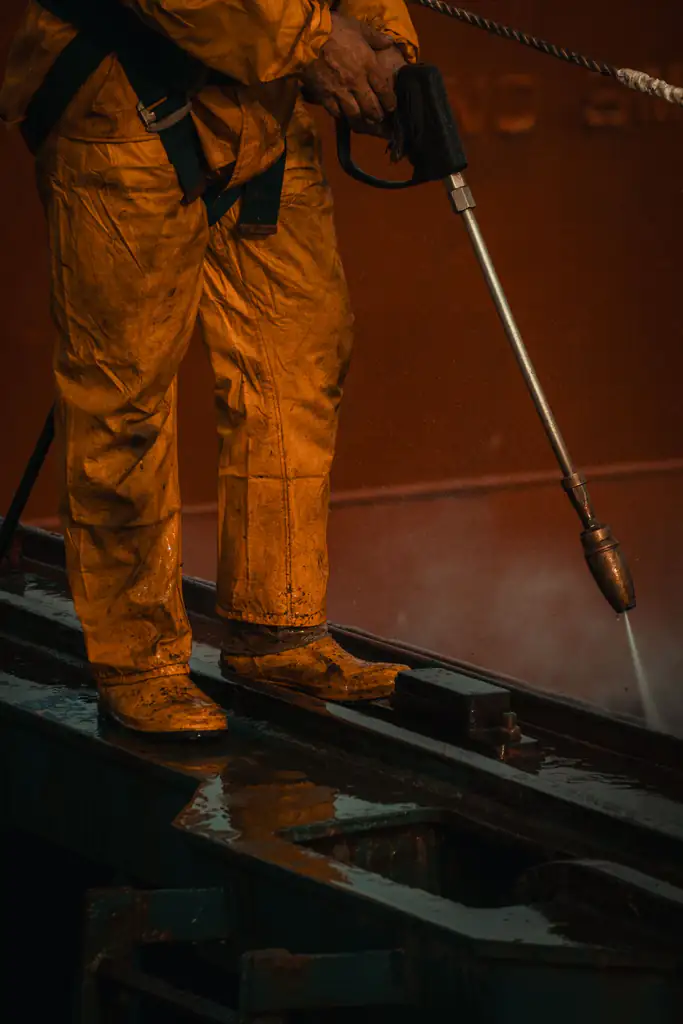
Pressure washing and cleaning chemicals carry real risks. High-pressure spray can injure, wet surfaces cause falls, and cleaners can harm skin, eyes and plants. Roof and second-story work is best left to professionals.
Never mix a rust remover with bleach or other cleaners. Acid combined with chlorine bleach can release toxic gas. Use one product at a time, rinse fully between products, and read every label.
| Stain source | Typical severity | Approach |
|---|---|---|
| Fertilizer spatter | Light to moderate | Oxalic-acid remover, single treatment usually enough |
| Furniture or railing bleed | Moderate | Acid remover; also seal or move the metal |
| Sprinkler / iron water | Moderate to heavy, recurring | Remover plus fixing the water source |
| Rebar or structural metal | Heavy, deep | May need stronger acid or professional help |
Where the rust sits on a driveway or patio, fold the treatment into a broader clean. Our driveway and patio cleaning guide walks through the surrounding surface so the spot you treat does not end up looking like a bright patch on dingy concrete.
Rust is chemistry, not muscle. Plain pressure will never move it, but an acidic rust remover, used carefully and matched to the stain, will. Respect the product — protect your skin, your plants and your surfaces — fix whatever is bleeding the rust in the first place, and the orange will stay gone.
FAQ
Rust is not surface dirt sitting on top of the concrete — it is iron oxide that has soaked into the pores and chemically bonded with the surface. Water pressure scrubs the surface but cannot break that bond, so the orange stain stays put no matter how long you blast it.
A dedicated rust remover, typically acid based, dissolves the iron oxide so it can be rinsed away. Oxalic-acid products are common for lighter stains; stronger acids exist for heavy stains. Match the product to the stain and always follow the label dilution and dwell time.
They are acidic, so yes, they demand respect. They can burn skin and eyes, damage plants, etch some surfaces and give off fumes. Wear gloves and eye protection, work in ventilation, protect surrounding plants and materials, and never mix them with other cleaners.
Used correctly, most are fine on concrete, but strong acids can etch or lighten the surface if left too long or used too concentrated. Test a small hidden spot first, keep to the label's dwell time, and rinse thoroughly so no acid keeps working after you are done.
Usually three sources — metal objects like furniture, railings or rebar that corrode and bleed; fertilizers containing iron that splash onto concrete; and irrigation or well water high in iron that leaves orange deposits where sprinklers hit. Identifying the source helps you stop the stain returning.
Mild stains sometimes respond to household oxalic or citric acid sources, but results are inconsistent and heavy stains usually need a purpose-made remover. Whatever you use, protect plants and test first — homemade does not mean harmless, since these are still acids.
Fix the source. Move or seal corroding metal, keep iron fertilizer off hard surfaces, and adjust sprinklers so iron-rich water does not spray concrete. Sealing the concrete after cleaning also makes future stains sit on the surface where they are easier to remove.
Keep reading
DIY or hire a pro for pressure washing? A comparison by surface, height, and risk — when driveway cleaning is a safe weekend job and when height and siding call for a professional.
Clean a wood deck without wrecking the boards — why to skip high pressure, the brush-and-cleaner method, drying time, and how to time resealing.
The pressure-washing mistakes that cause the most damage and injuries — wrong surfaces, spraying behind siding, too much pressure, too close, wrong tip — and how to avoid each.