How Gutters Work (and the Main Reasons They Fail)
A plain-English explanation of how residential gutters move roof water away from your home, the parts involved, and the handful of reasons gutters overflow, sag or leak.
Gutters

Most homes need gutters, but not all — houses with wide overhangs, well-draining sandy soil that already slopes away, and no basement can sometimes manage without. Short eaves, a basement or crawl space, or flat surrounding ground make gutters important.
The short answer: most homes should have gutters, but a few genuinely do not need them. If your house has wide roof overhangs, sits on fast-draining sandy soil that already slopes away from the walls, and has no basement, you may be able to skip them. But short eaves, a basement or crawl space, or flat ground around the foundation tip the balance firmly toward needing gutters.
Gutters are not decoration. Their job is to catch roof runoff and carry it away from the foundation before it can erode soil, splash siding, or find its way into a basement. Whether you need that protection comes down to a handful of specific conditions around your particular house.
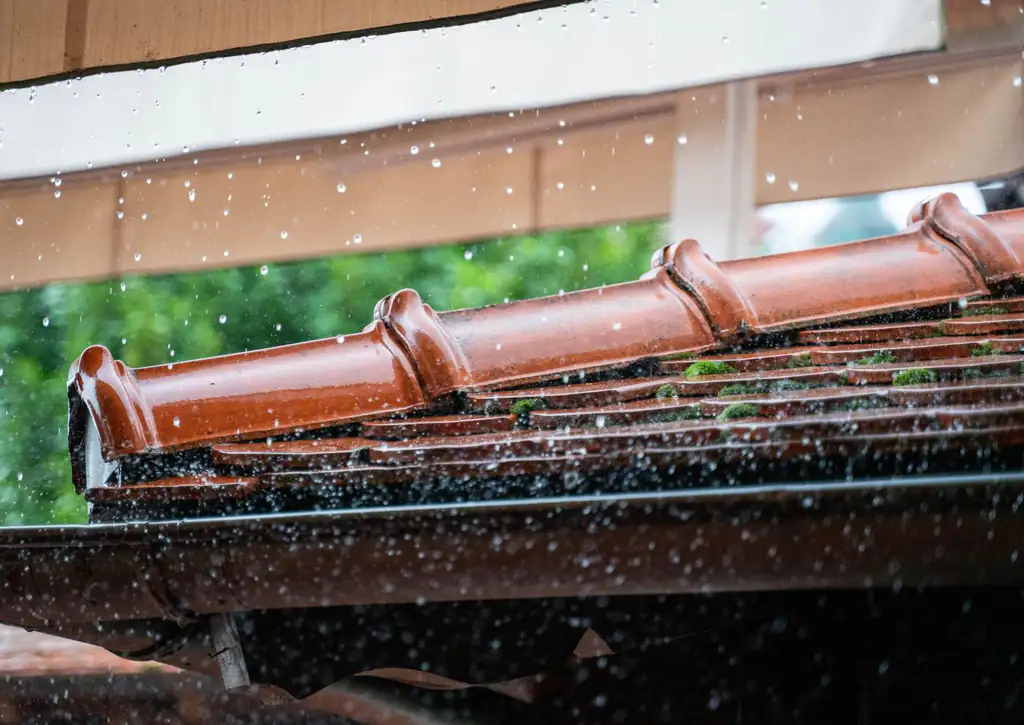
When rain hits your roof, gutters intercept it at the eave and route it to downspouts that discharge it a safe distance from the walls. Without them, all that water free-falls to the ground in a line along the drip edge, concentrating right where the foundation is most vulnerable. Our explainer on how gutters work covers the mechanics in more depth.
The question of whether you need them is really the question of whether your house can manage roof runoff safely without them. Four factors decide that.
A wide overhang throws water farther from the walls, reducing how much lands against the foundation. A house with generous eaves has a real head start. A house with short or nearly flush eaves drops water right at the base of the wall, where it does the most harm. Our piece on roof overhang and eaves explains how much difference the projection makes.
Soil decides what happens after water hits the ground. Sandy, well-draining soil absorbs and moves water away quickly, easing the load on your foundation. Dense clay soil sheds water slowly and lets it pool, holding moisture against the walls. The same rainfall is far more dangerous over clay than over sand.
If the grade already slopes away from the house on all sides, gravity is doing some of the gutters’ work for you. If the ground is flat, or worse, slopes back toward the foundation, water collects exactly where you least want it. Flat surrounding ground is one of the strongest reasons to install gutters. Our guide to water pooling near the foundation shows what that looks like when it goes wrong.
A basement or finished crawl space raises the stakes dramatically. There is now a below-grade space for water to seep into, and the cost of getting it wrong is high. A home on a slab with no basement is more forgiving of imperfect drainage, though not immune.
These factors interact. One favorable condition rarely offsets a serious problem elsewhere. Wide overhangs will not save a basement home on flat clay soil, for instance. Weigh them together, not in isolation.
Here is how the conditions typically stack up.
| Condition | Points toward skipping gutters | Points toward needing gutters |
|---|---|---|
| Roof overhang | Wide, generous eaves | Short or flush eaves |
| Soil | Sandy, fast-draining | Dense clay, slow-draining |
| Ground slope | Slopes away from house | Flat or slopes toward house |
| Foundation | Slab, no basement | Basement or crawl space |
| Climate | Dry, light rainfall | Frequent or heavy rain |
If your answers cluster in the left column, going without gutters may be reasonable. If any land in the right column, especially a basement or flat clay ground, gutters move from optional to important.
You do not have to choose all or nothing. Partial gutters are a practical compromise: install them only where they earn their keep and leave the rest of the roofline bare. Common spots include:
This targets your money at the specific places runoff causes trouble, which often makes sense on homes that are borderline cases.
Judging runoff means watching the roofline in the rain and sometimes climbing to inspect. Do your storm observation from the ground under cover. Save any close-up eave inspection for dry conditions, use a stable ladder on level footing, and get help or a professional for tall or steep roofs.
Most homes benefit from gutters, but a house with wide overhangs, sandy soil that drains and slopes away, and no basement can sometimes do without. Short eaves, clay soil, flat ground, or a basement swing the decision the other way. When you fall in between, partial gutters let you protect the vulnerable spots without wrapping the whole house. Look at your own overhang, soil, slope, and foundation together, and the right call becomes clear.
FAQ
Some can. Homes with wide overhangs, fast-draining sandy soil, ground that already slopes away, and no basement sometimes manage fine. But those conditions have to line up; most homes do not meet all of them.
Roof runoff drops straight to the ground, splashing siding and eroding soil at the foundation. Over time that can push water toward a basement or crawl space and undermine the footing.
They help by throwing water farther from the walls, but they do not control where it lands or move it away from the foundation. On flat ground near a basement, overhangs alone are usually not enough.
Yes. Sandy soil drains quickly and moves water away, easing the load. Dense clay sheds water slowly and lets it pool against the foundation, which makes gutters much more important.
Absolutely. Partial gutters over doorways, high-traffic paths, and the sides facing the foundation's weak points are a common compromise when full coverage is not necessary.
Often less so, but even dry regions get occasional heavy storms. The concern is what those infrequent downpours do to the foundation, not the average rainfall.
It can raise questions for buyers and inspectors, especially where gutters are expected. If your home genuinely does not need them, be ready to explain why the drainage works without them.
Keep reading
A plain-English explanation of how residential gutters move roof water away from your home, the parts involved, and the handful of reasons gutters overflow, sag or leak.
How gutter color and profile shape curb appeal — matching trim, roof, or contrasting, and the color limits of each material.
How fascia and soffit rot when water gets behind the gutter, and how repair fixes the source, the wood, and the gutter grip.