How to Remove an Ice Dam Safely
The safe way to remove an ice dam is limited — rake from the ground and call a pro to steam an active leak. Never climb, chip, or use flame. A step guide.
Ice Dams & Winter Water
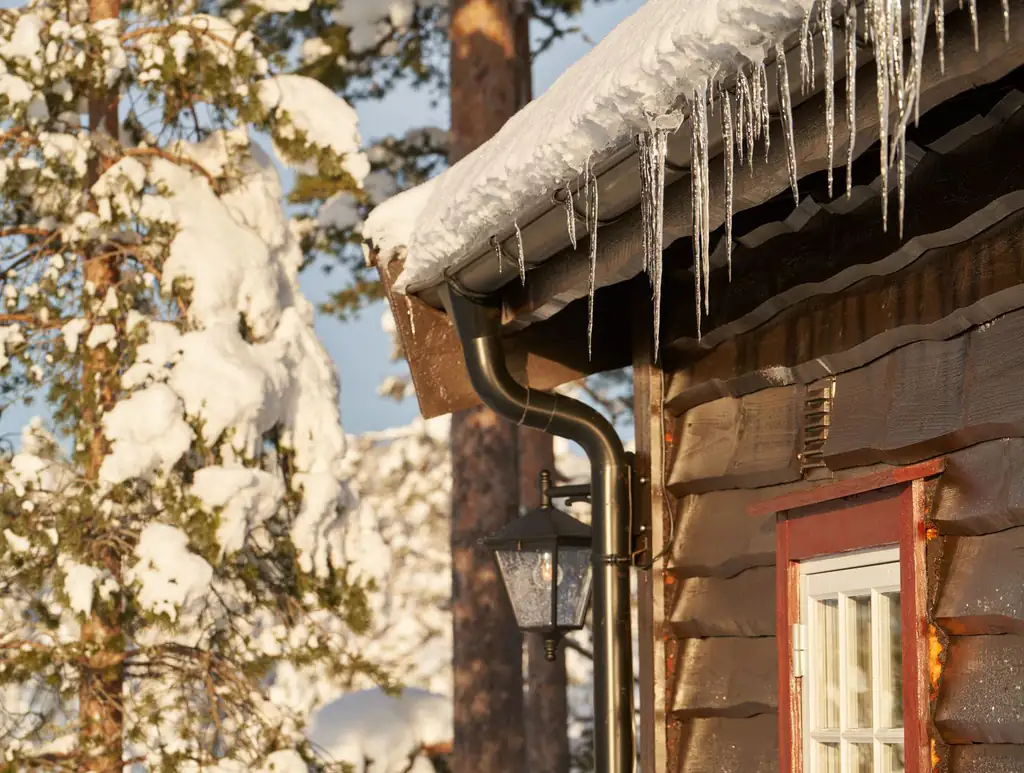
A roof rake pulls snow off the lower roof edge from the ground, reducing the snow that feeds ice dams and some of the load on the roof. Used from the ground it's a safe tool; used from a ladder or roof it isn't. Heavy or drifting snow load is a separate structural concern.
A roof rake is a long-handled tool that lets you pull snow off the lower edge of your roof while standing safely on the ground. Clearing that band of snow near the eave removes some of the material that feeds an ice dam and takes a little weight off the roof. Used from the ground, it’s one of the safer winter roof tools you can own. Used from a ladder or the roof itself, it stops being safe at all. And heavy or drifting snow load — the risk that too much snow overwhelms the structure — is a separate concern that deserves its own attention.
Picture the lower few feet of your roof, the band just above the eave. That’s where meltwater from a warm roof runs down and refreezes into an ice dam. It’s also where a roof rake reaches. By pulling the snow off that lower band from the ground, you remove some of the snow that would otherwise melt and feed the dam, and you shed a bit of weight at the same time.
Two things to keep in mind. First, raking is a supporting move, not a cure. Ice dams form because heat escaping into the attic warms the roof and melts snow; if you don’t address that heat, dams can still form even on a raked roof. Raking works best alongside the attic fixes covered in how to prevent ice dams. Second, you’re not trying to scrape the roof bare. Clearing the accessible lower band is the goal; a thin residual layer is fine and safer than aggressively scraping the shingles.
Do not climb onto an icy or snow-covered roof. It is extremely dangerous, and chipping at ice can damage the roof and cause falls. Serious ice-dam removal is a job for professionals with the right equipment.
The whole point of a roof rake is that it keeps you on the ground. Honor that:
Roof rakes suit some homes better than others. On a single-story house with a modest roof, the lower edge is easy to reach from the ground. On tall or steep roofs, much of the roof is simply out of reach, and no rake makes climbing safe. If you can't work comfortably from the ground, that's a sign to rely on attic prevention and, when needed, a professional — not a longer ladder.
It’s easy to lump “snow on the roof” into one category, but there are really two separate concerns. One is ice dams, where the issue is melting and refreezing at the edge. The other is snow load — the sheer weight of accumulated snow bearing down on the structure. A roof rake helps a little with load by removing snow from the edge, but it doesn’t clear the bulk of a heavily loaded roof, and it isn’t the tool for a genuine structural worry.
Two factors make load worse than depth alone suggests:
There’s no single universal “too much” number, because it depends on the roof’s design, the snow’s density, and how it’s distributed. When in doubt, don’t go up to investigate — read the indoor signs and, if they’re present, call a professional.
| Sign | What it may mean | What to do |
|---|---|---|
| New cracks in interior walls or ceilings | Structure flexing under load | Take seriously; consult a professional |
| Doors or windows suddenly sticking | Frame distortion from load | Investigate promptly; don’t climb up |
| Creaking, popping, or cracking sounds | Structure under stress | Treat as urgent; get an assessment |
| Visible sagging or bowing of the roofline | Possible overload | Urgent — professional assessment |
| Heavy drifts near walls, valleys, roof steps | Concentrated, uneven load | Monitor; professional help if concerned |
If you see these after a big or wet storm, treat them as reasons to bring in a professional, not to grab a shovel and climb. A qualified contractor has the equipment and training to reduce a dangerous load safely.
A roof rake is a genuinely useful winter tool — as long as you use it the way it’s meant to be used: from the ground, on the lower edge of the roof, to remove some of the snow that feeds ice dams and a bit of the load. It is not a license to climb, and it’s not a substitute for fixing the warm roof that causes dams in the first place. Snow load is a related but separate structural concern, driven by wet snow and drifting, and one where the safe response to worry is a professional, not a shovel and a ladder. Pair ground-level raking with the attic work in how to prevent ice dams, and you’re managing winter roofs the safe way.
FAQ
A roof rake is a long-handled tool that lets you pull snow off the lower few feet of your roof while standing on the ground. Clearing that band near the eave removes some of the snow that feeds an ice dam and takes a little weight off the roof. It's a supporting tool for ice-dam prevention, not a cure for the warm roof that causes dams.
Use it only from the ground, with both feet planted. Work the lower edge of the roof, watch overhead for power lines, and stand clear of snow and ice sliding down as you pull. Never use a roof rake from a ladder or the roof itself, and don't try to scrape the roof clean down to the shingles.
No. Raking removes snow near the eave, which helps, but ice dams form because heat escaping into the attic warms the roof and melts snow. If you don't address that heat with air-sealing, insulation, and ventilation, dams can still form. Think of raking as useful triage that works alongside the real attic fixes.
There's no single universal number — it depends on the roof's design, the snow's water content, and drifting. Wet, dense snow weighs far more than the same depth of dry powder. If you're worried about the load, especially after a big or wet storm, don't climb up to check; watch for warning signs indoors and consult a professional.
Indoor signs include new cracks in interior walls or ceilings, doors or windows that suddenly stick, and creaking or popping sounds from the structure. Sagging rooflines or bowing are serious. If you notice these after heavy snow, treat it as urgent and get a professional assessment rather than going up yourself.
Wind piles snow unevenly, so parts of a roof — often near walls, valleys, and roof steps — can carry much deeper, heavier drifts than the average depth suggests. That concentrated load is harder on the structure than a uniform blanket. Drifting is a common reason one section of a roof becomes overloaded while the rest looks fine.
No. A snow-covered roof is dangerously slippery and shoveling from it invites serious falls, and you can gouge the roof in the process. Rake from the ground for the lower edge, and if the overall load is a structural concern, call a professional who has the equipment and training to handle it safely.
Keep reading
The safe way to remove an ice dam is limited — rake from the ground and call a pro to steam an active leak. Never climb, chip, or use flame. A step guide.
A roof rake pulls snow off the lower roof from the ground, starving an ice dam of the snow that feeds it. How to use one safely and where it helps.
Why gutters and downspouts fill with ice — clogs, poor slope, and meltwater refreezing at the cold eave. The weight risk, and the real fixes for a symptom.