Attic Insulation and Ice Dams
Attic insulation helps stop ice dams by keeping the roof deck cold — but only after air-sealing. The right order of air-seal, insulate, ventilate, explained.
You prevent ice dams by keeping the roof deck cold and even — sealing attic air leaks, adding insulation, and improving attic ventilation so escaping heat doesn't melt the snow above. Managing snow and keeping gutters clear helps, but the durable fix is in the attic, not on the roof edge.
The most reliable way to prevent ice dams is to keep your roof deck cold and even all winter. That means stopping warm indoor air from leaking into the attic, adding enough insulation on the attic floor, and letting cold outside air flow under the roof through soffit and ridge vents. When the whole roof stays cold, the snow on top doesn’t melt from below, so there’s no meltwater to run down and refreeze into a dam at the edge. Managing snow and keeping gutters clear help around the margins, but the durable fix lives in the attic, not on the roof edge.
Ice dams run on a temperature split. The upper part of your roof sits over a warm attic; the eave, or overhang, hangs out past the exterior wall over open air and stays cold. When heat warms the upper roof, snow melts, the water trickles down to that cold eave, and it refreezes into a ridge of ice. That ridge traps more water behind it, and the trapped water can back up under the shingles. If you want the full mechanism step by step, our guide on how ice dams form walks through it.
Prevention, then, comes down to one idea: erase the temperature split. Keep the entire roof deck cold, and snow stays frozen instead of melting and refreezing. Almost everything that actually works traces back to this principle. Almost everything that doesn’t work ignores it.
Three attic measures do the heavy lifting, and the order matters.
Air-sealing comes first. Warm, moist air escapes the living space through gaps you can’t see: around recessed light fixtures, the attic hatch or pull-down stairs, plumbing and vent stacks, wiring penetrations, and the top plates of interior walls. That leaking air carries heat straight to the roof deck and often matters more than insulation R-value alone. Sealing those gaps with appropriate materials is usually the highest-value step.
Insulation comes second. Once the leaks are sealed, insulation on the attic floor slows the heat that still wants to rise from the rooms below. Recommended amounts vary by climate, so it’s worth checking guidance for your region rather than guessing. The goal is a consistent, generous layer with no thin spots — especially out near the eaves, which tend to get shortchanged.
Ventilation comes third. Soffit-to-ridge airflow flushes cold outside air under the roof deck and carries away any heat and moisture that made it up there. Intake vents low at the soffits and exhaust vents high at the ridge let cold air wash the underside of the roof. Ventilation only works if the intake path stays open, which is where a lot of homes quietly fail.
These three measures work as a system, not a menu. Air-sealing without ventilation can trap moisture; insulation packed over the soffit vents chokes off the airflow it's supposed to support. If dams keep coming back after DIY attempts, an energy audit or infrared attic scan can show exactly where heat and air are escaping so the money goes where it counts.
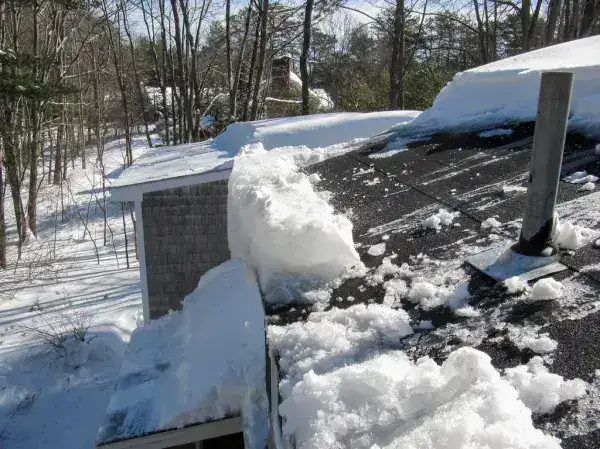
You can’t control the weather, but you can reduce the snow that feeds a dam. A roof rake — a long-handled tool used from the ground — lets you pull snow off the lower few feet of roof without leaving solid footing. Clearing that band near the eave removes some of the raw material a dam needs.
Treat this as a supporting move, not the main event. Raking helps most in a heavy-snow stretch or on a roof section you already know is prone to dams. Keep both feet on the ground, watch for overhead power lines, and stand clear of snow and ice sliding off. For more on the tool and on snow load, see roof rakes and snow load.
Clean gutters are worth having, just not for the reason people assume. A gutter packed with leaves and standing water freezes into a solid block quickly and gives ice a head start right at the cold edge. Clearing debris before winter removes that head start. If you’re unsure of the timing, our guide on how often to clean gutters can help you plan.
What clean gutters won’t do is change the temperature of your roof. A house with no gutters at all can still grow a thick dam at the eave, because the edge itself is the cold zone. So clear the gutters, then put your real effort into the attic.
| Approach | Does it prevent dams? | Why |
|---|---|---|
| Air-sealing attic leaks | Yes — foundational | Stops warm air from reaching and warming the roof deck |
| Adding attic-floor insulation | Yes, with air-sealing | Slows heat rising from the living space |
| Soffit-to-ridge ventilation | Yes, as part of the system | Keeps the underside of the deck cold and dry |
| Roof raking from the ground | Partly — supporting role | Removes snow that feeds a dam near the eave |
| Keeping gutters clear | Marginally | Prevents a frozen block at the edge; no effect on roof temperature |
| New or bigger gutters | No | Gutter size doesn’t stop snow from melting and refreezing |
| Heat cables at the eave | Narrowly | Melts a channel through ice; doesn’t fix the warm roof |
Do not climb onto an icy or snow-covered roof. It is extremely dangerous, and chipping at ice can damage the roof and cause falls. Serious ice-dam removal is a job for professionals with the right equipment.
Prevention should never put you on a ladder against a frozen roof. If a dam has already formed and is leaking, that’s a removal problem, not a prevention one — see removing ice dams safely.
Preventing ice dams isn’t about fighting ice at the roof’s edge. It’s about denying the dam its fuel by keeping the whole roof deck cold: seal the air leaks, insulate the attic floor, and let cold air ventilate under the deck. Rake snow from the ground and keep gutters clear as backup, but understand those are supporting acts. The lasting fix is in the attic. If your gutters are already sagging or pulling loose from ice, that’s worth reading about too — see the signs your gutters are failing.
FAQ
There isn't one magic step, but the highest-value move is usually air-sealing the leaks between your living space and the attic. Warm, moist air escaping through gaps around lights, the attic hatch, and plumbing stacks is often what warms the roof deck and starts the melt-refreeze cycle. Insulation and ventilation build on that foundation.
It helps, but insulation by itself is rarely enough. If air is still leaking up through gaps, warm air bypasses the insulation and reaches the roof. Most homes need air-sealing first, then adequate insulation, and then balanced ventilation working together. Treating any one of the three in isolation tends to disappoint.
Neither addresses the cause. Gutter guards can keep debris out so water drains, but they don't change roof temperature. Heat cables can melt a drainage channel through ice at the eave, but they use electricity all winter, need correct installation, and don't fix the warm roof. Think of them as narrow tools, not prevention.
Ice dams need a temperature split — a warm upper roof that melts snow and a cold eave that refreezes it. If the whole roof deck stays cold and even, the snow doesn't melt from below in the first place, so there's no meltwater to run down and freeze at the edge. Keeping the deck cold is the core of prevention.
A roof rake is a useful supporting tool. Pulling snow off the lower few feet of roof from the ground removes some of the material that feeds a dam. It's best used alongside attic fixes, not instead of them, and only ever from the ground — never from a ladder or the roof.
Some things, yes. You can rake snow from the ground and keep an eye on problem eaves. But major air-sealing, insulation, and ventilation work is easier and safer to plan for milder weather, when a contractor or energy auditor can get into the attic comfortably. Winter is mostly for triage; the real prevention work happens off-season.
Look for warm spots after a snowfall — bare patches on the roof over the house while neighboring shaded areas stay covered can hint at heat loss. For a real answer, an energy audit or infrared attic scan pinpoints exactly where warm air is escaping so you're not guessing.
Keep reading
Attic insulation helps stop ice dams by keeping the roof deck cold — but only after air-sealing. The right order of air-seal, insulate, ventilate, explained.
The attic cure for ice dams — air-seal leaks first, insulate the attic floor, then balance soffit-to-ridge ventilation to keep the roof deck cold. Why all three matter.
The variables that explain why neighboring roofs differ on ice dams, from attic heat loss and sun exposure to pitch, complexity, and snow load.