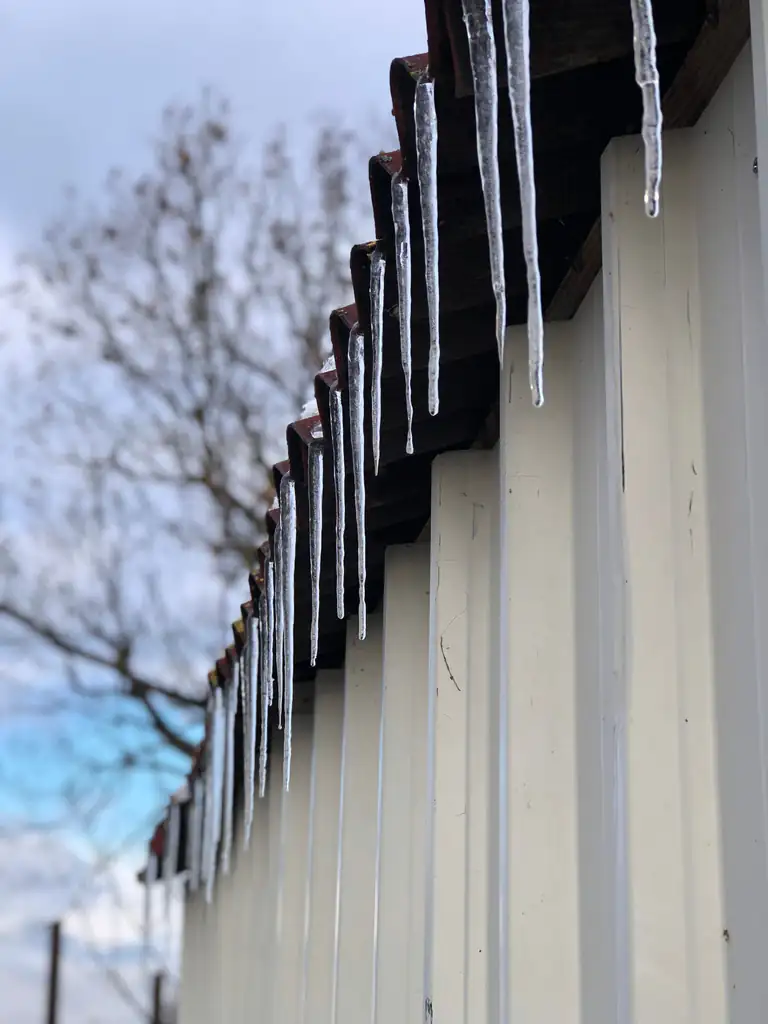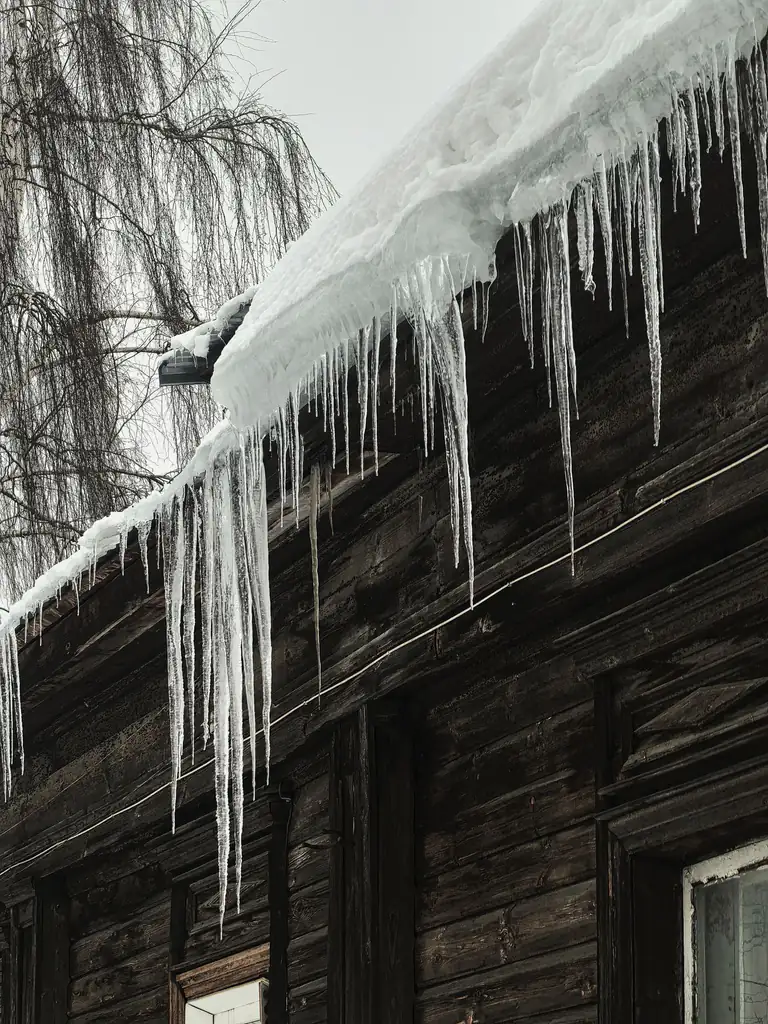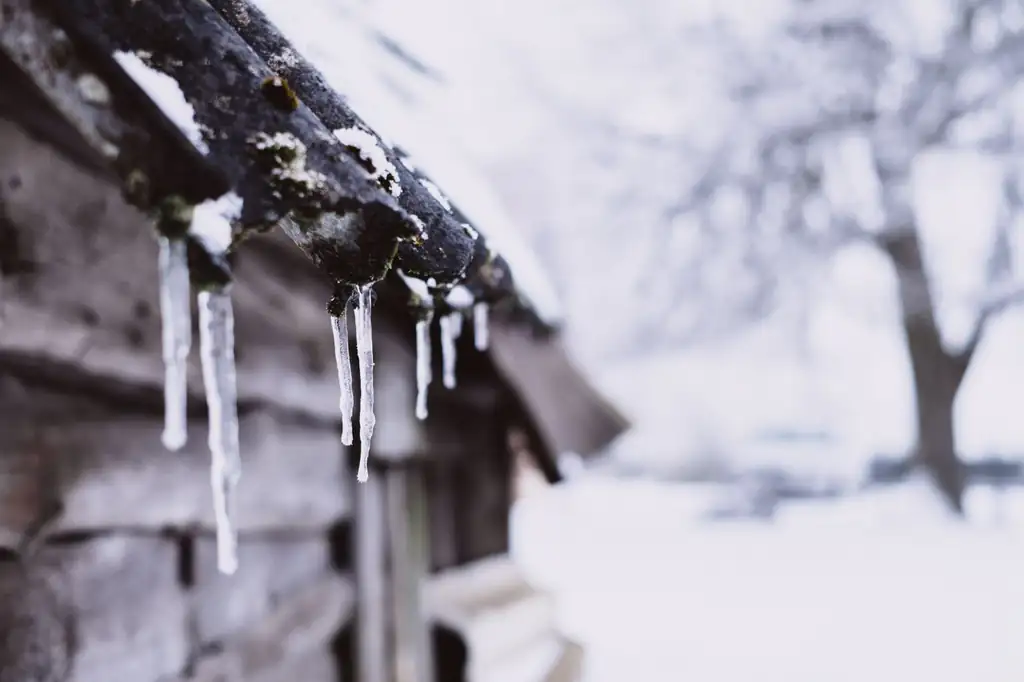
Icicles on Gutters — What They Mean
What icicles on your gutters actually mean, when they are harmless and when a big row signals an ice dam forming from a warm roof, and why knocking them off is not a fix.
Ice Dams & Winter Water
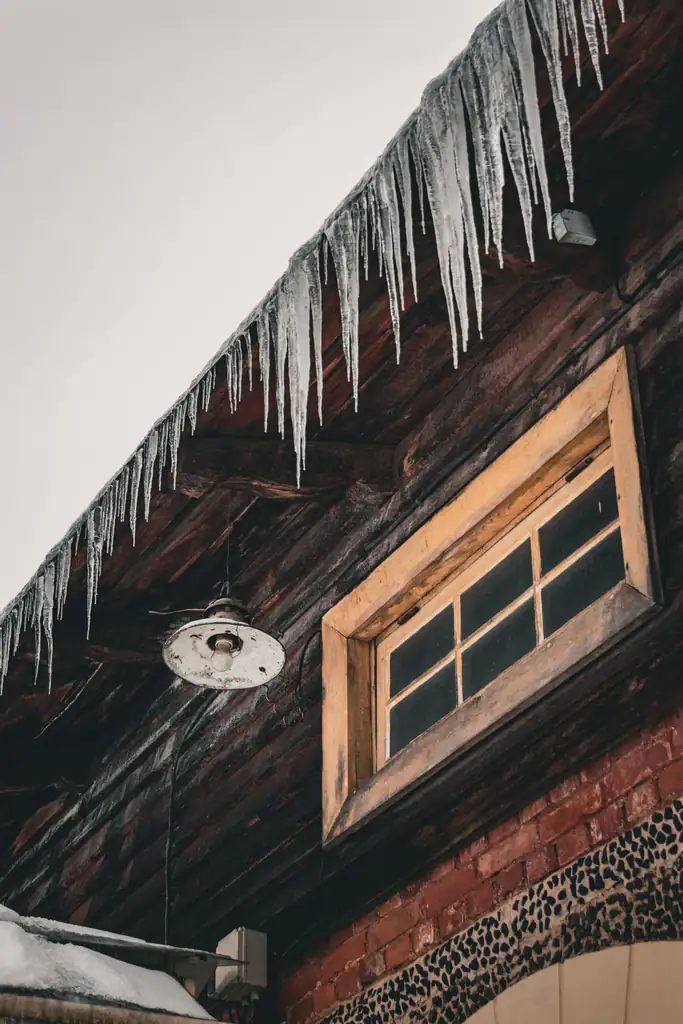
Ice fills gutters and downspouts when standing water freezes — from clogs, poor slope, or meltwater refreezing at the cold eave. A gutter full of ice is heavy and can bend or pull hangers, but the ice is a symptom: autumn cleaning and addressing attic heat are the real fixes.
Gutters and downspouts fill with ice when standing water in them freezes. That water gets stuck there for one of three reasons: a clog holding debris and water in place, poor slope that lets water pool instead of drain, or meltwater running off a warm roof and refreezing at the cold eave. A gutter packed solid with ice is heavy, and that weight can bend the trough or pull the hangers loose. But the ice is a symptom, not the disease. The real fixes are autumn cleaning to remove standing water and addressing the attic heat that melts snow in the first place.
Ice needs standing water and a cold-enough spot to freeze it. Gutters at the eave provide the cold spot every winter; the standing water is what varies. Three common sources:
To see how the roof runoff is supposed to move through the system when it’s not frozen, our guide on how roof runoff works lays out the path from roof to downspout to ground.
Ice is heavy, and a full gutter carries a lot of it. All that load hangs on the hangers and the fascia board behind the gutter, which weren’t designed for a solid ice core. Over a winter, or several, that can lead to:
If your gutters are already sagging, pulling away, or leaking at the seams, that’s worth investigating beyond the ice — see the signs your gutters are failing.
This is the crucial reframe. It’s tempting to treat the ice in the gutter as the problem to attack, but the ice is telling you about two upstream issues: either water is pooling because of a clog or bad slope, or your roof is warm enough to melt snow that then refreezes at the edge.
That second point matters because it means the gutter isn’t causing your ice dam — the warm roof is. A house with no gutters at all can still grow a thick dam at the eave, because the edge itself is the cold zone. The gutter just fills with the same ice and can make the dam a little worse by holding meltwater right at the edge. For the full mechanism, see how ice dams form.
Because gutter ice is a symptom, chasing it every winter is a losing game. If you find yourself dealing with a frozen, sagging gutter year after year, the lasting answer is usually upstream: clear the debris and fix the slope so water drains, and cool the roof by addressing attic heat loss. Otherwise the ice just comes back with the next storm.
| Situation | What helps | What to skip |
|---|---|---|
| Debris in the trough | Autumn cleaning before freeze-up | Digging frozen debris out on a ladder |
| Water pooling in a run | Correcting slope toward downspouts (off-season) | Chipping ice to “drain” it |
| Meltwater refreezing at the eave | Attic air-sealing, insulation, ventilation | Blaming or upsizing the gutters |
| An active, leaking ice dam | Professional steam removal | Torches, hot water, or climbing up |
| Persistent buildup | Heat cables as a narrow aid, correctly installed | Relying on cables instead of fixing the cause |
The productive work is mostly off-season. Clean the gutters and confirm they slope to the downspouts so water keeps moving — our guide on how often to clean gutters can help you time it. Then address the attic heat that melts snow, which is the only thing that reduces the meltwater refreezing at the edge.
Do not climb onto an icy or snow-covered roof. It is extremely dangerous, and chipping at ice can damage the roof and cause falls. Serious ice-dam removal is a job for professionals with the right equipment.
The urge to grab a ladder and chip a frozen gutter free is exactly what gets people hurt. Ladders on frozen ground, ice underfoot, and a heavy tool in hand are a bad combination, and chipping tends to crack the gutter you’re trying to save. Let the ice melt on its own, do the corrective work when it’s warmer, and call a professional if a dam is actively leaking.
Ice in your gutters and downspouts is real and can be heavy enough to damage them, but it’s a symptom of something upstream: standing water from a clog or bad slope, or a warm roof melting snow that refreezes at the cold eave. Fix those causes — clean and re-slope the gutters in the off-season, and cool the roof by addressing attic heat loss — and there’s far less water left to freeze. Chasing the ice itself, especially from a ladder, only risks the gutter and you. For the attic side of the equation, see how to prevent ice dams.
FAQ
Gutters ice up when water that's sitting in them freezes. That standing water comes from clogs holding debris and water, from poor slope that lets water pool instead of drain, or from meltwater running off the roof and refreezing at the cold eave. All three leave water in the trough long enough to freeze solid.
It can be. Ice is heavy, and a trough packed solid puts a lot of weight on the hangers and fascia. Over time that can bend the gutter, pull hangers loose, or crack seams. The ice itself is usually a symptom of a clog or a warm roof, so the fix is addressing those, not just clearing the ice.
No. Chipping at ice risks cracking or bending the gutter and, if you're on a ladder or roof to reach it, risks a serious fall. Icy ladders and roofs are dangerous. Let the ice melt naturally, address the clog or slope in the off-season, and for a leaking ice dam call a professional.
Heat cables can melt a channel so water drains instead of pooling, which reduces ice buildup in the trough. But they run on electricity all winter, need correct installation, and don't address why water is pooling in the first place. They're a narrow tool, not a substitute for cleaning gutters and fixing attic heat loss.
Autumn cleaning helps a lot, because a clogged gutter full of leaves and standing water freezes into a solid block fast. Clearing debris and confirming good slope removes standing water so there's less to freeze. But cleaning won't change the roof's temperature, so meltwater from a warm roof can still refreeze at the cold edge.
They're related but not identical. An ice dam is a ridge of ice at the roof's edge caused by a warm roof melting snow that refreezes at the cold eave. Gutters often fill with that same ice and can worsen it by holding meltwater at the edge, but a home with no gutters can still get ice dams. Gutter ice is a symptom in the same system.
There's no single winter trick. The durable approach is off-season: clean the gutters and confirm they slope to the downspouts so water drains, and address attic heat loss with air-sealing, insulation, and ventilation so less snow melts and refreezes at the eave. Together those cut the standing water that freezes.
Keep reading
What icicles on your gutters actually mean, when they are harmless and when a big row signals an ice dam forming from a warm roof, and why knocking them off is not a fix.
Gutters are often blamed for ice dams, but a warm roof is the real cause. Here is why removing gutters does not help and what actually fixes the problem.
The safe way to remove an ice dam is limited — rake from the ground and call a pro to steam an active leak. Never climb, chip, or use flame. A step guide.