Open vs Closed Roof Valley
Open vs closed roof valley, explained. How each handles heavy runoff, debris and durability, and why both still concentrate water on the gutter below.
Roof Runoff

Most roof valley runoff problems come down to concentration: a valley funnels water from two roof planes into one fast stream that overshoots the gutter, erodes the soil below, or forces water behind the trough. The fixes are a splash guard, added capacity at the outlet, and keeping the valley clear of debris.
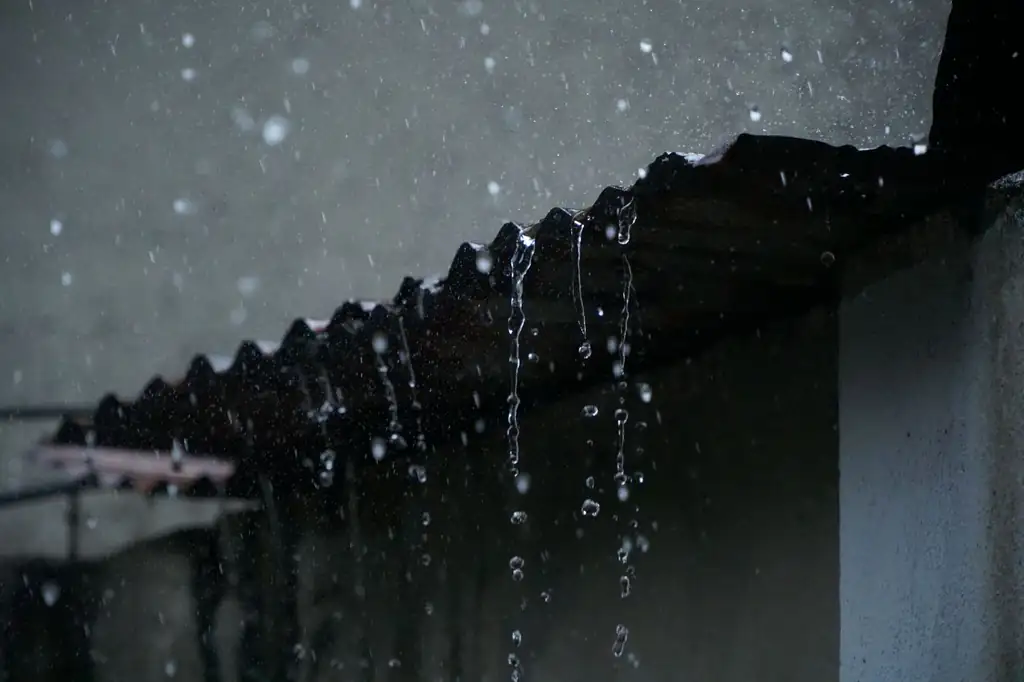
If water hammers off one spot on your roof in every storm, a valley is almost always the cause. A valley funnels runoff from two roof planes into a single fast stream, and that concentrated flow overshoots the gutter, erodes the soil below, or curls behind the trough. The fixes are consistent: a splash guard to correct the aim, extra capacity where the valley drains, and keeping the valley clear so debris does not make it worse.
A valley is the trough where two sloped roof planes meet. Instead of rain sheeting evenly off a flat expanse, the valley gathers water from both slopes and concentrates it into one narrow channel aimed at the eave. The mechanics of why that flow speeds up and stacks in volume are covered in roof valleys and water concentration.
The takeaway is that a valley delivers more water, moving faster, to a single point on your gutter than any equal length of open roof ever will. Everything a valley does well, collecting and directing, also concentrates the water in a way that makes trouble at the eave.
This is the classic one. Your gutter can be clean, level, correctly pitched, and the right size, and water still lands on the ground below the valley. When the fast stream hits the back of the trough, its momentum carries it up and over the front lip instead of settling in. In light rain the gutter catches everything, then in a downpour, when the valley is delivering its heaviest flow, the same gutter throws water over the edge.
Whatever the gutter fails to catch lands hard on the ground in a narrow band. Over a season that concentrated stream digs a trench in the soil, washes out mulch, and splashes mud up the siding. A stripe of eroded earth or a puddle that always forms in the same spot under a valley is a tell-tale sign of overshoot above.
If the flow is aimed poorly or the flashing at the valley outlet is too short, some of the stream can curl behind the trough and run down the fascia instead of into the gutter. That is a different failure from overshoot, and it soaks the fascia board over time. The full range of causes for that pattern is in water runs behind the gutter.
Valleys funnel leaves, needles, and roof grit straight toward the outlet, exactly where the heaviest flow arrives. A clog there backs up the trough during peak flow, turning an overshoot problem into a guaranteed overflow.
How much a valley overshoots depends on roof size, pitch, and rainfall intensity, so there is no single fix or number that suits every home. Match the drainage to the valley you actually have rather than to a rule of thumb.
A splash guard, sometimes called a valley diverter, is a short raised strip of metal fixed to the outer edge of the gutter directly under the valley. It catches the concentrated jet and redirects it down into the trough instead of over the lip. It is inexpensive and targets the aim problem that capacity alone cannot solve. More detail on these is in gutter splash guards and valley diverters.
Bigger troughs and more downspouts give the water somewhere to go so the gutter does not fill and spill. Concentrating extra capacity near the valley, rather than spreading it evenly along the run, tends to help most, and placing a downspout close to where the valley empties lets the trough drain fast during the exact minutes it is being hammered.
Because valleys deliver debris straight to the outlet, staying on top of cleaning frequency matters more here than anywhere else on the roof. A splash guard helps, but the same lip that catches water also catches leaves, so it needs an occasional check too.
| What you see | Likely problem | First fix to try |
|---|---|---|
| Water jumping over the gutter front | Overshoot | Splash guard |
| Eroded soil or splashed siding under the valley | Overshoot reaching the ground | Splash guard, then check capacity |
| Wet, stained fascia behind the gutter | Water curling behind the trough | Check flashing and gutter alignment |
| Gutter fills and spills only in heavy rain | Volume or slow draining | Add outlet near the valley |
| Overflow with visible leaves in the trough | Debris clog at the outlet | Clear the valley and outlet |
Roof valley runoff problems are concentration problems. A valley does its job perfectly, gathering and aiming water, and the trouble starts at the eave where all that fast flow meets a gutter sized for average conditions. A splash guard to fix the aim, enough capacity and a well-placed outlet to handle the volume, and regular clearing to stop clogs will resolve the great majority of valley overflow. The puddle under your roofline is a drainage detail, not a sign the roof is coming apart.
FAQ
A valley collects runoff from two roof planes and channels it into one narrow path. That combined, fast-moving flow arrives at the eave as a concentrated stream rather than an even sheet, which is why one spot on your roofline seems to dump far more water than the rest.
The gutter may be fine everywhere else and still spill under a valley, because the valley delivers a fast, heavy jet that overshoots the front lip or fills the trough faster than the outlet can drain it. It is a concentration problem, not necessarily a sizing problem across the whole run.
The direct fix is a splash guard, a short raised strip of metal on the outer edge of the gutter under the valley that catches the stream and drops it into the trough. Adding capacity and placing a downspout near the outlet help the trough keep up with the flow.
If the gutter overshoots or the valley empties onto the ground, the concentrated stream digs into the soil below. A stripe of washed-out earth, splashed siding, or a puddle that always forms in the same spot usually points to a valley overshooting the gutter above it.
Yes. If the concentrated flow is aimed poorly or the flashing at the valley outlet is short, water can curl behind the trough instead of into it. That is a different pattern from overshoot and can soak the fascia over time.
More capacity helps with volume, but overshoot is partly about speed and aim, so a bigger trough alone often still spills. Most valley problems need a splash guard to fix the aim in addition to enough capacity and a well-placed outlet.
Usually not. Concentrated valley flow is normal roof behavior. It becomes a problem only when the drainage below cannot catch or hold the stream, which is a gutter detailing and sizing issue rather than a roof defect.
Keep reading
Open vs closed roof valley, explained. How each handles heavy runoff, debris and durability, and why both still concentrate water on the gutter below.
Dormers, valleys and roof-to-roof transitions concentrate runoff over seams, which is why they leak. Here is what to watch and how the fixes work.
Roof pitch changes how fast and forcefully water reaches your gutter. Learn why steep roofs overshoot, low roofs pond, and how slope factors into sizing.