How to Quiet a Noisy Downspout
Why downspouts drum, drip, and rattle in the rain, and the simple fixes that quiet them without replacing the whole run.
Downspouts
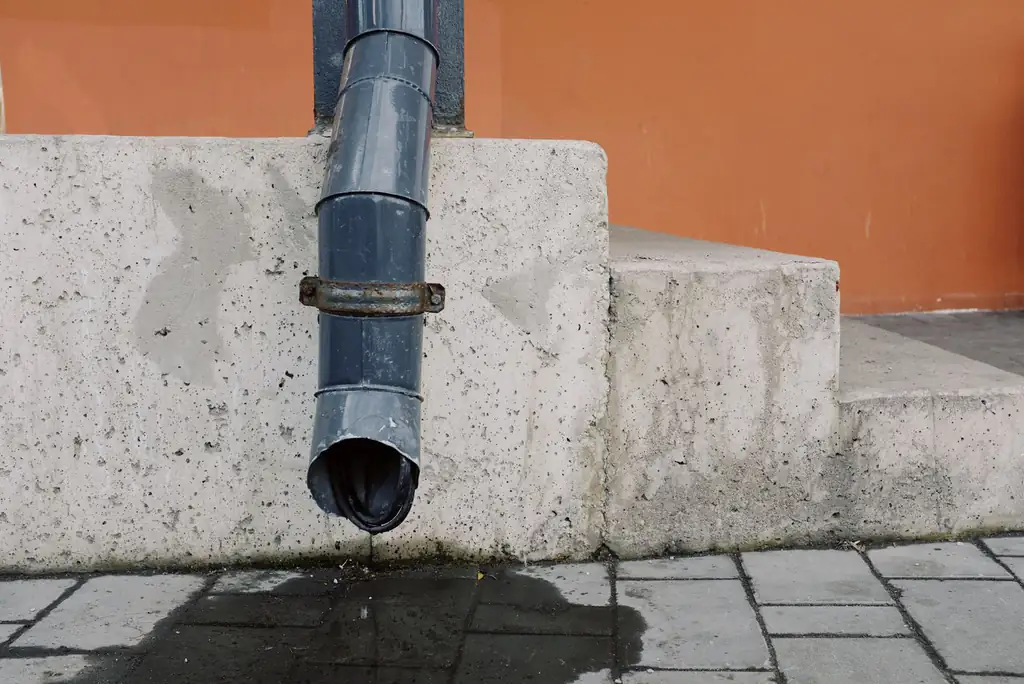
Downspouts freeze when water stands in them through a hard freeze — from clogs, poor slope, or meltwater refreezing. A blocked downspout backs water up to the gutter and behind it, so autumn clearing and good slope matter most; never force or torch a frozen pipe.
The short answer: downspouts freeze when water is left standing inside them through a hard freeze — usually because of a clog, poor slope, or daytime meltwater that refreezes at the cold bottom. The freeze itself is not the worst part; a blocked downspout backs water up into the gutter and behind it. So autumn clearing and good drainage matter most, and you should never force or torch a frozen pipe.
Moving water is hard to freeze; standing water is not. A downspout that drains freely usually empties before the cold can lock it up. Trouble starts when water lingers inside the pipe, and there are three common reasons it does.
A frozen downspout is a symptom, and the damage comes from what it does upstream. Once the pipe is blocked with ice, the gutter has nowhere to drain. Water and slush back up into the gutter, and from there it can overflow the front edge or work its way behind the gutter toward the fascia and wall. In freezing conditions that backed-up water keeps feeding more ice. This is why the frozen pipe matters — not because the ice inside is inherently harmful, but because of the backup it creates.
Winter conditions, roof design, and local climate vary enormously. The guidance here reduces the likelihood of a frozen downspout and its backups, but no measure guarantees an ice-free system in a severe cold snap.
Prevention beats thawing every time, because a frozen pipe is difficult and hazardous to clear safely. Three habits do most of the work.
| Measure | What it does | When to do it |
|---|---|---|
| Clear debris | Removes the clogs that trap standing water | Before winter, after leaf fall |
| Ensure good slope | Keeps water moving so it leaves before freezing | Check in fall; correct sagging sections |
| Clear discharge point | Lets water exit instead of pooling at the outlet | Before and during winter |
Autumn clearing is the single highest-value step. Going into winter with clean gutters and downspouts removes the clogs that hold water in place. Good slope keeps whatever water enters the pipe moving toward the exit, and a clear discharge point at the bottom — not buried in snow, leaves, or ice — gives that water somewhere to go so it does not pool and refreeze.
Frozen downspouts sit alongside a broader set of cold-weather drainage issues; the companion guide on preventing frozen downspouts and drains covers the wider picture, including how roof-edge ice ties in.
Never use an open flame or torch on a frozen downspout, and avoid ladder work on ice. A torch is a fire hazard, can damage the pipe and the house, and combining ladders with icy, freezing conditions risks a serious fall. If ice is stubborn, leave it to a professional equipped to work safely.
Beyond the flame warning, resist the urge to force ice out mechanically or to pour boiling water down the pipe as a quick fix — the water can refreeze and worsen the blockage, and neither approach is worth the risk of a winter ladder climb. The safest strategy is to prevent freezing in the first place and to let a pro handle ice that will not clear on its own.
Downspouts freeze when water stands in them through a hard freeze, and the danger is the backup a blocked pipe forces into the gutter and behind it. The winning move is prevention: clear the system in autumn, keep good slope so water drains before it can freeze, and keep the discharge point open. When ice does form, never force or torch it — thawing a downspout safely is a job for the right conditions or a professional, not a risky climb with boiling water or a flame.
FAQ
They freeze when water sits inside the pipe during a hard freeze instead of draining out. Clogs, poor slope, or meltwater that refreezes at the bottom all leave standing water behind, and once it freezes it can block the whole pipe.
It can be. A blocked downspout stops the gutter from draining, so water backs up into the gutter and can spill behind it. That backup, and the ice it feeds, is the real concern rather than the frozen pipe on its own.
The biggest levers are clearing debris before winter and making sure water drains freely — good slope and a clear discharge point so nothing stands in the pipe. Water that leaves quickly has far less chance to freeze inside.
It is generally not recommended as a fix. It can refreeze and make things worse, and working on ladders in icy conditions is hazardous. The safer path is prevention and letting a pro handle stubborn ice safely.
No. Open flame is a fire risk, can damage the downspout and the house, and is dangerous on a ladder in winter. Never torch a frozen pipe. Focus on prevention and safe thawing instead.
Meltwater running down during the day can refreeze at the cold bottom or outlet at night, gradually building an ice plug that blocks the pipe. A clear, well-draining discharge point reduces how much water lingers there to freeze.
Frozen downspouts and ice dams are related winter drainage problems. A downspout that cannot drain adds to the standing water and ice that a roof edge already struggles with in freezing weather, so both are worth managing together.
Keep reading
Why downspouts drum, drip, and rattle in the rain, and the simple fixes that quiet them without replacing the whole run.
When upsizing to larger downspouts like 3x4 actually helps, why the gutter outlet has to match, and how to avoid simply relocating the bottleneck.
What downspout brackets and straps do, how far apart to space them, and how to fasten into different wall types so the pipe stays tight and quiet.