How to Remove an Ice Dam Safely
The safe way to remove an ice dam is limited — rake from the ground and call a pro to steam an active leak. Never climb, chip, or use flame. A step guide.
Ice Dams & Winter Water
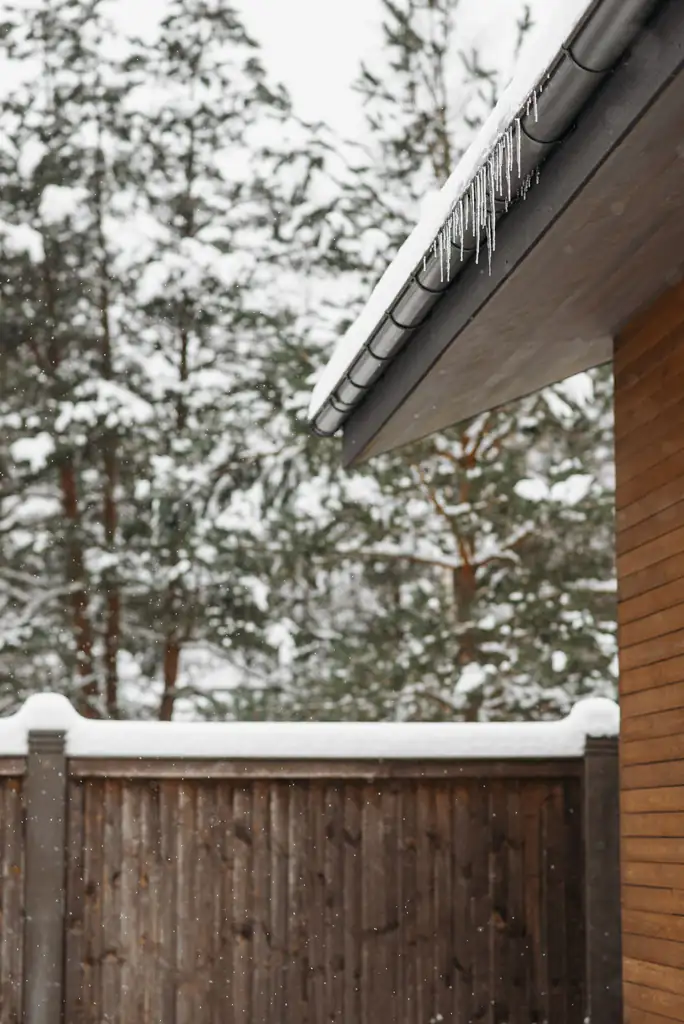
Downspouts and buried drain lines freeze when standing water sits in them through a hard freeze. Clearing them in autumn, keeping slope so water does not pool, and being careful with underground discharge in cold climates all reduce the risk — a frozen line backs water up to the house.
Downspouts and buried drain lines freeze for one main reason: water sits still inside them and a hard freeze turns it to ice. Clear the lines in autumn, keep enough slope that water drains fully instead of pooling, and be thoughtful about where underground pipes discharge in cold climates — and you cut the risk sharply. It matters because a frozen line has nowhere to send water, so it backs up toward the house.
Moving water resists freezing; standing water does not. A downspout or drain that empties completely between rains has little water left to freeze. The trouble starts when water lingers — behind a clog of leaves, in a low spot where the pipe sags, or in a buried line whose outlet is blocked or buried in snow. That trapped water freezes solid, and now the whole line is plugged. The next thaw or rain arrives, finds the pipe blocked with ice, and backs up.
This connects directly to winter roof problems. When a roof sheds meltwater during a thaw, it needs the gutters and downspouts to carry it away. If the downspout is iced up, that water pools in the gutter and at the eave, feeding the very refreezing that builds ice dams. A frozen drain does not just inconvenience you; it can compound the roof-edge trouble.
Most frozen-line prevention is autumn work done before the first hard freeze.
Leaves and debris are the usual reason water stops draining. Before winter, clear the gutters, downspouts, and any accessible drain openings so water runs through freely. A line that drains completely has little standing water to freeze. This is part of good winter gutter maintenance.
Water needs a continuous downhill path. Check that gutters pitch toward the downspouts, that downspouts are not crushed or kinked, and that buried lines maintain fall to their outlet. A sagging or flat section holds water, and held water freezes. Fixing a low spot in autumn is far easier than thawing a plug in January.
Buried downspout drains are convenient, but in cold climates the discharge design matters. A line that discharges to daylight and drains fully is less prone to icing than one that holds water or empties into a spot that snow and ice can seal over. Make sure the outlet stays open and the pipe actually empties. Our guide on underground downspout drainage covers how these systems are laid out; the winter concern is simply that the line should not sit full of water through a freeze.
| Risk factor | Why it freezes | Prevention |
|---|---|---|
| Leaf and debris clogs | Trap standing water in the line | Clear gutters and downspouts in autumn |
| Sagging or flat runs | Water pools instead of draining | Restore slope; straighten crushed downspouts |
| Blocked or buried outlet | Line cannot empty, holds water | Keep the discharge point open and above snow where possible |
| Buried line with no fall | Standing water in the pipe freezes | Ensure the underground run drains fully to daylight |
| Meltwater with nowhere to go | Backs up and refreezes at the edge | Keep the whole path clear from roof to outlet |
Treat this as general guidance; every property’s grading and drainage differ, so adapt it to your own layout.
A heat cable run down a downspout can keep a melt path open in a stubborn spot, but it is a supplement, not a first step. It uses electricity and needs safe, GFCI-protected wiring, and it does nothing about a clog or a sagging line. Clear and slope the drain first; reach for heat cables and gutter heat tape only for a spot that stays troublesome afterward.
When a line freezes mid-winter, the instinct is to force it open. Be careful.
Do not climb onto an icy or snow-covered roof. It is extremely dangerous; serious ice-dam work is a job for professionals with the right equipment.
If a frozen line is already backing water toward the house and you cannot clear it safely from the ground, it is reasonable to wait for a thaw or call a professional rather than take risks at height or damage the pipe.
Frozen downspouts and drains come down to standing water meeting a hard freeze. Take the standing water out of the equation — clear the lines in autumn, keep the slope so they drain fully, and make sure buried discharge points actually empty — and the risk drops. When something does freeze, avoid the hot-water and chemical shortcuts that tend to backfire, stay off the icy roof, and remember that the goal is simply to keep water moving from the roof all the way out and away from the house.
FAQ
They freeze when water sits still inside them during a hard freeze. Standing water in a clogged or poorly sloped line, or in a buried pipe with a blocked outlet, freezes solid and blocks the next flow of water.
Keep water moving and out: clear gutters and downspouts in autumn, maintain slope so water drains fully instead of pooling, and make sure the discharge point stays open. Standing water is what freezes.
Water backs up. A frozen line has nowhere to send meltwater or rain, so it can overflow the gutter, pool against the foundation, or back water up toward the house — which can lead to leaks and ice buildup.
Be cautious. Hot water can refreeze and worsen the blockage, and chemicals or salt can harm plantings, corrode metal, and may not clear a deep buried blockage. These are stopgaps at best, not reliable fixes.
They can be if they hold standing water or discharge below the frost line without draining fully. In hard-freeze regions, the discharge design matters so the line empties and does not become an ice plug.
A heat cable run down the downspout can help keep a melt path open, but it uses electricity, needs safe GFCI-protected wiring, and treats the symptom. Keeping the line clear and well sloped comes first.
Autumn, before the first hard freeze: clear leaves and debris, check slope and connections, and confirm the discharge point is open. It is far easier than dealing with a frozen line mid-winter.
Keep reading
The safe way to remove an ice dam is limited — rake from the ground and call a pro to steam an active leak. Never climb, chip, or use flame. A step guide.
How to use a roof rake safely from the ground to reduce ice-dam snow, plus snow-load basics — wet snow, drifting, and when heavy load becomes a structural worry.
Why gutters and downspouts fill with ice — clogs, poor slope, and meltwater refreezing at the cold eave. The weight risk, and the real fixes for a symptom.