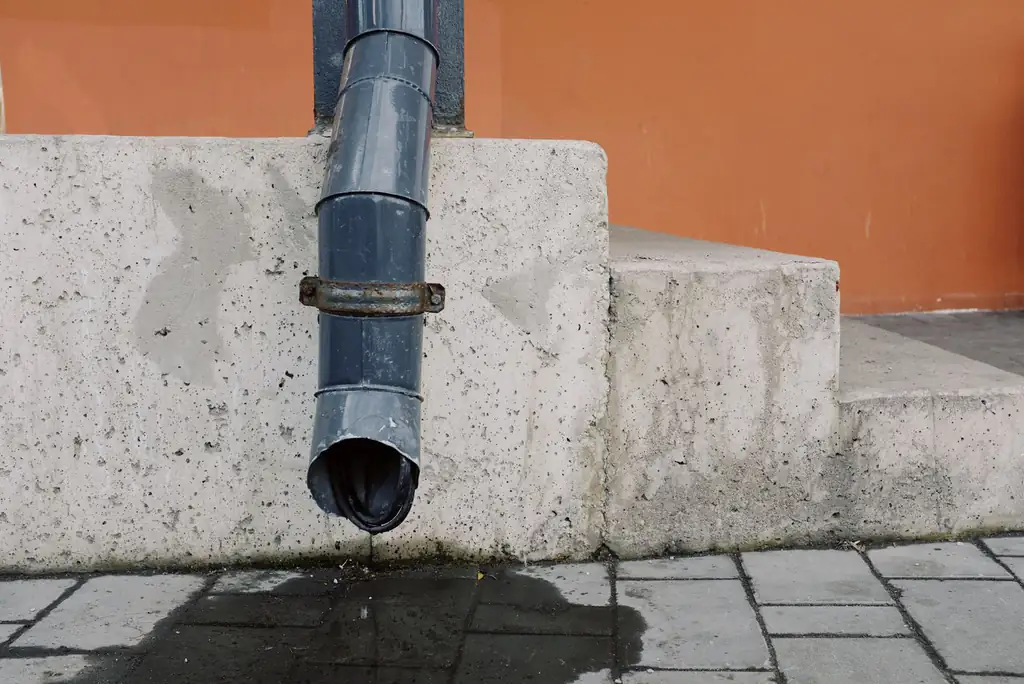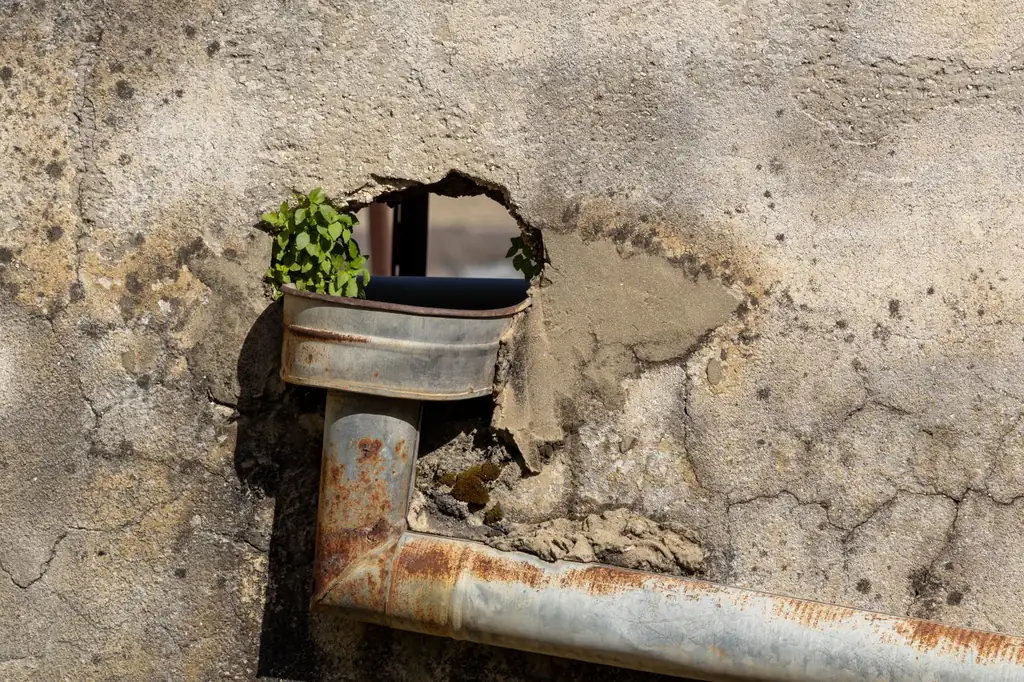
Hidden and Decorative Downspouts
Hidden and decorative downspout options — concealed runs, boxed-in chases, round and copper profiles, and rain chains — plus why capacity and access must come first.
Downspouts
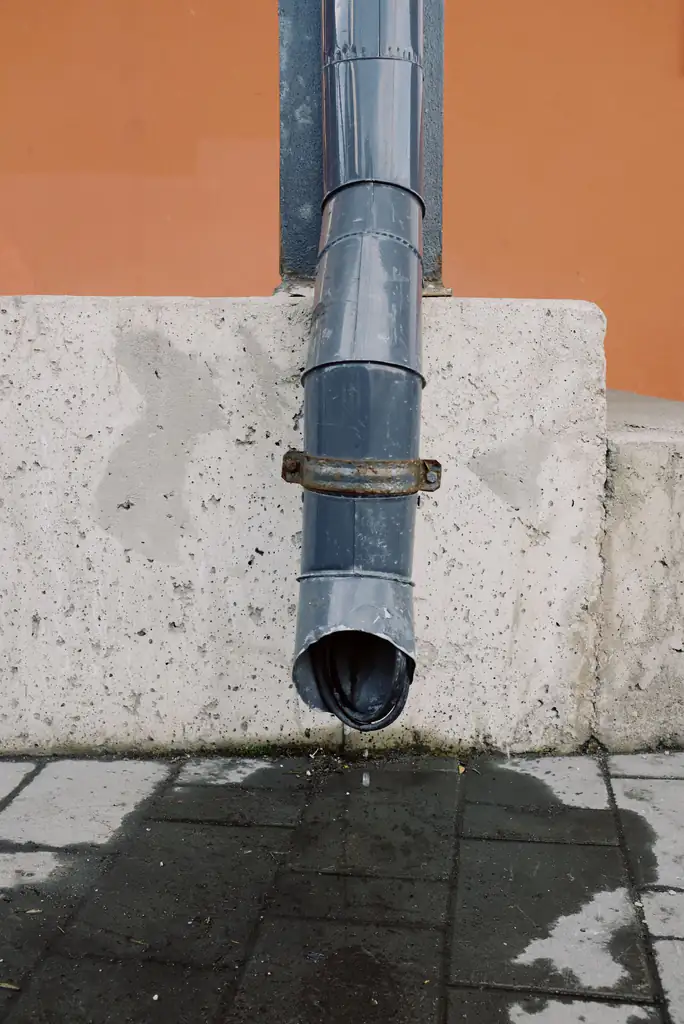
Downspout material should usually match the gutter — aluminum is the affordable, rust-proof default, copper is premium and long-lived, steel is strong but can rust, and vinyl is cheap but brittle in cold. Mixing dissimilar metals invites galvanic corrosion.
The short answer: pick the downspout material that matches your gutters, and let budget and looks break the tie. Aluminum is the rust-proof, affordable default most homes use. Copper is the premium, long-lived choice. Steel is tough but can rust, and vinyl is cheap but turns brittle in the cold. The one rule worth memorizing is to avoid mixing dissimilar metals, because that invites galvanic corrosion at the joint.
A downspout does an unglamorous job: carry water from the gutter down to the ground and away from the house. Because the pipe itself is fairly simple, it is easy to assume the material barely matters. What the material actually decides is how long the system lasts, how much it costs, how it looks against your siding, and how well it holds up to sun, freezing, and the occasional bump from a ladder or lawnmower.
Capacity, by contrast, is mostly about the pipe’s size and how clear it stays — not the metal. If you are weighing dimensions, that is a separate question covered in downspout sizing and types. Here we are focused on what the pipe is made of.
Before comparing materials head to head, start with what is already on the house. In most cases the downspout should match the gutter material, and there are practical reasons beyond appearance.
If you are choosing gutters and downspouts together from scratch, it is worth reading up on gutter materials compared so the whole system is planned as one.
Lifespan and cost figures for any material swing a lot with climate, water chemistry, and install quality. Treat every number here as a rough, hedged range — not a guarantee for your specific house.
Aluminum is the workhorse of American downspouts. It does not rust, it is light enough to handle on a ladder, it takes a baked-on color finish, and it usually sits at the affordable end of the range. Its main weakness is that it dents — a hard knock can leave a visible dimple — and thinner gauges can crumple under a fallen branch. For most homeowners, aluminum is the sensible starting point unless there is a specific reason to go elsewhere.
Copper is the premium option. It is often described as lasting many decades with good installation, and it develops a patina over time that many people find attractive. The trade-offs are cost, which is typically well above the other materials, and that it usually calls for soldered or carefully made joints, meaning professional installation. Copper is a genuine upgrade in both looks and longevity, but it is a considered purchase rather than a default.
Steel — usually galvanized or coated — is strong and resists dents better than aluminum, which makes it appealing in high-traffic spots. The catch is rust: once the protective coating is scratched or wears through, steel can corrode. It also tends to be heavier to work with. Stainless variants resist rust far better but push the cost up. Steel earns its place where toughness matters most.
Vinyl (PVC) is the budget pick. It is inexpensive, will not rust, and a homeowner can often cut and assemble it without special tools. The downsides show up in cold and sun: vinyl gets brittle when it is cold and can crack from a freeze or an impact, and prolonged UV exposure can fade or weaken it over the years. In mild climates on a tight budget it can be fine; in hard-winter regions it is the most failure-prone of the group.
The table below is a general guide. Where you live and how the system is installed will shift these more than the material alone.
| Material | Relative cost | Rough lifespan | Rust risk | Cold-weather behavior | Best for |
|---|---|---|---|---|---|
| Aluminum | Low–moderate | Long | None | Holds up well | Most homes, general use |
| Copper | High | Very long | None | Holds up well | Premium, long-term homes |
| Steel | Moderate | Moderate–long | Yes if coating fails | Holds up well | High-impact locations |
| Vinyl | Lowest | Shortest | None | Can become brittle | Mild climates, tight budgets |
When two dissimilar metals stay in contact and get wet, an electrochemical reaction can eat away at the more reactive of the two. This is galvanic corrosion, and downspouts are a classic place for it to show up — for example, aluminum joined directly to copper, or fasteners of one metal biting into a pipe of another.
The practical takeaways are simple. Keep a metal system to a single metal where you can. If you must connect two different metals, isolate them so they are not in direct contact, and choose fasteners compatible with the pipe material. This is a big part of why “match the gutter” is such reliable advice: a matched system rarely creates a dissimilar-metal junction in the first place.
For most homeowners, aluminum that matches the existing gutters is the safe, cost-effective default. Step up to copper when longevity and appearance justify the price, reach for steel where the pipe takes physical abuse, and treat vinyl as a mild-climate budget option. Whatever you choose, keep the system to one metal or isolate any junction — that single habit prevents the galvanic corrosion that quietly shortens a downspout’s life.
FAQ
In most cases, yes. Matching the material keeps the whole system aging at a similar rate, avoids awkward transitions at the outlet, and — with metals — sidesteps the galvanic corrosion that can happen where two different metals touch.
Aluminum is the default on most US homes. It resists rust, comes in many colors, is light to handle, and tends to be one of the more affordable options, which is why so many installers reach for it first.
Copper is often cited as lasting many decades, sometimes well beyond the life of the roof, when installed and joined well. Exact figures vary widely with climate and water chemistry, so treat any single number as a rough guide rather than a promise.
Vinyl gets brittle in cold weather, and a hard freeze or a stray ladder knock can crack it. It also expands and contracts with temperature more than metal, which can stress the joints over time.
Where two dissimilar metals stay in contact with moisture, galvanic corrosion can attack the more reactive metal. Mixing aluminum and copper is a common example, so it is generally better to keep a system to one metal or isolate the connection.
Capacity depends far more on the pipe's cross-section and how clear it stays than on the metal itself. A 3x4 aluminum downspout and a 3x4 copper one move similar amounts of water; material mostly changes cost, looks, and lifespan.
Steel is strong and dent-resistant, which appeals in spots that take abuse. The trade-off is rust risk if the coating is scratched, so it needs sound finishing and occasional attention to stay ahead of corrosion.
Keep reading
Hidden and decorative downspout options — concealed runs, boxed-in chases, round and copper profiles, and rain chains — plus why capacity and access must come first.
Why downspouts drum, drip, and rattle in the rain, and the simple fixes that quiet them without replacing the whole run.
Why downspouts freeze in winter, the backup risk a frozen pipe creates, how to prevent it, and what you should never do to thaw one.