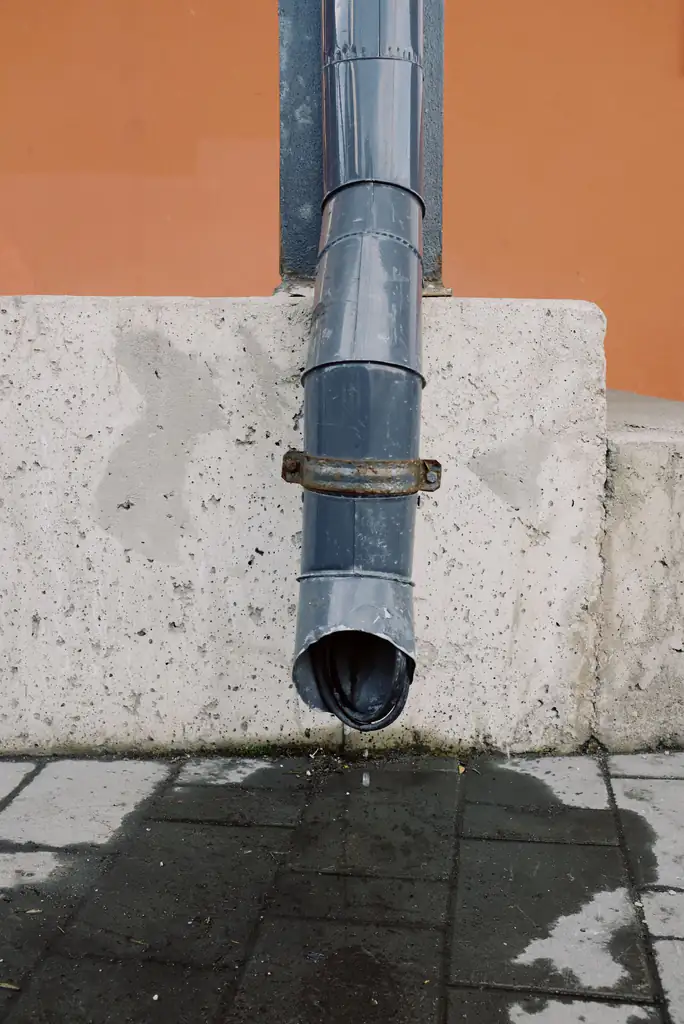
Downspout Materials Compared
A homeowner's plain-English comparison of aluminum, copper, steel, and vinyl downspouts — cost, lifespan, and why the material should match your gutters.
Downspouts

Homeowners sometimes conceal or dress up downspouts — routing them through columns, boxing them in, or choosing decorative round or copper profiles. These can look great, but concealment can hide clogs and leaks, so capacity and access still have to come first.
Downspouts are the least loved part of a gutter system to look at — a plain rectangular tube running down an otherwise nice facade. So homeowners hide them or dress them up: routing them through porch columns, boxing them into trim, or swapping in round or copper profiles that read as a detail rather than an afterthought. All of that is fair game. The one rule that cannot bend is that the water still has to get down and out, and you still have to be able to reach the pipe when something goes wrong.
The most thorough approach hides the downspout inside something — a hollow porch column, a wall cavity, or a recess built into trim. The pipe disappears and the facade stays clean. It is the best-looking option and the one that asks the most caution, because everything that can go wrong with a downspout now happens where you cannot see it.
A gentler version is boxing the downspout into a chase: a wood or trim enclosure built around the pipe against a wall or column. The pipe is still there, just wrapped in something that matches the house. This is popular because it looks intentional without burying the downspout inside the structure, and it is far easier to build in an access point.
You do not have to hide a downspout to improve it. Round profiles look softer and more traditional than the standard rectangular tube. Materials matter too — copper weathers to a patina many people prize, and painted aluminum can be matched to trim. Decorative brackets and cast fittings add detail. The appeal here is that the downspout stays fully visible and fully accessible while still looking like a deliberate choice.
A rain chain replaces the enclosed downspout at a single outlet with a series of cups or links that guide water down in the open. It is the most decorative option of all and the least conventional. It also moves far less water, so it belongs at a low-volume spot rather than a main outlet — we compare the two directly in rain chains vs downspouts.
Here is the catch that runs under every concealment method: a downspout’s job is to carry a lot of water quickly, and downspouts clog and leak. When the pipe is out in the open, a clog announces itself — water spills at a seam, or the downspout overflows at the top. When the pipe is inside a column or a wall, the same clog can send water where you cannot see it, soaking framing or trim before anything shows on the surface.
That is the real cost of hiding a downspout: not that it fails more often, but that when it fails, you find out later and the damage can be worse. If you are chasing a downspout that overflows or backs up, the causes in why a downspout is not draining apply to concealed runs too — you just have to work harder to inspect them.
Concealment does not prevent clogs; it hides them. Any boxed-in or enclosed downspout should include an access panel or a removable section so the pipe can be inspected and cleared without demolition.
Two principles keep a good-looking downspout from becoming a liability.
Capacity first. A downspout has to be sized for the roof area it drains, not for the column it is hiding in. The temptation with concealment is to shrink the pipe so it fits a slim chase — which undersizes it and makes overflow more likely. Decide the pipe size from the roof, then design the concealment around that pipe. Our guide to downspout sizing and types covers how to match the outlet to the roof it serves.
Access second. Build in a way to reach the pipe. A hinged panel on a boxed chase, a removable column base, a cleanout at the bottom — any of these turns a yearly clean or a leak check from a demolition job into a five-minute task.
This is a general comparison; the specifics depend on your house and how the concealment is built.
| Approach | Look | Access risk | Notes |
|---|---|---|---|
| Concealed run | Fully hidden | High if no panel | Best looks, hardest to inspect |
| Boxed-in chase | Tidy, matches trim | Moderate | Easy to add an access panel |
| Round / decorative profile | Deliberate detail | Low | Visible and reachable |
| Copper profile | Weathered patina | Low | Looks-driven; drainage rules unchanged |
| Rain chain | Open, ornamental | Low | Low capacity; low-volume spots only |
Hidden and decorative downspouts can genuinely lift a facade — a copper round pipe, a neatly boxed chase, a run tucked inside a column. The looks are worth pursuing. Just keep the order of priorities straight: size the pipe for the roof, build in access, and treat concealment as something you wrap around a properly working downspout rather than a way to make an inconvenient pipe vanish. Handle it that way and you get the clean facade without inviting a hidden leak.
FAQ
You can conceal a downspout by routing it inside a column, boxing it into a chase, or recessing it into trim, so it is largely out of sight. What you cannot do is make the water it carries disappear — the pipe still has to be sized for the flow and reachable when it clogs.
Not necessarily more often, but a clog or leak in a hidden run is harder to spot and can do damage behind a wall or column before you notice it. That is why access panels and an occasional check matter more, not less, when a downspout is concealed.
Copper is chosen mostly for looks and longevity; it weathers to a patina many homeowners like. Whether it is worth the extra cost is a personal call. Functionally, a copper downspout still has to be sized and pitched like any other — the material does not change the drainage rules.
It is a downspout run enclosed in a built chase — a wood or trim box that hides the pipe against a wall or column. It looks tidy, but the enclosure should include a way to reach the pipe for cleaning and to catch a leak before it rots the surround.
A rain chain is a decorative alternative to an enclosed downspout for a single outlet, guiding water down cups or links. It moves far less water, so it suits low-volume spots rather than a main outlet on a big roof. We compare them directly in a separate article.
Yes. Round profiles, decorative brackets, and materials like copper or painted aluminum dress up a downspout while leaving it fully visible and accessible. That is often the safest path, since nothing about the drainage is hidden from view.
Concealment should not reduce capacity if the pipe inside is properly sized, but squeezing a downspout into a slim column or chase can tempt you to undersize it. Size for the roof area first, then design the concealment around that pipe — not the other way around.
Keep reading
A homeowner's plain-English comparison of aluminum, copper, steel, and vinyl downspouts — cost, lifespan, and why the material should match your gutters.
Rain chains vs downspouts — how a rain chain moves water, how its capacity compares, the splash, wind and freeze tradeoffs, and where each one belongs.
Why downspouts drum, drip, and rattle in the rain, and the simple fixes that quiet them without replacing the whole run.