How to Clean a Wood Deck
Clean a wood deck without wrecking the boards — why to skip high pressure, the brush-and-cleaner method, drying time, and how to time resealing.
Exterior Cleaning
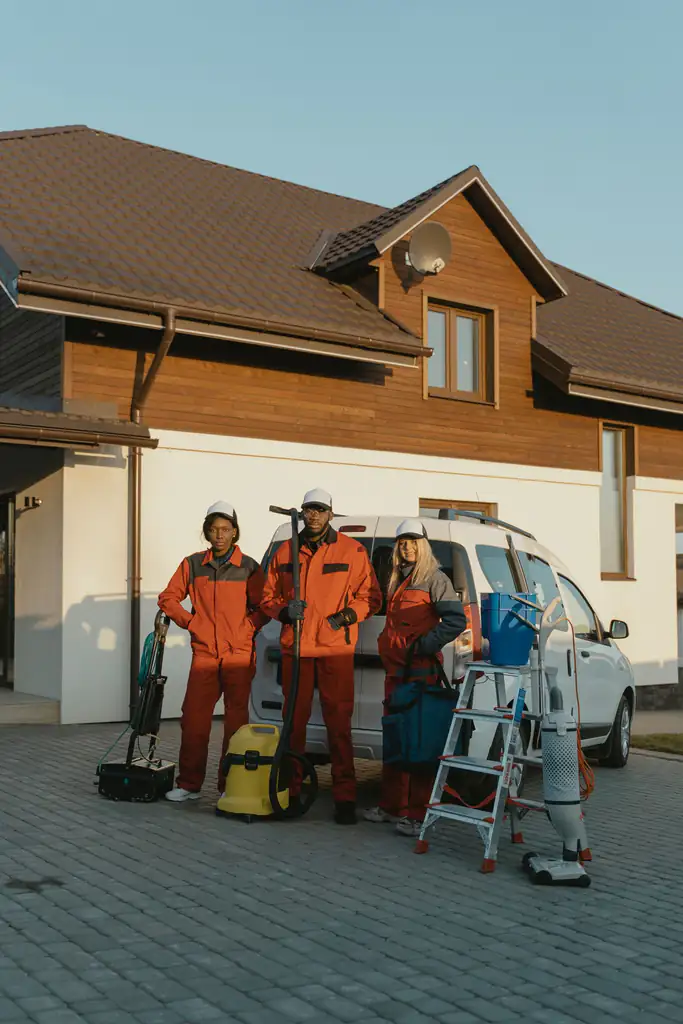
A roof is cleaned with low-pressure soft washing and a cleaning solution, never a pressure washer — high pressure strips shingle granules and forces water under the roof. The bigger risk is you, not the roof, so most homeowners are better off cleaning from a ladder edge or the ground, or hiring out the height.
The safe way to clean a roof is low-pressure soft washing with a cleaning solution — never a pressure washer, which strips the granules off asphalt shingles and drives water underneath them. And the honest headline is that the biggest danger is not to the roof but to you: a wet roof is steep and slippery, so the safest cleaning happens from a ladder edge, from the ground, or from a professional’s harness, not by walking the shingles.
It is worth being blunt about this, because it is the single most damaging mistake in exterior cleaning. Asphalt shingles are coated in mineral granules that shield the asphalt from UV and weather. High-pressure spray blasts those granules off, aging the shingle prematurely. It also forces water up and under the overlapping courses toward the roof deck, where it has no business being, and it can crack shingles that have gone brittle with age. On top of the physical damage, many manufacturers consider pressure washing grounds for voiding the warranty.
So the method is settled before you start: roofs get soft-washed. For the fuller reasoning on force versus chemistry, the power washing versus soft washing comparison is the companion to this guide, and the broader list of surfaces that pressure ruins is covered in what not to pressure wash.
Soft washing pairs a gentle, low-pressure flow of water with a cleaning solution that actually kills algae, moss, mold, and lichen and loosens grime. The chemistry removes the growth; the water only carries it away. That is why it works where force would fail — it cleans without stripping granules or pushing water behind anything.
The basic sequence is simple:
Notice what is missing: scrubbing, scraping, and blasting. If growth clings after treatment, the answer is patience and a second gentle application, not force.
Here is where most of the actual risk lives. Roof-cleaning injuries come from falls, not from shingles. A wet, sloped, granular surface is one of the least forgiving places to lose your footing, and a ladder against a gutter edge is only as safe as its setup and the person on it.
The safest way to clean a roof is to not stand on it. Many single-story roofs can be treated:
This keeps your weight on the ground or on a secured ladder rather than on a slick slope.
Roof and ladder work is genuinely dangerous. Wet roofs are slippery, ladders shift, and second-story height turns a slip into a serious fall. Never work on a roof in wind or when surfaces are wet with anything but your own rinse water, keep well clear of power lines, and if the roof is steep, high, or you are not fully confident, hire a professional with fall protection.
| Situation | Do it yourself? | Why |
|---|---|---|
| Single-story, low slope, reachable from a ladder or ground | Possibly | Height risk is manageable, method is simple |
| Steep pitch | No | Very little grip; a slip is hard to arrest |
| Two-story or higher | No | Fall height is the danger, not the cleaning |
| Fragile roofing (old, brittle, tile, slate) | No | Walking or spraying can break it; specialist territory |
| Heavy moss and lichen over large areas | Lean toward pro | Repeat treatment and safe access add up |
| You are unsteady on a ladder | No | The task is not worth the risk |
Cleaning a roof treats the symptom. Algae streaks and moss return wherever the roof stays damp and shaded, so managing moisture and shade does more for the long run than any single wash. The roof algae and moss removal guide goes deeper on why growth takes hold and how to slow its return.
Everything you rinse off the roof flows into the gutters and downspouts. Clear debris and dead growth from the gutters after cleaning so the runoff you just created does not clog the very system meant to carry it away.
The takeaway is steady and simple: clean a roof with low pressure and the right solution, let chemistry do the work, and treat the height with the seriousness it deserves. The gentlest method that removes the growth protects the shingles, and staying off a slick roof protects you. When either the pitch or your confidence runs short, that is exactly the moment to call in someone who does this with a harness.
FAQ
No. High pressure strips the mineral granules that protect asphalt shingles, forces water up under the shingles toward the deck, and can crack aging ones. It shortens the roof's life and often voids the shingle warranty. Roofs are cleaned only by low-pressure soft washing.
Soft washing — a low-pressure flow of water paired with a cleaning solution that kills algae, moss, and lichen. The chemistry does the work, so the growth is removed without force. Where possible the roof is treated from a ladder at the edge or from the ground with a pump sprayer, not by walking a wet roof.
Usually not, and ideally not. A wet roof is slippery and steep, and most falls are avoidable by staying off it. Many roofs can be treated from a stable ladder at the eave or with a ground-based pump sprayer that reaches the surface. Steep, high, or fragile roofs are a job for a professional.
Apply an appropriate roof-cleaning solution, let it dwell as the label directs, and rinse gently at low pressure. Let the treatment kill the growth rather than scrubbing or blasting it. Moss may take time to die back and loosen. Never scrape aggressively, which tears up the shingle surface.
Soft washing is, when done at low pressure with a suitable solution. What is not safe is pressure washing, wire brushing, or hard scraping, all of which remove the protective granules and shorten shingle life. The gentlest method that removes the growth is the right one.
Roof-cleaning solutions can harm plants and lawn when they run off, and they drain straight into your gutters and downspouts. Wet plants with plain water first, cover them where practical, rinse afterward, and follow the product label and any local runoff guidance.
When the roof is steep, high, multi-story, or fragile, when you are not confident on a ladder, or when large areas need treating. Height is the real hazard in roof cleaning, and professionals bring fall protection and experience that a one-off DIY job does not.
Keep reading
Clean a wood deck without wrecking the boards — why to skip high pressure, the brush-and-cleaner method, drying time, and how to time resealing.
The pressure-washing mistakes that cause the most damage and injuries — wrong surfaces, spraying behind siding, too much pressure, too close, wrong tip — and how to avoid each.
A surface-by-surface guide to what you should never pressure wash — roofs, siding, wood, windows, brick mortar — and the soft-wash alternative that is safe.