How to Remove Roof Moss
Why roof moss damages shingles, how to kill it with gentle soft-washing, and how to keep it from coming back — without scraping or pressure-washing.
Exterior Cleaning
Black streaks on a roof are usually algae; green mounds are moss that traps moisture and lifts shingles. Both are cleaned with gentle, low-pressure soft-washing and the right solution — never a pressure washer, which strips granules and damages shingles.
If your roof has dark streaks, that is almost certainly algae; if it has raised green cushions, that is moss. Clean both with gentle, low-pressure soft-washing and an appropriate cleaning solution — not a pressure washer, which strips the protective granules off shingles and shortens the life of the roof.
They look different because they are different organisms, and they cause different kinds of trouble.
Algae shows up as dark, almost black vertical streaks running down the slope. The usual culprit is a blue-green algae that feeds partly on the limestone filler in asphalt shingles. It settles first on the shaded, slower-drying parts of a roof — typically north-facing slopes and areas under tree cover. Early on, algae is mostly a cosmetic problem. It makes a roof look old and dirty long before the shingles are actually worn out.
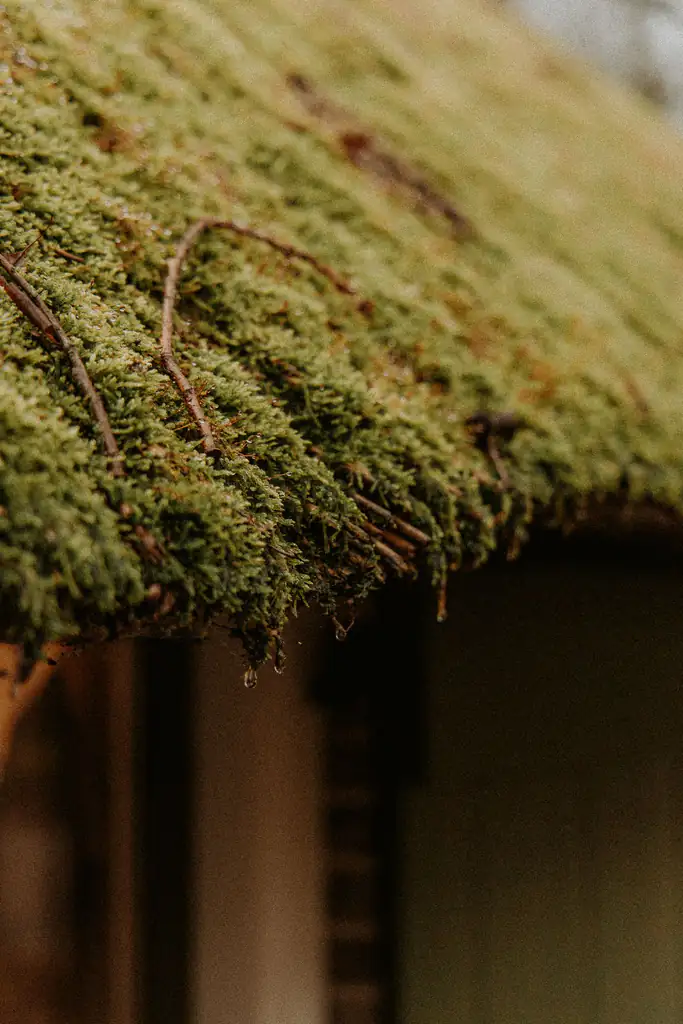
Moss is a true plant. It forms green, spongy mounds, usually along the bottom edges of shingles and in the seams where debris collects. Unlike algae, moss holds water. It acts like a wet sponge sitting on your shingles, and its root-like rhizoids creep under and between them. That combination of trapped moisture and lifting pressure is what makes moss a genuine maintenance concern rather than just an eyesore.
A damp, shaded roof is part of a bigger moisture picture. The same conditions that grow moss also stress the roof’s ability to shed water cleanly. If you want to understand where all that water is supposed to go once it leaves the shingles, it helps to know how roof runoff works — the roof surface, the gutters, and the ground drainage are one connected system, and a mossy roof is often the first visible sign that part of that system stays wetter than it should.
| Problem | Caused mainly by | What you notice | Why it matters |
|---|---|---|---|
| Dark streaks | Algae | Black stains down the slope | Cosmetic early; feeds on shingle filler over time |
| Granule loss | Moss and aggressive cleaning | Bald, shiny shingle spots | Granules protect shingles from UV; loss shortens life |
| Lifted shingles | Moss rhizoids | Curled or raised edges | Lets wind and water get underneath |
| Trapped moisture | Moss | Soft, spongy green mounds | Keeps the deck damp; encourages rot below |
| Clogged valleys | Moss and debris | Green buildup in seams | Slows drainage and holds water |
The correct method is called soft-washing: low pressure, roughly the force of a garden hose, paired with a cleaning solution that actually kills the organism rather than just blasting the surface. The solution does the work; the gentle rinse carries it away. This is the same principle that separates the two main exterior-cleaning methods, and it is worth reading up on power washing versus soft washing before you touch any part of your house, because the choice of pressure is what protects or destroys the surface.
A pressure washer is the wrong tool for a roof for concrete reasons:
For moss specifically, resist the urge to scrape or blast it off while it is dry and brittle — you tend to take granules with it. Most guidance is to apply the solution, let it work, and let subsequent rain and gentle rinsing carry the dead moss away over the following weeks. Patience protects the shingle.
Pressure washing carries real risks. High-pressure spray can injure, wet surfaces cause falls, and water near power lines and outlets is dangerous. Roof and second-story work is best left to professionals.
Cleaning treats the symptom. Prevention treats the cause, which is almost always shade and trapped moisture.
Roof cleaning solutions can harm foundation plants and lawn when they run off. Wet plants with plain water before you begin, rinse them again afterward, and always follow the product label and any local guidance on chemical runoff.
Algae and moss are common, they are manageable, and they respond well to a patient, gentle approach. The goal is a clean roof that stays that way — accomplished by treating growth softly and then removing the shade and moisture that fed it in the first place.
FAQ
They are almost always algae, specifically a blue-green algae called Gleocapsa magma. It shows up as dark vertical streaks that run down the slope, usually on north-facing or shaded sections. Dirt rinses off; algae does not, because it is a living organism rooted in the shingle surface.
Yes. Moss holds water against the shingle like a sponge and its root-like structures work under and between shingles. Over time that constant moisture and the lifting action can loosen granules, curl shingle edges, and let water travel where it should not. Algae is mostly cosmetic early on, but moss is a structural concern.
No. A pressure washer strips the protective mineral granules off asphalt shingles, forces water under them, and shortens the life of the roof. It can also void some shingle warranties. Roofs are cleaned with low-pressure soft-washing and a cleaning solution, never high pressure.
They can, because the spores are airborne and shade keeps surfaces damp. You slow regrowth by trimming back branches that shade the roof, keeping the roof clear of debris, and considering zinc or copper strips near the ridge so rain carries a trace of metal down the slope.
Anything involving climbing on a roof or working from a tall ladder carries real fall risk, made worse by wet, slippery surfaces and cleaning chemicals. Many homeowners are better off hiring a professional for the height, and focusing their own effort on prevention from the ground.
They can reduce regrowth. When rain hits metal strips installed near the ridge, it carries trace metal ions down the slope that make the surface less hospitable to algae and moss. It is a preventive idea, not an instant cleaner, and coverage fades toward the bottom of long slopes.
Cleaning solutions that run off the roof can harm foundation plantings and lawn. Wet the plants with plain water before you start, cover them where practical, rinse them again afterward, and follow the directions on whatever product you use regarding runoff and dilution.
Keep reading
Why roof moss damages shingles, how to kill it with gentle soft-washing, and how to keep it from coming back — without scraping or pressure-washing.
Remove exterior mildew for good — kill the growth with a gentle cleaning solution, then fix the gutters, drainage or shade keeping the surface damp.
Soft washing uses a cleaning solution and low pressure to kill algae and mildew instead of blasting them. Learn how it works and where it fits.