Foundation Crack Repair Basics
The two halves of a lasting foundation crack repair — sealing the crack and fixing the water feeding it — plus which cracks are a professional's job, not a DIY seal.
Foundation Protection
A French drain around a foundation is the right answer for a specific problem — water pressing against the wall from saturated soil or a high water table that cheaper surface fixes cannot remove. If your trouble is roof water dumping at the wall or a yard that slopes toward the house, grading and downspout fixes usually solve it first, at a fraction of the cost and disruption. The honest answer is often "not yet."
A French drain around a foundation is a real solution to a specific problem — but it is not the first thing most homeowners should reach for. It earns its place when water is pressing against the wall from saturated soil or a high water table, the kind of subsurface water that cheaper surface fixes cannot remove. If your actual problem is a downspout dumping at the wall or a yard that slopes toward the house, grading and downspout work usually solves it first, at a fraction of the cost. So the honest answer to the question in the title is often “probably not yet — check the cheaper causes first.”
Start with what the drain actually does, because that defines when you need one.
A French drain is a gravel-filled trench with a perforated pipe in it. Water in the surrounding soil moves into the gravel, falls into the pipe, and drains away to an outlet. Around a foundation, its job is to relieve water sitting in the soil at the base of the wall — to give that water an easy path away so it stops building against the foundation. That building water is hydrostatic pressure, and relieving it is precisely what a foundation drain is designed to do.
The key word is subsurface. A French drain is a fix for water that is already in the soil. It does nothing for water still running across the surface — that is a different problem with a different, cheaper solution.
Here is why “not yet” is so often the right answer: a great deal of foundation moisture is surface water that never needed to reach the wall at all.
When a downspout discharges beside the foundation, or the yard slopes toward the house, or a low spot pools after rain, water soaks into the soil right against the wall — and then a French drain has to manage water that grading could have kept away in the first place. Regrading the soil to slope away from the foundation and extending downspouts so roof water discharges well past the wall removes that water above ground, before it ever becomes a subsurface problem. Our primer on foundation grading basics shows what that first pass involves.
These fixes are cheap, non-invasive, and handle a large share of foundation moisture. Skipping them to install a French drain is spending on excavation to manage water a ten-dollar downspout extension could have removed.
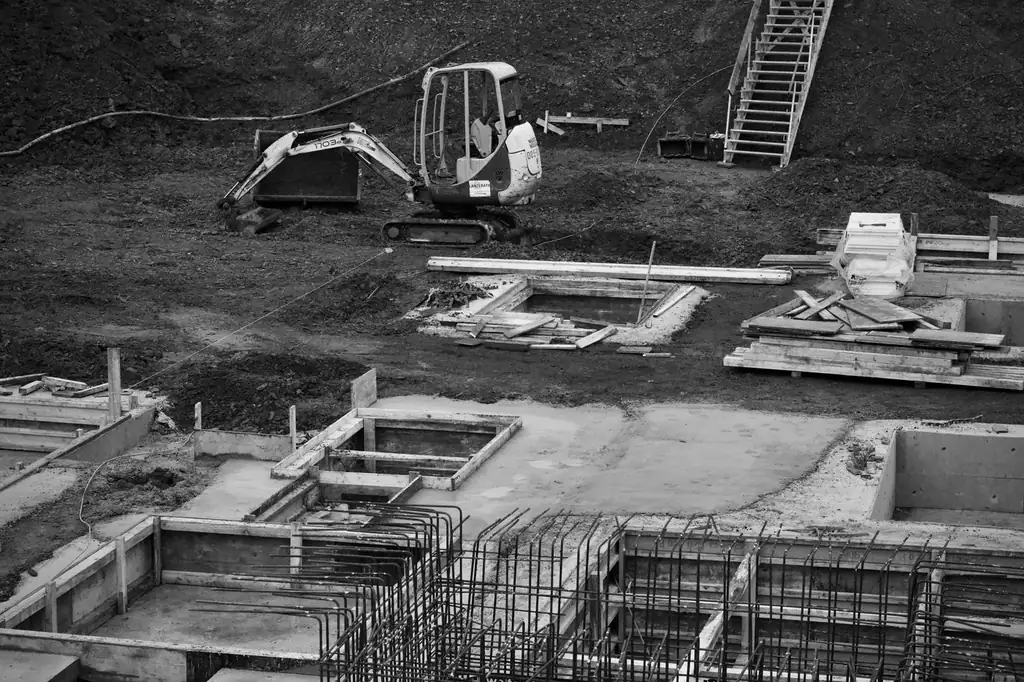
An exterior foundation French drain means excavating a deep trench right beside a load-bearing wall, which carries collapse and structural risk. That is licensed-contractor work, not a weekend project. Use this article to decide whether a drain is even warranted before you get that far — and have any cracking, bowing, or wall movement assessed as a structural question first.
Sometimes the cheaper fixes are not enough, and that is exactly when a French drain earns its keep.
The signal is subsurface water that surface work cannot reach. If the wall keeps getting wet even after you have graded the soil away and moved the downspouts, if water seeps in chronically or rises from the base rather than appearing only after storms, or if the water table itself sits against the foundation for much of the year, you are dealing with groundwater — and a French drain is the tool built for it. Where the drain sits at the base of the footing, it is what we cover in foundation drains and footing drains; the general around-the-house case is laid out in our piece on a French drain around a foundation.
The distinction that decides everything is surface water versus groundwater. Surface water is redirected above ground by grading; groundwater is relieved below ground by a drain. Reading which one you have is the whole question.
| Clue | Points to surface water | Points to groundwater |
|---|---|---|
| Timing | Wet right after rain, dries between storms | Chronic, or persists even in dry spells |
| Location of entry | Traces to a downspout or a slope toward the house | Seeps in low, rises from the base |
| Response to grading | Improves when you regrade and extend downspouts | Continues despite good surface drainage |
| Water table | Normal, dry soil most of the year | Sits high against the wall much of the year |
| Right first move | Grading and downspout fixes | Consider a French drain |
Read the table as a two-column diagnosis. If your clues cluster in the left column, fix the surface first — you may never need the drain. If they cluster in the right, the drain is doing work grading cannot.
If the diagnosis lands on a French drain, there is still a choice of side, and it is worth knowing before you talk to a contractor.
An exterior foundation drain sits in the soil outside and intercepts water before it reaches the wall, but installing it means excavating to the footing. An interior drain runs at the base of the wall inside and manages water that has already reached the foundation, often paired with a sump. Each solves the problem from a different side, and which makes sense depends on access, cost, finished space, and the specifics of the house — a decision to make with a professional rather than from a rule of thumb.
A French drain around a foundation is the right answer to subsurface water — saturated soil or a high water table pressing against the wall that cheaper fixes cannot remove. But most foundation moisture starts as surface water, and grading and downspout work usually solve that first, far more cheaply than excavation. So diagnose before you dig: if the water appears after rain and traces to a downspout or a slope toward the house, fix the surface and you may never need the drain; if it is chronic and persists despite good surface drainage, the drain earns its place. Because soil, climate, water table, and how your home was built all shape the answer, treat this as a framework, rule out the cheap causes first, and route any structural sign or excavation work to a licensed professional.
FAQ
Often not as a first step. A French drain is warranted when water is pressing against the wall from saturated soil or a high water table that surface fixes cannot remove. If the problem is roof water discharging at the wall or a yard sloping toward the house, grading and downspout fixes usually solve it more cheaply first. Rule those out before committing to a trench.
It relieves water in the soil at the base of the wall. A perforated pipe in gravel gives that water an easy path to collect and drain away to an outlet, lowering the pressure pushing against the foundation. It is a subsurface fix for subsurface water — not a fix for surface water that grading or downspouts could redirect above ground.
A footing drain is a specific French drain installed at the base of the footing, usually when the house is built, to relieve water at the deepest point of the wall. A French drain is the general technique — a gravel-filled trench with perforated pipe — that can be placed at various depths. All footing drains are French drains, but not every French drain is at the footing.
Frequently, yes, if the water arriving at the wall is surface water. Regrading the soil to slope away from the foundation and extending downspouts removes water before it soaks in beside the wall. That handles a large share of foundation moisture at a fraction of the cost of excavation, which is why it is the first thing to try.
Both exist and solve the problem from different sides. An exterior drain intercepts water in the soil before it reaches the wall but requires excavation; an interior drain manages water that has already reached the base inside. Which makes sense depends on access, cost, and the specific situation, so it is a decision to make with a professional.
An exterior foundation drain means excavating a deep trench beside a load-bearing wall, which carries collapse and structural risk and calls for a licensed contractor. Simpler yard French drains away from the foundation are more approachable, but the closer the trench gets to the footing, the more it becomes professional work.
Watch the timing and the location. Water that appears at the wall right after rain, tied to a downspout or a slope toward the house, is surface water that grading can address. Water that seeps in chronically, rises from the base, or persists even in dry spells despite good surface drainage points to groundwater, which is where a French drain earns its place.
Keep reading
The two halves of a lasting foundation crack repair — sealing the crack and fixing the water feeding it — plus which cracks are a professional's job, not a DIY seal.
What exterior foundation waterproofing actually involves, why it means excavating to the footing, the layers that make it work, and why to try drainage fixes first.
Why gutters and foundation drainage solve different stages of the same water problem, why a gutter that discharges at the wall defeats itself, and how the two work together.