What Is a Drip Edge and Do You Need One?
A drip edge is the metal flashing that guides roof runoff into the gutter and off the fascia. Learn what it does, where it goes, and whether you need one.
Roof Runoff
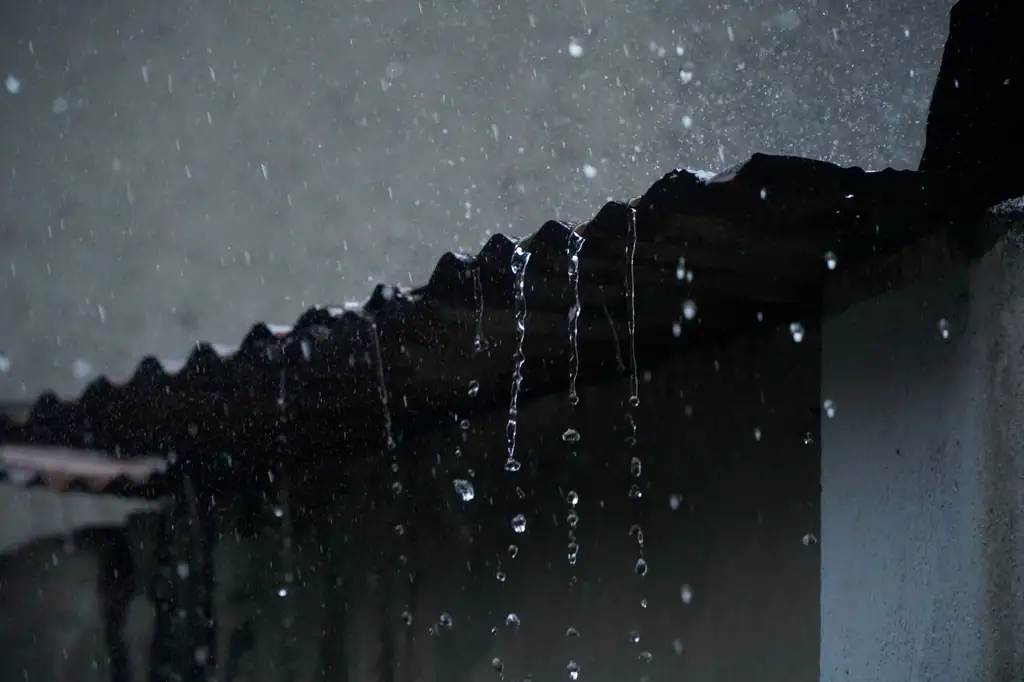
Anything poking through the roof — a chimney, skylight or vent — interrupts runoff and relies on flashing, and behind a chimney a cricket (a small diverter), to send water around it. Failed flashing at penetrations is a leading cause of roof leaks.
The short answer: anything that pokes through your roof, a chimney, a skylight, a vent pipe, interrupts the sheet of water running down the roof and forces it to go around. That job falls to flashing, and behind a chimney, often to a small diverter called a cricket. When that flashing fails, water gets in, and failed flashing at penetrations is one of the leading causes of roof leaks there is.
A clean roof plane sheds water beautifully. Rain sheets down it and off the eave, with nothing in the way. Punch a hole through it, for a chimney or a skylight, and you have changed the rules. Now the runoff coming down the slope hits an obstacle, and the roof has a seam around that obstacle that has to stay watertight. For the underlying picture of how water moves down a roof before it meets any of this, see how roof runoff works.
The pressure is not evenly distributed. The uphill side of a penetration, the high side facing the ridge, takes the brunt of it, because that is where the descending runoff runs straight into the obstacle. Water piles up there, debris collects there, and if the flow has nowhere to go, it sits against the seam and works at it. The downhill and side edges matter too, but the uphill side is the classic trouble spot.
How much water a penetration has to deflect depends on the roof area above it, the pitch, and rainfall, so there is no fixed figure. The wider the obstacle and the more roof draining toward it, the more the uphill side needs a way to split and shed that flow.
Flashing is thin, shaped metal that seals the joint between the roof and whatever passes through it, guiding runoff back onto the roof surface and around the obstacle. At a penetration, flashing is what stands between the interrupted water and the inside of your house.
Good flashing is not a single piece slapped on top. It is layered into the roofing in a specific sequence so that water always sheds over it, never under it. Around a chimney that typically means several components working together up the sides and across the top and bottom. Around a skylight it means a flashing kit fitted to the frame. When any of it is missing, short, corroded, or installed out of order, water finds the gap. Because getting flashing right is about sequence and integration, not just coverage, it is unforgiving of shortcuts. The related detail of kickout flashing, which throws water away from a wall where a roof edge ends, shows how precise these small metal pieces have to be to do their job.
Wide chimneys create a special problem: they present a broad wall to the runoff coming down the slope, and water plus debris can dam up against the uphill side. The answer is a cricket, sometimes called a saddle.
A cricket is a small raised ridge, essentially a tiny two-sided roof, built against the uphill face of the chimney. It splits the descending runoff and sends it around both sides of the chimney instead of letting it collect against the back. Think of it as a permanent diverter shaped into the roof itself. On a wider chimney it is not decoration; it is what keeps the high side from becoming a pond every time it rains. A cricket is a small structural addition, which is one more reason chimney work belongs to a professional.
Pulling it together, penetrations leak because they combine the two things a roof handles worst: concentrated water and a seam. The table below maps the common penetrations to where they tend to fail.
| Penetration | Weak point | Depends on |
|---|---|---|
| Chimney (narrow) | Uphill side and corners | Correct step and cap flashing |
| Chimney (wide) | Water damming on the uphill side | A cricket plus flashing |
| Skylight | Frame perimeter, uphill edge | A properly fitted flashing kit |
| Vent pipe | The collar around the pipe | An intact flashing boot |
| Any penetration | The seam where it meets the roof | Flashing integrated in the right order |
In nearly every case, the failure is not the chimney, skylight, or vent itself. It is the flashing around it, aged, damaged, poorly installed, or missing a cricket it needed.
Flashing repair and cricket construction at a penetration is height work that must be integrated correctly with the roofing. A chimney cricket is a small structural addition, and flashing done out of sequence can trap water and cause the leak it was meant to stop. For most homeowners this is a job for a qualified roofing professional, not a caulk-gun fix.
Every chimney, skylight, and vent on your roof is a deliberate hole in a surface whose whole purpose is to keep water out. What makes those holes safe is not the object itself but the flashing that sends runoff around it, and on a wide chimney, the cricket that splits the flow before it can dam against the uphill side. When you understand that, roof leaks stop being mysterious: the open field of a roof rarely fails, but the seams around penetrations do, and failed flashing there is a leading cause of leaks. Because the work sits at height, has to be integrated in a precise sequence, and can involve a small structural addition, it is nearly always a job for a roofing pro. Your role is to know where to look, especially the uphill side, catch the early signs, and get the right person up there before a tired seam becomes a stained ceiling.
FAQ
Because they interrupt the roof's runoff and force water to go around them, which puts a lot of pressure on the flashing that seals the joint. Anywhere something pokes through the roof, the roof has a seam to defend, and failed flashing at these penetrations is a leading cause of roof leaks.
A cricket, sometimes called a saddle, is a small raised ridge built on the uphill side of a chimney. It splits the runoff coming down the roof and sends it around both sides of the chimney instead of letting it pile up against the back. On wider chimneys especially, it prevents water and debris from damming behind the chimney.
On the uphill, or high, side, where runoff coming down the slope runs straight into the chimney. Without a cricket to divide the flow, water and debris pool there, and that standing water works at the flashing and mortar. It is the classic weak point on a chimney.
Usually not. Penetration flashing is height work, it has to be integrated correctly with the roofing to shed water, and a chimney cricket is a small structural addition. Done poorly it can trap water and cause the very leak it was meant to prevent. This is generally a job for a qualified roofing pro.
Interior stains near a chimney chase, below a skylight, or around a vent are common signs, and they often show up after heavy or wind-driven rain. Because water can travel along framing before it drips, the stain may appear somewhat away from the actual penetration.
Yes. A skylight interrupts the roof the same way a chimney does, and it relies on a flashing kit to send runoff around its frame. Many skylight leaks trace back to flashing that was installed poorly, damaged, or has aged, rather than to the skylight glass itself.
Sealant is a temporary patch at best. It may slow a leak for a season, but it is not a substitute for correct flashing, which is shaped and layered to shed water. Relying on caulk usually hides a problem while water keeps working behind it.
Keep reading
A drip edge is the metal flashing that guides roof runoff into the gutter and off the fascia. Learn what it does, where it goes, and whether you need one.
Dormers, valleys and roof-to-roof transitions concentrate runoff over seams, which is why they leak. Here is what to watch and how the fixes work.
Kickout flashing diverts roof runoff away from the wall and into the gutter where a roof meets a wall. Learn why missing it causes hidden rot and how to spot it.