Sump Pump Discharge Freezing in Winter
Why a sump pump discharge line freezes in winter, the damage a blockage causes, and how slope, drainage, and fittings lower the risk.
Sump Pumps & Interior Drainage
A sump pump's discharge line must release water far enough from the house that it doesn't drain right back to the pit — and it must not tie into a sanitary sewer where that's prohibited. Freezing, grade and local rules all shape where it can go.
A sump pump’s discharge line has one job that’s easy to get wrong: put the water somewhere it won’t come straight back. That means far enough from the house that it doesn’t soak back down to the pit, onto ground that slopes away, and — critically — not tied into a sanitary sewer where local rules forbid it. Freezing in winter, your lot’s grade, and your municipality’s code all shape where the line can actually go. Get the discharge point right and the pump does its job; get it wrong and you’ve built a loop that never ends.
This is a companion to how a sump pump works, zeroed in on the one component that quietly sinks a lot of otherwise-fine systems.
Picture a discharge line that dumps a few feet from the foundation, right against the wall. The pump lifts the water out of the pit, the pipe drops it next to the house, the water soaks into the soil, and — because that soil drains toward the low point of your basement — it works its way right back to the pit. The pump runs again. And again.
That loop wastes the pump, wears the motor, and keeps the ground around your foundation permanently saturated, which is the last thing you want. The fix is conceptual and simple: get the water far enough away, and downhill enough, that it can’t return. Everything else about discharge placement is a variation on that idea.
The same logic applies to roof water, which is why downspout extensions matter for the same reason — water released near the wall finds its way back to the foundation no matter what put it there.
There’s no universal magic number, but the direction is fixed: farther out and farther downhill is better. A commonly cited target is releasing water several feet from the foundation — often around ten — onto ground that slopes away from the house. The right distance for your property depends on the grade you actually have and how your soil drains. A steep, well-draining lot may carry water off easily a shorter distance out; a flat lot with heavy clay may need more length and a deliberate slope to move it anywhere.
The non-negotiable part is that the water must end up somewhere it flows away, not somewhere it pools. Releasing water onto flat ground or into a low spot just relocates the problem a few feet. Pair the discharge point with the same thinking you’d apply to water pooling near the foundation — the goal in both cases is soil that sheds water away from the house.
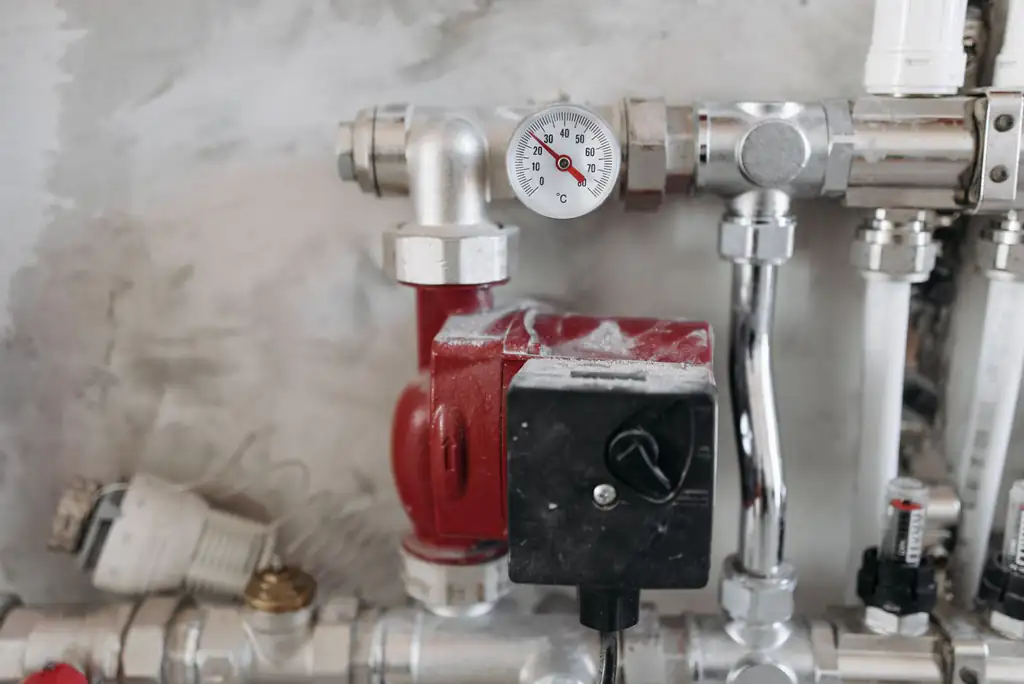
In cold climates, the discharge line is a freezing hazard. Water left standing in a flat or uphill section of pipe turns to ice, and a plug of ice blocks the line completely. When that happens, the pump has nowhere to send water — it can run against the blockage and burn out the motor.
A frozen discharge line is a pump-killer even when the pump itself is perfect. Slope the run so it drains after each cycle instead of holding standing water, keep the outlet clear of snow, ice, and debris, and check it after cold storms. Some homeowners use freeze-resistant fittings or an above-grade section designed to shed ice; whatever the method, the principle is to leave no standing water to freeze.
Here’s a rule that surprises people: in many places, you may not tie a sump discharge into the sanitary sewer. The reason is that sump water is storm and groundwater, and dumping it into the sewer that carries wastewater to treatment can overload the system, especially during the heavy storms that run the sump hardest.
Rules vary from one municipality to the next, and some older homes have grandfathered connections that current code wouldn’t allow. Because the specifics differ by location — and because getting this wrong can mean fines or a mandated correction — this is one to verify with your local building or water authority before you do anything. Don’t assume it’s permitted just because a neighbor’s line runs that way.
Plumbing and electrical work. Rerouting a discharge line, adding fittings, or tying into any drainage system can involve plumbing that must meet local code, and the pump itself belongs on a properly grounded circuit. Leave permanent plumbing changes and any electrical work to a licensed plumber or electrician rather than improvising near standing water.
Where the water finally lands generally comes down to a few options. Which fits depends on your lot’s slope, your soil, and your local rules.
| Option | How it works | Best where | Watch out for |
|---|---|---|---|
| To daylight | Line exits at a lower point and water flows out naturally on the surface | Lots with enough downhill grade | Needs a suitable low spot; can freeze at the outlet |
| Away from foundation, onto graded soil | Releases water several feet out onto ground sloping away | Most lots with workable grade | Flat or clay soil may not carry it off |
| Dry well | Buried chamber lets water percolate into surrounding soil | Well-draining soil, where code allows | Poor in clay; must sit far from the house |
| Sanitary sewer | Ties into the wastewater line | Rarely — often prohibited | Frequently against code; verify locally first |
It’s worth keeping two ideas distinct. Managing where the discharge water goes is drainage — moving water away so it doesn’t return to the foundation. That’s different from waterproofing, which is sealing or protecting the structure itself against moisture. A well-placed discharge line is a drainage fix. It reduces how much water reaches the pit, but it isn’t a substitute for waterproofing measures, and neither one replaces good grading and gutters keeping water away in the first place.
The discharge line is a small piece of pipe that decides whether the whole system works or just spins in place. Send the water far enough, downhill enough, freeze-safe enough, and within the rules — and the pump finally gets to stay off between storms.
FAQ
Far enough that the water doesn't just soak back to the pit — a commonly cited target is at least several feet, often around ten, out from the foundation, onto ground that slopes away. The exact distance depends on your lot's grade and soil, so treat any single number as a starting point rather than a rule.
Often no. Many municipalities prohibit tying a sump discharge into the sanitary sewer, because storm water overloads the treatment system. Rules vary by location, so this is one to verify with your local authority before doing anything — don't assume it's allowed just because a nearby connection exists.
Water left standing in a flat or uphill section of pipe freezes in cold weather and blocks the line. With nowhere to send water, the pump can run against the blockage and burn out. Sloping the run so it drains after each cycle and keeping the outlet clear of snow and ice both help reduce the risk.
Discharging to daylight means running the line so it exits at a lower point on the property where water can flow out naturally onto the surface, using the lot's slope. It avoids relying on a pit or connection and lets gravity carry water away — provided you have the grade and a suitable spot for it to emerge.
It can, where soil and codes allow. A dry well is a buried pit or chamber that lets pumped water percolate into the surrounding soil away from the foundation. It works best in well-draining soil and must sit far enough from the house that the water doesn't migrate back, so local rules and soil conditions govern whether it's a fit.
Very much so. If the line dumps near the wall, that water soaks the soil against the foundation and often drains right back to the pit, keeping the ground saturated and the pump cycling. Moving the outlet well away and downslope is one of the simplest ways to stop feeding water back to the problem.
Keep reading
Why a sump pump discharge line freezes in winter, the damage a blockage causes, and how slope, drainage, and fittings lower the risk.
How a sump pump works in a crawl space — when you need one, how it pairs with a vapor barrier, access and maintenance challenges, and what it does and doesn't fix.
Why a sump pump hums but pumps no water — jammed impeller, air lock, clogged intake, stuck check valve, or frozen discharge — with a safe check for each cause.