What Drives the Cost of Gutter Guards
Gutter guard cost depends on guard type, linear footage, roof height and complexity, and DIY versus pro install. Learn the factors and avoid buying twice.
Cost & Planning

Gutter guards can be worth it when they cut how often you clean gutters that are hard or dangerous to reach and that clog often — but they are an added cost, not a maintenance-free promise. Whether they pay off depends on your trees, roof, climate and how you would otherwise handle cleaning, so weigh the guard cost against the cleaning cost it actually replaces.
Gutter guards can be worth paying for — but only under the conditions that actually make them earn their keep. They are worth it when they meaningfully cut how often you clean gutters that are hard or dangerous to reach and that clog often. They are a weak investment on a low, tree-free roof you barely clean anyway. And no guard, at any price, is the maintenance-free promise the marketing implies. Whether guards pay off is a personal calculation: the cost of the guard against the cost of the cleaning it genuinely replaces, over years, for your specific trees, roof and climate.
A gutter guard is not a repair or a capacity upgrade — it is a maintenance-reduction product. You are paying up front to clog less often later. That framing matters, because it means the value of a guard is entirely relative to what your gutters would cost you to maintain without one.
Two houses can buy the identical guard and get opposite value. On a two-story house ringed by oaks and pines, where cleaning is frequent and involves real height and risk, cutting the number of cleanings is worth a lot. On a single-story house with no overhanging trees, where the gutters need clearing once a year and you can do it from a step ladder, the same guard saves very little. The product did not change; the situation did.
We do not quote guard prices here — they range enormously from inexpensive foam and brush inserts to premium professionally installed micro-mesh systems, and installation labor varies as much as the material. What stays consistent is how to judge the value: guard cost versus the cleaning cost it truly replaces.
Heavy leaf and needle load is what makes guards pay. Under oaks, maples and pines that dump debris every autumn, gutters clog fast and a guard prevents a lot of clearing. Under a clear sky, the guard prevents very little. The type of debris matters too — fine pine needles defeat some guards that handle broad leaves easily, which is why matching guard type to debris is central to choosing the best guard for your home.
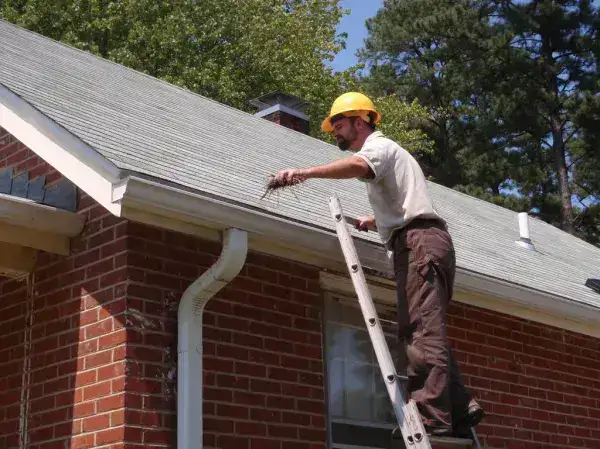
The harder and more dangerous your gutters are to reach, the more a guard is worth. Cleaning a tall, steep or awkward roof costs more when you hire it out and carries more risk when you do it yourself. Reducing those cleanings has real value. A low roof you can safely clear in an afternoon changes the math the other way.
In snow and ice country, some guards help and some create problems — reverse-curve and solid-top designs can shed differently, and ice can form on and under guards. A guard that ices up trades one chore for another, so cold-climate buyers should read how guards behave in snow and ice before assuming savings.
The comparison is against your real alternative. If you would pay a service several times a year, a guard offsets a recurring bill. If you would do it yourself for the cost of an afternoon, the guard mostly buys back time and reduces risk rather than cash. Both are legitimate reasons to buy — but they are different reasons, and honest math names which one applies.
| Guards tend to be worth it when | Guards tend to be a weak buy when |
|---|---|
| The roof is tall, steep or hard to reach | The roof is low and easy to clean safely |
| Heavy leaf or needle load clogs gutters often | Little tree cover; gutters rarely clog |
| You would otherwise pay a service repeatedly | You clean it yourself in an afternoon |
| The guard type suits your debris and climate | The wrong type traps needles or ices up |
| You value reduced risk and time highly | You are chasing a purely financial return |
The clean story guards are sold with is “install once, never clean again, save forever.” The honest version is quieter. A well-matched guard on a demanding house can genuinely reduce cleanings for years and reduce the risk of ladder work, and over that span it can offset much or all of what you would have spent cleaning. A poorly matched guard, or one on an easy house, can cost more than the cleaning it saves — and still need occasional attention on top.
Start by naming what cleaning actually costs you today — in money if you hire it, in time and risk if you do not — and how often. Then match a guard type to your real debris and climate rather than to a sales pitch, and price it as a separate line even if you are replacing gutters at the same time. If the guard’s cost is comfortably less than years of the cleaning it replaces, and it genuinely reduces work or risk you care about, it is worth it. If you are buying it to end maintenance forever, no guard will keep that promise, and you can read why in do gutter guards eliminate cleaning. For a fuller weighing of the trade-off, are gutter guards worth it covers the performance side in detail.
Gutter guards are worth paying for when they cut frequent, difficult or risky cleaning on a house that demands it — and a poor buy when they are asked to solve a problem you barely have. The number that decides it is not the guard’s price in isolation but the guard’s price against the cleaning it truly replaces, over years, for your trees, roof and climate. Do that comparison honestly and the answer for your house becomes clear, even though there is no single answer for every house.
FAQ
Sometimes, but not automatically. A guard pays off when it meaningfully cuts cleanings you would otherwise pay for on a tall or tree-heavy house. On a low, tree-free roof you rarely clean anyway, the payback is weak. The math is personal — compare the guard's cost against the cleaning cost it genuinely replaces over years, not the marketing promise of never cleaning again.
No honest guard does. Guards reduce how often gutters clog, but fine grit, pollen, shingle grit and pine needles still get through or sit on top, and the guard surface itself needs occasional attention. Treat them as reducing maintenance, not ending it.
Not necessarily. A premium micro-mesh guard may be the right answer under heavy pine or oak, while a mid-range screen is plenty under light leaf load. Paying for performance you do not need is not value. Match the guard to your actual debris, roof and climate rather than to the price tag.
Buying them for a low, easy-to-clean roof with little tree cover, choosing a type that struggles with your specific debris, or expecting them to end maintenance. Guards that trap needles on top, or ice up in cold climates, can create new chores that cancel out the savings.
It is a sensible time to consider them because the system is already open, but keep them on a separate line so you can judge them on their own merits. Bundling guards into the base gutter price makes it impossible to tell what the guards themselves are costing you.
They can be a modest selling point, but they are not a reliable financial return. Buyers appreciate lower maintenance, yet guards in poor condition or the wrong type for the roof can read as a future expense. Their real value is convenience while you live there, not resale math.
Keep reading
Gutter guard cost depends on guard type, linear footage, roof height and complexity, and DIY versus pro install. Learn the factors and avoid buying twice.
Gutter cleaning cost depends on linear footage, height, roofline, how clogged and accessible the gutters are, and how often you book it. Learn the factors.
Gutter guards are a big upfront cost, cleaning a recurring one. Compare them over years using your trees, height and guard type instead of a single price.