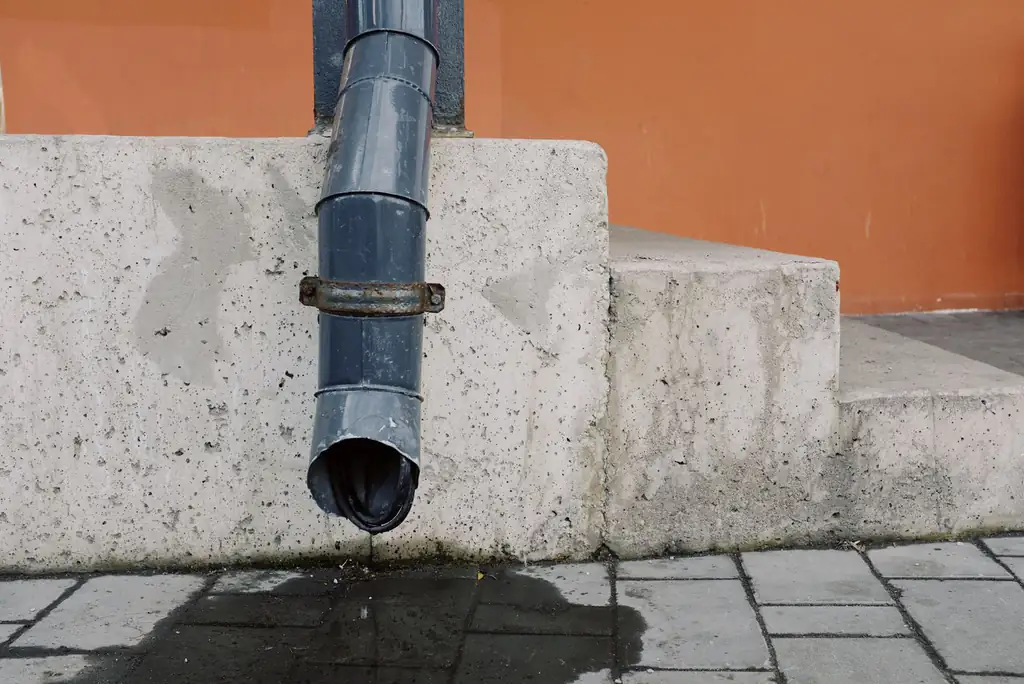
How to Quiet a Noisy Downspout
Why downspouts drum, drip, and rattle in the rain, and the simple fixes that quiet them without replacing the whole run.
Downspouts

A strainer or leaf guard at the top of a downspout keeps leaves from packing the outlet and the pipe below. They help, but they also collect debris that must be cleared — trading a hidden clog for a visible one you have to maintain.
A downspout strainer is a small piece of hardware with a simple job: sit in the gutter outlet and stop leaves from washing down into the pipe. Leaf guards at the outlet do the same thing in a slightly different form. They genuinely help — but they come with a catch that is easy to miss. They do not make debris disappear; they just move where it collects. Instead of a clog hidden deep in the pipe, you get a visible pile at the top that you have to clear. Whether that is a good trade depends on your downspout and how faithfully you will maintain it.
At the top of every downspout is an outlet — the opening in the bottom of the gutter where water drops into the pipe. That outlet, and the elbows just below it, are where roof debris tends to pack in first. A strainer is a dome or basket, often wire or plastic, that seats in that outlet and catches leaves, twigs and larger bits before they enter the pipe. An outlet leaf guard does the same thing with a cover or cage over the opening.
The value is about location. A clog down inside the downspout — or worse, inside a buried line — is hidden and awkward to clear. A strainer intercepts that debris up top, where you can see it and lift it out. If your downspout already backs up regularly, understanding where it catches is the first step; our guide to why a downspout is not draining covers tracing the blockage.
Here is the part that gets glossed over. A strainer does not eliminate the debris — the same leaves still land on your roof and wash toward the outlet. The strainer just stops them at the top instead of letting them pack the pipe. That means the debris now collects on the strainer, in plain view, and it has to be cleared or it will eventually block the outlet itself.
So the honest way to describe a strainer is a trade: you swap a hidden clog you might not notice until the gutter overflows, for a visible pile you have to maintain on some regular schedule. For most people that is a good deal — a mound of leaves you can see and lift out beats a blockage buried in an elbow. But it is only a good deal if you actually do the clearing.
A strainer that is never cleared becomes the exact clog it was meant to prevent. Packed solid with leaves, it blocks the outlet and the gutter overflows — even though the pipe below is perfectly clear. Maintenance is not optional with these; it is the whole point.
Strainers are not equally worthwhile everywhere. They pay off most in a few specific situations:
Conversely, on a short, straight downspout with little overhead debris, a strainer adds a maintenance chore for a problem you did not really have.
There is no universal schedule — it depends on how much lands on your roof. The visible pile is your gauge: when debris starts to mound on the strainer, clear it.
| Situation | Rough clearing frequency | Why |
|---|---|---|
| Heavy tree cover | Several times through fall | Debris piles up fast |
| Moderate leaf fall | A couple times a year | Steady but manageable buildup |
| Little overhead debris | Occasionally, as needed | Slow to accumulate |
| Feeds a buried line | Check before major storms | Hidden clog is costly to clear |
Treat these as starting points. A single stormy week under an oak can undo a whole season’s worth of a lighter estimate.
Clearing a strainer means working at the gutter line. That usually puts you on a ladder, sometimes near the roof edge. If reaching the outlet means overreaching or stretching from the top rungs, reposition the ladder or bring in someone equipped for the height — routine leaf-clearing is not worth a fall.
Downspout strainers and outlet leaf guards do exactly what they promise: they keep leaves out of the pipe and out of the elbows and buried lines where a clog would be hardest to reach. But they do it by moving the debris, not removing it — trading a hidden clog for a visible pile you have to clear. That trade is well worth it on downspouts feeding buried lines, on runs with many turns, and under heavy trees, as long as you actually keep up with the clearing. Neglect it and the strainer becomes the very clog it was installed to prevent. Used with that maintenance in mind, it is one of the simplest ways to keep a downspout draining.
FAQ
A strainer sits in the gutter outlet at the top of the downspout and blocks leaves and larger debris from entering the pipe. The idea is to stop material before it reaches the elbows and the run below, where a clog would be hidden and harder to clear. The debris still collects, but it collects where you can see and remove it.
They change where clogs happen more than whether they happen. A strainer keeps debris out of the pipe, but the debris then piles up on the strainer itself, and if it is never cleared it eventually blocks the outlet. So a strainer trades a hidden clog deep in the pipe for a visible one at the top that you have to maintain.
It depends on how much falls on your roof. A house under heavy tree cover may need the strainer checked several times through fall, while a house with little overhead debris might only need it a couple of times a year. The visible pile on top is the signal — when it starts to mound up, it is time to clear it.
They earn their keep most on downspouts that feed a buried line or a run with many turns, where a clog would be hidden and hard to reach. A strainer keeps the worst debris out of exactly the places you cannot easily clear, moving the maintenance to the accessible top of the pipe instead.
It can, if it is never maintained. A neglected strainer packs solid with leaves and blocks the outlet entirely, so the gutter overflows even though the pipe below is clear. A strainer only helps if it is cleared on some regular basis; left alone, it becomes the clog it was meant to prevent.
Not quite. Gutter guards cover the length of the gutter to keep debris out of the trough, while a downspout strainer or outlet guard focuses specifically on the opening where water enters the downspout. They can work together, but a downspout strainer addresses the outlet in particular, which is a common clog point even on a guarded gutter.
Yes. A strainer protects the downspout outlet, not the whole gutter. Leaves and grit still collect in the trough and around the strainer, and both need clearing. A strainer reduces hidden clogs in the pipe, but it does not remove the need to keep the gutters themselves clean.
Keep reading
Why downspouts drum, drip, and rattle in the rain, and the simple fixes that quiet them without replacing the whole run.
Why downspouts freeze in winter, the backup risk a frozen pipe creates, how to prevent it, and what you should never do to thaw one.
When upsizing to larger downspouts like 3x4 actually helps, why the gutter outlet has to match, and how to avoid simply relocating the bottleneck.