How to Find a Drainage Outlet on Your Property
The outlet is where a drain sends its water, and finding one is the real challenge in most projects. How to spot low points, read your slope, and weigh daylight, dry wells and permitted connections.
Drainage
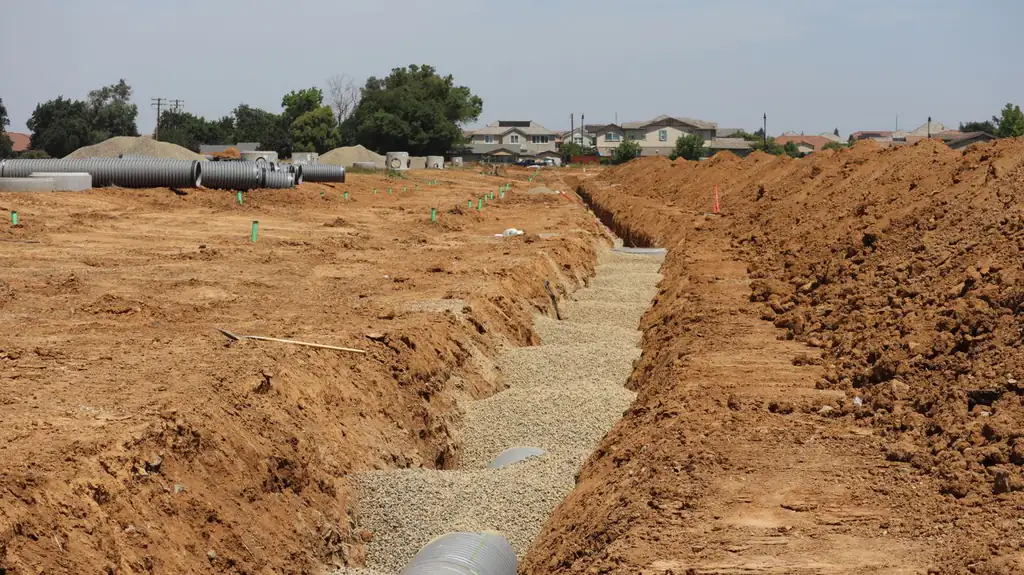
Daylighting a drain means running the pipe out to a lower point where it simply opens at the surface and lets water flow out by gravity. It is the simplest, most reliable outlet when the land slopes away — no pump, pop-up or dry well needed.
Of all the ways to end a drain line, one stands out for being almost boringly reliable: just let the pipe come out of the ground somewhere lower and pour the water out. It has a name — daylighting — and where the land cooperates, it beats every fancier alternative precisely because there is nothing to it.
Daylighting a drain means running the pipe to a lower point where it opens at the surface and lets water flow out by gravity — the pipe emerges into the daylight and discharges onto lower ground. When the land slopes away from the drain, it is the simplest and most reliable outlet there is: no pump to power, no pop-up lid to lift, no dry well depending on the soil. Gravity does everything. The only requirements are real fall from the drain to the outlet and lower ground that can accept the water.
Picture a drain line collecting water — from a yard, a footing, a buried downspout run — and carrying it through a pipe that gently falls the whole way. At the far end, instead of a mechanism, the pipe simply comes out of a bank or slope and opens. Water runs down the line and out the open end onto the lower ground below. That open end “sees daylight,” which is where the term comes from.
The beauty of it is what is not there. Nothing operates a daylight outlet. It does not wait for pressure to build, it has no moving parts to jam, and it needs no electricity. As long as water arrives at the open end, it flows out. That makes daylighting the most failure-resistant outlet in residential drainage — the fewer components between the water and where it needs to go, the fewer things can fail.
Daylighting has one firm requirement: the land has to slope away from the drain to a lower point you can reach with the pipe. Specifically, you need continuous fall from the drain to the outlet so water flows out on its own, and lower ground that can accept the discharge without simply backing up or flooding a spot you care about.
Where those conditions exist, daylighting is usually the best outlet you can choose, and it is one of the main reasons a sloped site is easier to drain than a flat one. Finding that lower point is itself the crux of many projects — our guide on finding a drainage outlet covers how to read your slope and low points to locate one.
Where the conditions do not exist — flat ground, or no reachable lower spot — daylighting is off the table, and you look at the alternatives below.
A daylight outlet has to release onto ground that can accept the water and that you are allowed to send it to. Aiming concentrated discharge onto a neighbor's property can cause legal and neighborly problems and is often regulated. Confirm where you may discharge under local rules before you set the outlet, and never point it at a lower neighbor without understanding the rules first.
Daylighting is one of three common ways to end a residential drain line, and the right choice comes down to whether you have somewhere lower to flow to and whether your soil drains.
A pop-up emitter is what you reach for when the pipe cannot emerge naturally — say the lowest reachable spot is a flat lawn. It is a lidded fitting that opens under water pressure and closes again, but it needs enough slope to build that pressure, and on truly flat ground it holds standing water. If you have a slope where the pipe can simply daylight, that simpler open outlet is often preferable to the emitter’s moving lid.
A dry well solves a different case: no lower ground to daylight to, but soil that drains well enough to soak water away. Instead of flowing out onto the surface, the water soaks into the ground. In slow clay a dry well fails; on a flatter site with well-draining soil it can be the answer where daylighting cannot reach.
Daylighting also frequently pairs with buried roof-water lines. A downspout dropped into solid pipe and carried away from the house can simply daylight at a lower point, which is one of the tidiest ways to handle it — see underground downspout drainage for building that run.
| Outlet | Use when | Depends on |
|---|---|---|
| Daylight | Land slopes away to a lower point | Continuous fall; lower ground to accept water |
| Pop-up emitter | Pipe can’t emerge naturally, e.g. flat lawn | Enough slope to build opening pressure |
| Dry well | No lower ground, but soil drains | Soil that actually accepts water |
The one weakness of a daylight outlet is the open end, and it is entirely manageable. Because the whole line drains through that opening, a blocked outlet backs water up the entire pipe. Keep it working with a little routine attention:
Daylighting is drainage at its most honest: run the pipe downhill, open it at a lower point, and let gravity carry the water out. Where the land slopes away, nothing else matches it for reliability, because there is almost nothing to break. Give it real fall to a lower spot you are allowed to discharge to, keep the open end clear, and it will quietly outlast every mechanism you could have installed instead. Try it on flat ground, though, and it is no outlet at all — that is when a pop-up emitter or a dry well takes over.
FAQ
Daylighting a drain means running the pipe to a lower point where it opens at the surface and lets water flow out by gravity. The pipe literally comes out into the daylight and discharges onto lower ground. It is the simplest kind of drain outlet because nothing operates it but gravity.
When the land slopes away from the drain to a lower point you can reach with the pipe. You need continuous fall from the drain to the outlet so water flows out on its own, and lower ground that can accept the discharge. Where those exist, daylighting is usually the best outlet available.
A daylight outlet is an open pipe end on a slope, always ready to flow. A pop-up emitter is a lidded fitting used where the pipe cannot emerge naturally, such as a flat lawn, and it opens under water pressure. If you have a slope where the pipe can daylight, that simpler outlet is often preferable.
When there is no lower ground to daylight to but the soil drains well enough to soak water away. Daylighting needs somewhere lower for water to flow out onto. A dry well lets water soak into the surrounding soil instead, which suits flatter sites with well-draining ground.
Keep the open end clear of soil, leaves, mulch and overgrowth, protect it with an animal guard or grate so nothing nests in the pipe, and check and flush it seasonally and after big storms. A buried or blocked outlet backs water up the whole line, so the opening has to stay open.
Yes. Daylighting relies entirely on gravity, so the outlet must sit lower than the drain with continuous fall between them. If the outlet is not genuinely below the drain, water will not flow out on its own and can stand in the line instead.
Discharging concentrated water onto a neighbor's land can cause legal and neighborly problems and is often regulated. Do not aim a daylight outlet at someone else's property without understanding local rules first. The outlet has to release onto ground that can accept the water and that you are allowed to send it to.
Keep reading
The outlet is where a drain sends its water, and finding one is the real challenge in most projects. How to spot low points, read your slope, and weigh daylight, dry wells and permitted connections.
The outlet decides whether a French drain works. Daylighting, pop-up emitters, and dry wells compared, plus where you must never send the water.
How pop-up emitters work as a drain outlet, where they fit, the slope they require to open, and why flat ground and freezing conditions cause them to fail.