Ice Dams on Low-Slope Roofs
Why low-slope roofs are more vulnerable to ice dams and leaks, and how attic sealing, insulation, and eave membrane reduce the risk.
Ice Dams & Winter Water
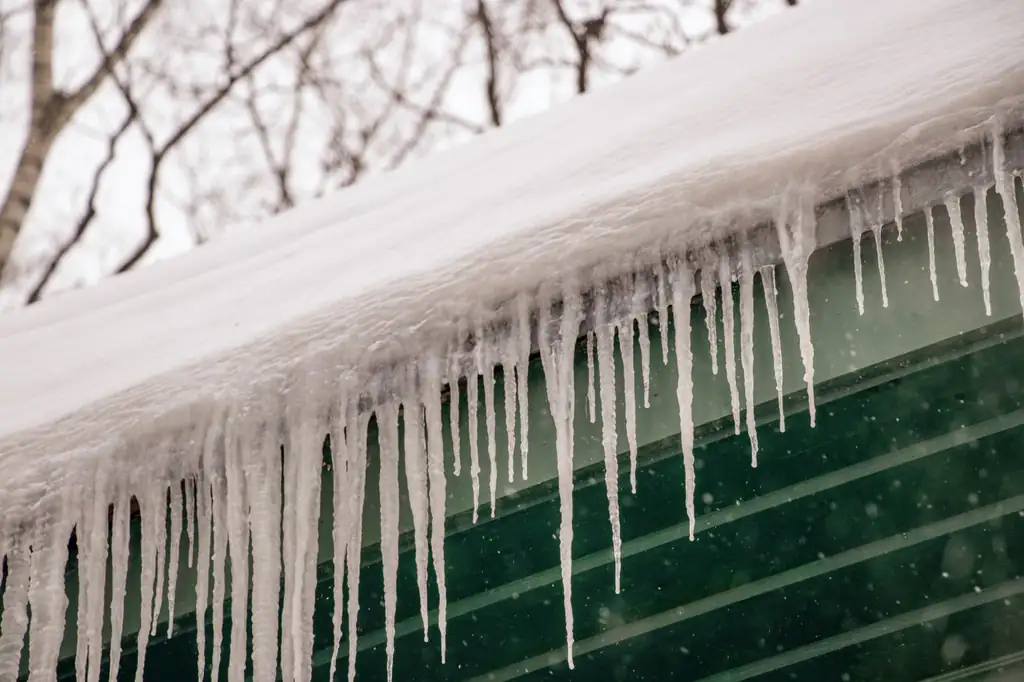
Ice dams damage a home in stages — trapped meltwater backs up under shingles and leaks into walls and ceilings, soaks insulation, stains and rots, and the weight of ice bends gutters and fascia. Interior leaks are the sign it is already past cosmetic.
Ice dams do not damage a house all at once. They work in stages: trapped meltwater backs up under the shingles, finds its way into walls and ceilings, soaks the insulation, stains and eventually rots the wood, while the sheer weight of the ice bends gutters and pulls on the fascia. By the time you see water indoors, the problem is already well past cosmetic.
An ice dam forms when heat escaping the roof melts snow, the water runs down to the cold eave, and it refreezes into a ridge. Behind that ridge, more meltwater pools. Roofs are designed to shed water that runs downhill over the shingles — they are not designed to hold a standing pond. That standing water is where the trouble starts.
Shingles overlap to shed running water, not to seal against a pool sitting on top of them. When meltwater backs up behind the dam, it can work its way up and under the shingle edges and reach the roof deck. This is the quiet first stage — nothing is visibly wrong inside yet, but water is already getting past the roof’s outer layer.
From the deck, water follows gravity and framing into the structure. It shows up as stains on ceilings and walls, often near an exterior wall, sometimes feet away from the actual dam. You may see peeling paint, bubbling drywall, or a damp musty smell before you see an obvious drip. Because the path is hidden, a small stain usually means more water has traveled than what you can see.
Water reaching the attic soaks the insulation. Wet insulation slows heat far less than dry insulation, which — frustratingly — lets even more heat reach the roof deck and can make the next dam worse. It also stays damp, setting the stage for the final stage.
Repeated wetting of framing, sheathing, and drywall over a winter invites mold and, over time, wood rot. These are the expensive, slow forms of damage — the ones that outlast the ice by months.
Ice is heavy. A thick ridge along the eave, plus a row of large icicles, loads the gutter and the fascia board it hangs from. That weight can bend gutters, pull fasteners loose, and stress the fascia. This damage is on the outside and easier to spot, but it points to how much ice the roof edge is carrying.
| Where | What you might notice | What it suggests |
|---|---|---|
| Ceilings | Faint stains, especially near exterior walls | Water is already past the shingles |
| Interior walls | Peeling paint, bubbling drywall, damp smell | Water tracking down inside the wall cavity |
| Attic | Damp or matted insulation, wet sheathing, frost | Roof deck leaking; insulation losing performance |
| Roof edge | Thick ice ridge, large icicles along the gutter | A dam holding standing water behind it |
| Gutters/fascia | Sagging, bent, or pulled-loose gutters | Ice weight overloading the edge |
Any interior sign means water is already getting in. Treat a ceiling stain as an alarm, not a blemish to paint over.
A leak can appear well away from the dam that caused it, because water travels along framing before it drips. Chasing only the visible stain often misses the source. If you are seeing interior water, the real fix is upstream: stop the roof from melting snow in the first place. See how to prevent ice dams.
Much of ice-dam damage is cumulative. One severe storm can start the leaking, but the rot, mold, and stubborn stains build across repeated freeze-thaw cycles all winter. Catching it at the ceiling-stain stage — and reducing what is feeding the dam — limits how far it progresses. Documenting leaks with photos and dates as they happen is also wise, both for tracking the problem and for any conversation with your insurer, whose coverage varies.
Do not climb onto an icy or snow-covered roof. It is extremely dangerous; serious ice-dam work is a job for professionals with the right equipment.
If a dam has already formed and is leaking, resist the urge to attack the ice yourself from a ladder or the roof. See our guide on removing ice dams safely for what can be done from the ground and when to call a professional.
Ice dams damage a home from the outside in and the top down — under the shingles, into the ceilings and walls, through the insulation, and eventually into rot, while ice weight bends the gutters. The through-line is that interior signs mean the damage is already underway, not just beginning. Catch it early, keep records, stay off the icy roof, and fix the warm-roof cause so next winter’s storm does not pick up where this one left off.
FAQ
Often it is subtle — a faint water stain on a ceiling or wall near an exterior wall, damp insulation, or peeling paint. By the time you see a stain indoors, water has already been getting past the shingles for a while.
Yes. The water travels under the shingles and into the roof deck and walls, so the leak can appear feet away from the dam, and the ice itself stays outside on the eave.
It can. Wet insulation loses much of its ability to slow heat, which ironically warms the roof more and can worsen future dams, and it stays damp long enough to invite mold and rot.
Yes. A heavy ridge of ice is very heavy, and its weight can bend gutters, pull them loose, and stress the fascia board they attach to. Large icicles add to that load.
It varies. A single bad freeze-thaw storm can start interior leaks, but much of the damage — rot, mold, stained ceilings — builds over repeated cycles across a winter.
Coverage varies by policy and situation, so check with your own insurer rather than assuming. Document leaks and damage with photos and dates as they happen.
Not from a ladder or the roof — that is dangerous and can damage the roof edge. Reducing snow load safely from the ground and calling a professional for the dam itself is the safer path.
Keep reading
Why low-slope roofs are more vulnerable to ice dams and leaks, and how attic sealing, insulation, and eave membrane reduce the risk.
The safe way to remove an ice dam is limited — rake from the ground and call a pro to steam an active leak. Never climb, chip, or use flame. A step guide.
How to use a roof rake safely from the ground to reduce ice-dam snow, plus snow-load basics — wet snow, drifting, and when heavy load becomes a structural worry.