How Ice Dams Damage Your Home
How ice dams damage a house in stages, from water backing up under shingles to soaked insulation, rot, and bent gutters — and the warning signs to catch it early.
Ice Dams & Winter Water
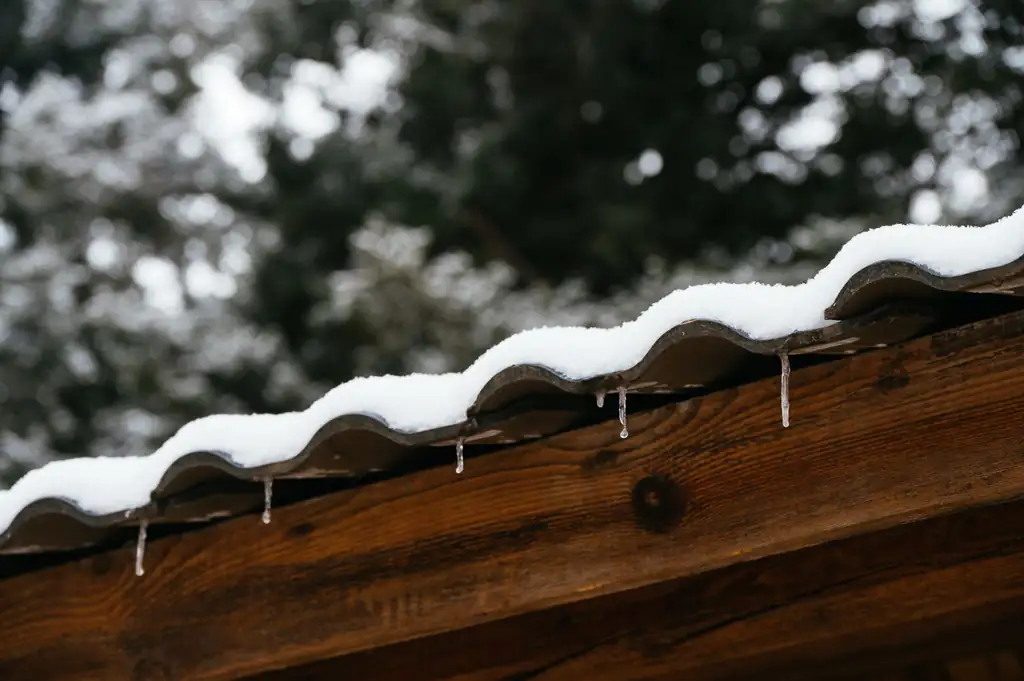
Low-slope roofs are especially prone to ice dams and leaks because water moves slowly and pools, giving meltwater time to refreeze and back up under the roofing. Attic sealing, insulation, and a good ice-and-water membrane at the eave matter even more here.
Low-slope roofs are more likely to develop ice dams and to leak when they do, because water drains slowly across a shallow pitch and has extra time to refreeze and pool near the eave. The dam still forms from heat escaping into the attic, but the flat geometry makes the consequences worse. Sealing attic air leaks, adding insulation, and installing a generous ice-and-water membrane at the eave all matter more on this kind of roof.
An ice dam is not really about the roof surface at all. It starts when warmth from the living space leaks up into the attic, warms the underside of the roof deck, and melts the bottom layer of the snowpack. That meltwater runs down until it reaches the eave, which hangs out beyond the heated walls and stays cold. There it refreezes, and the ridge of ice grows upward until water backs up behind it. If you want the full sequence, see how ice dams form.
On a steep roof, meltwater moves quickly and spends little time on any one spot before it clears the edge. On a low-slope roof, everything slows down. Water travels a longer, flatter path to the gutter, lingers on the surface, and gets more chances to refreeze on the way. When it does pool, it sits rather than sheds. Standing water is patient, and it will work its way into any lap seam, nail hole, or flashing joint it can reach.
Pitch is only part of the picture. A low-slope roof over a well-sealed, well-insulated, well-ventilated attic can shed snow evenly and stay dam-free, while a steep roof over a leaky attic can dam badly. Slope raises the stakes; it does not create the heat loss.
Two things compound on a shallow roof. First, the surface holds a thin film of meltwater longer, so refreezing is more likely during the cold overnight hours. Second, once a dam exists, the pond behind it is broader and shallower rather than a fast trickle over an edge. That wide, slow pond covers more fasteners and seams at once. Roofing materials are designed to shed water that runs downhill, not to hold back a standing pool, so the same dam that would drip off a steep roof can push water under the courses on a flat one.
The core strategy is identical to any roof: keep the deck cold and even. What changes is the emphasis. Because backup is easier and pooling is worse, the interior air barrier and the eave membrane both carry more weight.
| Factor | Steeper roof | Low-slope roof |
|---|---|---|
| Drainage speed | Fast; water clears quickly | Slow; water lingers |
| Refreeze risk | Lower per pass | Higher; more time on surface |
| Backup behind a dam | Narrow trickle | Broad, shallow pond |
| Eave membrane role | Important | More important |
| Attic air sealing payoff | High | Very high |
| Tolerance for heat loss | Some margin | Very little |
The table is a general guide, not a formula. Every house differs in insulation, ventilation, sun exposure, and how snow collects.
Air sealing the attic floor stops warm, moist indoor air from leaking up around recessed lights, plumbing stacks, the attic hatch, and top plates. Insulation then slows the heat that remains. Together they keep the roof deck closer to outdoor temperature so the snowpack does not melt from below. Balanced intake-and-exhaust ventilation flushes away any heat that slips past. On a low-slope roof, where you have almost no drainage margin to spare, getting this right is the difference between a cold roof and a slow, leaky one. Our guide to attic insulation and ventilation for ice dams walks through the priorities.
A self-adhering ice-and-water membrane bonds to the deck and seals around fasteners, so even if water backs up it has a much harder time reaching the interior. On a low-slope roof, codes and roofers often call for the membrane to extend farther up from the eave than on a steep roof, precisely because water can push higher behind a shallow-roof dam. The membrane does not prevent a dam. It buys you a dry ceiling when one forms anyway.
Do not climb onto an icy or snow-covered roof. It is extremely dangerous; serious ice-dam work is a job for professionals with the right equipment.
A low-slope roof can feel deceptively walkable, which makes it more tempting and no less hazardous. A thin, invisible glaze under fresh snow removes all traction, and there is rarely anything to catch a slide. Clearing snow from the ground with a roof rake, where you can reach safely, is a reasonable homeowner step; getting up on the roof is not.
If you see water stains spreading along an interior wall or ceiling near the eave during a winter thaw, or icicles and ice ridges building thick at the edge, treat it as a signal to get a professional assessment rather than a reason to climb up. A roofer or insulation contractor can evaluate the attic, check the membrane coverage, and identify where heat is escaping. For a sense of what unchecked backup can do inside the house, see ice dam damage to your home.
The through-line on a low-slope roof is simple: you have less drainage margin, so you get less forgiveness. Keep the deck cold with air sealing, insulation, and ventilation, back it up with a generous eave membrane, and leave the roof itself to people equipped to be up there safely.
FAQ
They tend to be more vulnerable because water drains slowly across a shallow pitch, giving meltwater more time to refreeze near the eave and pool behind the ice. The dam itself still forms from the same cause on any roof: heat escaping into the attic.
Roofers generally treat anything below about a 3-in-12 pitch as low slope, and truly flat roofs as a separate category. The shallower the pitch, the more slowly water sheds and the longer it lingers on the surface.
A self-adhering ice-and-water membrane along the eave is valuable on any cold-climate roof, and its role grows as pitch drops because water backs up more easily. The membrane does not stop dams from forming; it limits leaks when they do.
Heat cables may keep a drainage path open in spots, but they do not address the attic heat loss that creates dams, and they add cost and maintenance. Air sealing and insulation are the more durable fixes.
A shallow pitch drains slowly, so meltwater travels a longer, flatter path to the gutter. When it reaches the cold eave and refreezes, the growing ice ridge traps water behind it, and that standing water is what finds seams and fasteners.
Not necessarily. Low-slope roofs can also leak from ponding, failed seams, or flashing problems unrelated to ice. If leaks appear during a winter thaw and line up with the eave, an ice dam is a likely suspect.
Keep reading
How ice dams damage a house in stages, from water backing up under shingles to soaked insulation, rot, and bent gutters — and the warning signs to catch it early.
The safe way to remove an ice dam is limited — rake from the ground and call a pro to steam an active leak. Never climb, chip, or use flame. A step guide.
How to use a roof rake safely from the ground to reduce ice-dam snow, plus snow-load basics — wet snow, drifting, and when heavy load becomes a structural worry.