Icicles on Gutters — What They Mean
What icicles on your gutters actually mean, when they are harmless and when a big row signals an ice dam forming from a warm roof, and why knocking them off is not a fix.
Ice Dams & Winter Water
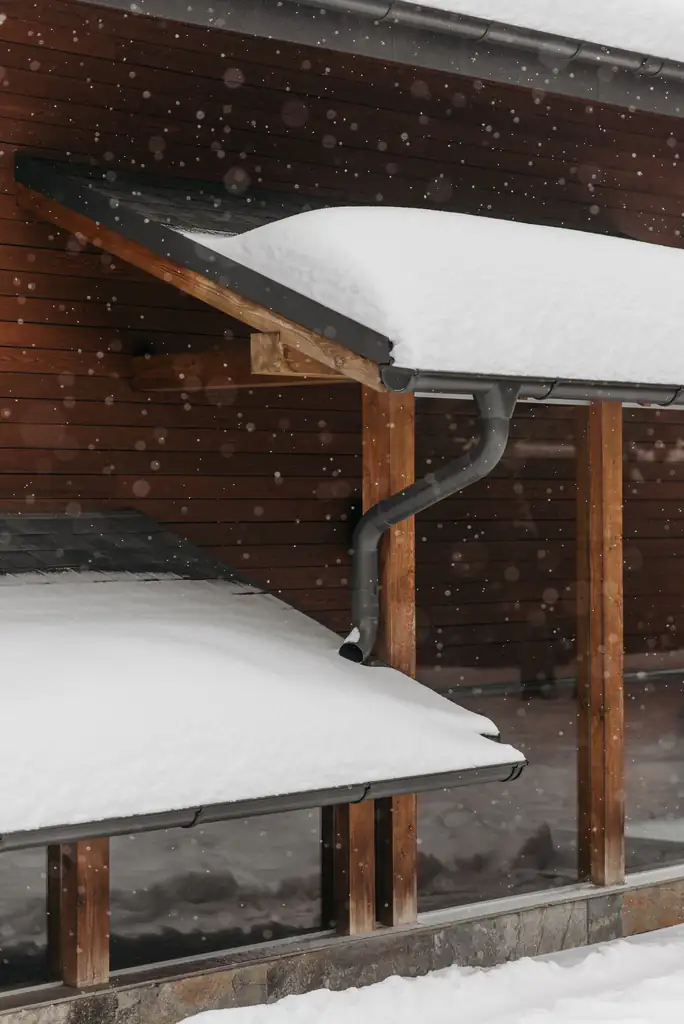
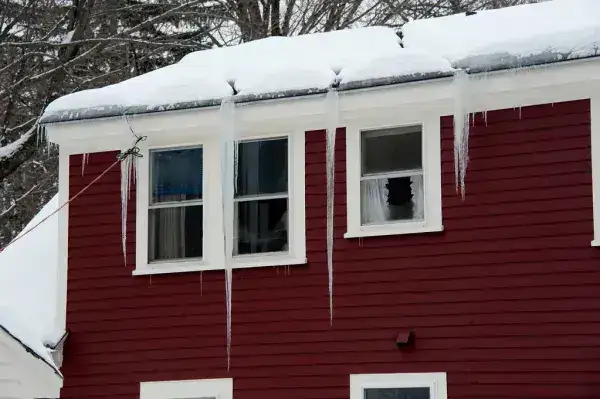
Icicles are hanging spikes of ice at the roof edge; an ice dam is a ridge of ice on the roof surface that traps meltwater behind it. Icicles are mostly a visible warning sign, while the dam is the thing that actually leaks into your home. Both come from the same warm-roof cause.
Icicles and ice dams look related because they are, but they are not the same thing. An icicle is a hanging spike of ice at the roof edge, formed as dripping water freezes on its way down. An ice dam is a ridge of ice sitting on the roof surface itself, trapping a pool of meltwater behind it. The practical difference matters: the dam is what actually leaks into your home, while icicles are mostly a visible warning that the conditions for a dam are present. Both trace back to the same cause — a warm roof melting snow that refreezes at a cold edge.
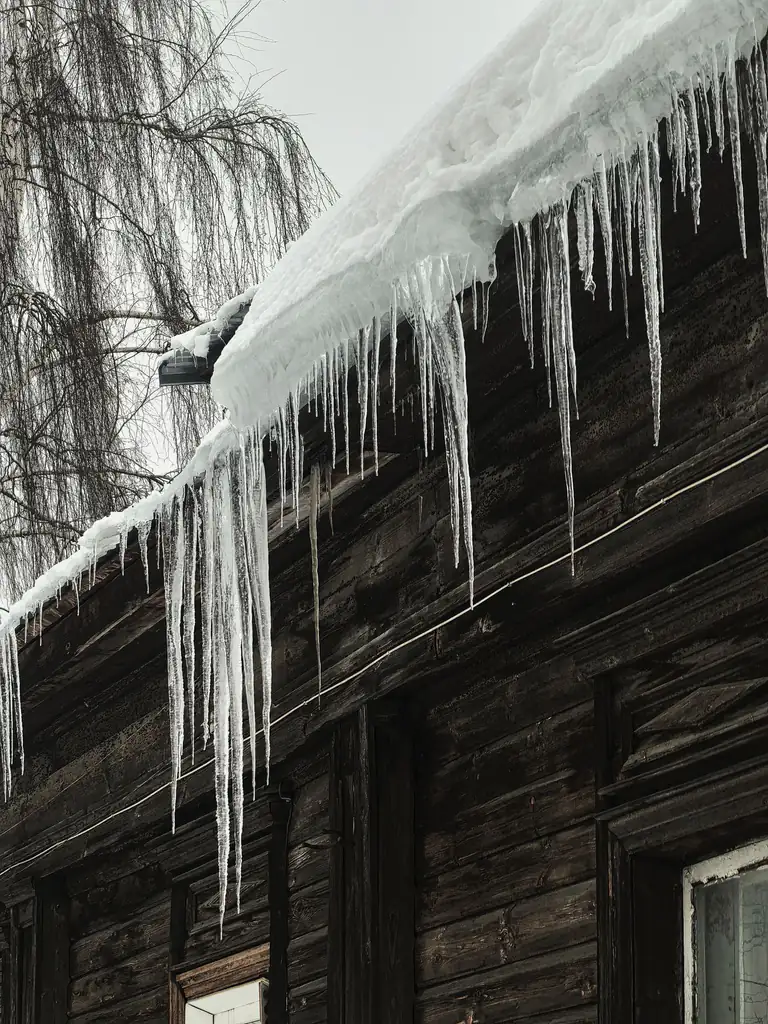
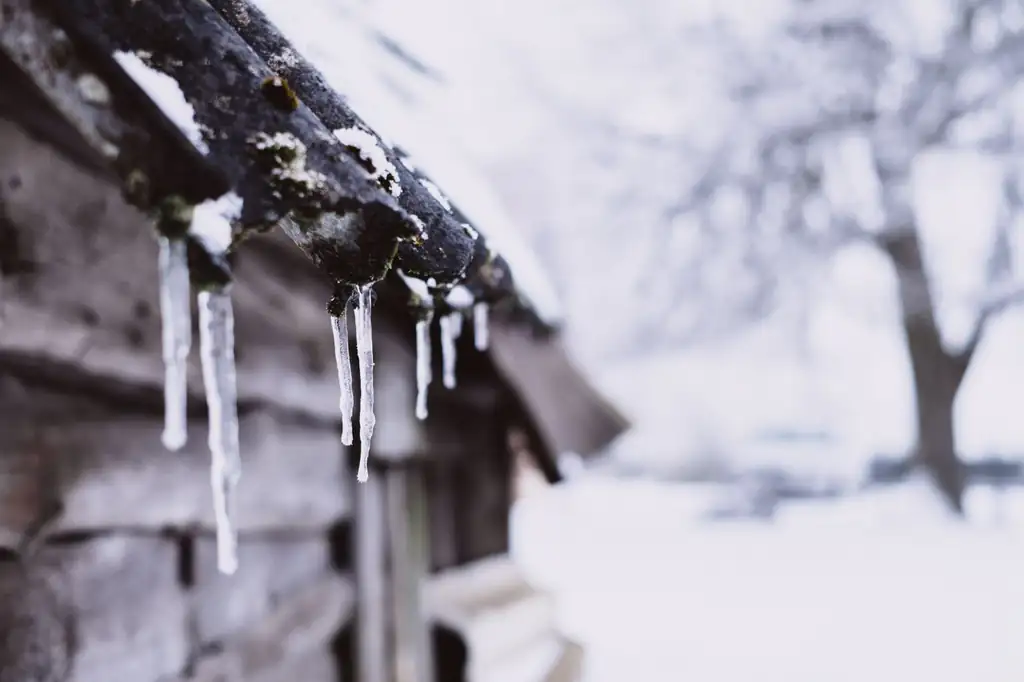
An icicle forms when meltwater runs to the edge of the roof, drips, and freezes as it hangs — building downward into the familiar tapered spike. Icicles live at and below the roofline, hanging off the eave, the gutter, or the drip edge. They are the part everyone notices from the street.
Importantly, an icicle by itself is not forcing water into your roof. It is the frozen remainder of water that already made it to the edge and dripped clear. That is why icicles are best read as a symptom and a warning rather than the source of interior leaks. Our piece on icicles on gutters and what they mean goes deeper on reading them.
An ice dam is a ridge of ice on the roof surface, usually at the cold overhang beyond the heated part of the house. Once that ridge exists, meltwater coming down from the warmer roof above collects behind it and has nowhere to go. It becomes a standing pool on a surface designed only to shed running water — and that pool backs up under the shingles and into the structure.
The dam, not the icicle, is the leak-maker. It is also less visible, because it sits up on the roof rather than hanging in plain sight below it.
| Feature | Icicle | Ice dam |
|---|---|---|
| Where it forms | Hanging below the roof edge | On the roof surface at the eave |
| What it is | Frozen dripping water | A ridge trapping standing meltwater |
| Causes interior leaks? | Not directly | Yes — water backs up under shingles |
| Main risk | Falling ice, weight on gutters | Roof and interior water damage |
| Visibility | Highly visible from the ground | Often hidden up on the roof |
| Warning value | A visible sign of the conditions | The actual problem to solve |
Read across any row and the theme holds: the icicle is the sign, the dam is the substance.
Think of icicles as the smoke and the ice dam as the fire. A roof hung with heavy icicles is telling you that meltwater is reaching a cold edge and freezing — the exact recipe for a dam. Treat persistent icicles as a prompt to look at the warm-roof cause, not just as winter scenery.
Both come from the same chain of events. Heat escapes the living space into the attic, warms the roof deck, and melts the underside of the snow. That meltwater trickles down to the cold overhang. If it refreezes into a ridge on the surface, you get a dam. If it drips over the edge and freezes as it hangs, you get icicles. Often you get both at once, from the same water and the same warm roof.
This shared origin is good news for prevention: fixing the cause reduces both. Keeping the roof deck cold through attic insulation and ventilation means less meltwater reaching the edge, which means fewer dams and fewer icicles together.
If the question is what damages your home, the answer is the ice dam. Its trapped pool is what works under the shingles, soaks the deck, and shows up as ceiling stains inside. The general steps to prevent ice dams are aimed squarely at stopping that pool from forming.
Icicles carry a different, more immediate risk: they are heavy and they fall. Large ones load the gutters and fascia and can drop without warning onto anyone below. So both deserve attention, but for different reasons — the dam for hidden water damage, the icicles for weight and falling hazard.
Do not knock icicles down from a ladder or chip at an ice dam from the roof. Falling ice and icy roofs cause serious injuries. Keep people and pets away from large icicles, reduce snow load from the ground, and call a professional for significant ice at the edge.
Icicles hang below the roof edge as frozen dripping water; an ice dam is a ridge on the roof surface that traps meltwater and pushes it under the shingles. The dam causes the leaks, the icicles mostly warn you the conditions are ripe, and both come from the same warm roof melting snow at a cold edge. Solve the cause and you cut down on both — and until then, keep clear of falling ice and off the icy roof.
FAQ
An icicle is a hanging spike of ice that forms as dripping water freezes at the roof edge. An ice dam is a ridge of ice sitting on the roof surface that traps meltwater behind it. The dam causes leaks; the icicle is mostly a visible sign of the same conditions.
They can be. Icicles show that meltwater is running to a cold edge and freezing, which is exactly the condition that forms ice dams. Not every icicle means a dam has formed, but a roof making lots of icicles is often making dams too.
The ice dam. It holds a pool of standing meltwater behind it, and that water backs up under the shingles and into the home. Icicles hanging off the edge are not themselves pushing water into the roof, though their weight can strain gutters.
Large icicles can be. They are heavy, they load the gutters and fascia, and they can fall unexpectedly onto people, pets, or property below. Keeping clear of them and never reaching up to knock them down from a ladder is the safer approach.
Largely yes. Both come from heat escaping the roof, melting snow, and that meltwater refreezing at the cold eave. Fixing the underlying warm-roof problem reduces both the dams and the icicles at the same time.
Yes. Brief thaw-freeze cycles or sun melting surface snow can produce icicles without a full dam forming behind them. But persistent, heavy icicles usually signal the same warm-roof conditions that build dams.
Neither from a ladder or the roof — both are dangerous. Knocking down icicles risks falling ice and falls, and chipping at a dam damages the roof. Reduce snow load from the ground and call a professional for serious ice at the edge.
Keep reading
What icicles on your gutters actually mean, when they are harmless and when a big row signals an ice dam forming from a warm roof, and why knocking them off is not a fix.
How ice dams really form — attic heat loss melts snow that refreezes at the cold eave. Why gutters aren't the cause, and what to do safely.
The safe way to remove an ice dam is limited — rake from the ground and call a pro to steam an active leak. Never climb, chip, or use flame. A step guide.