Ice in Gutters and Downspouts
Why gutters and downspouts fill with ice — clogs, poor slope, and meltwater refreezing at the cold eave. The weight risk, and the real fixes for a symptom.
Ice Dams & Winter Water
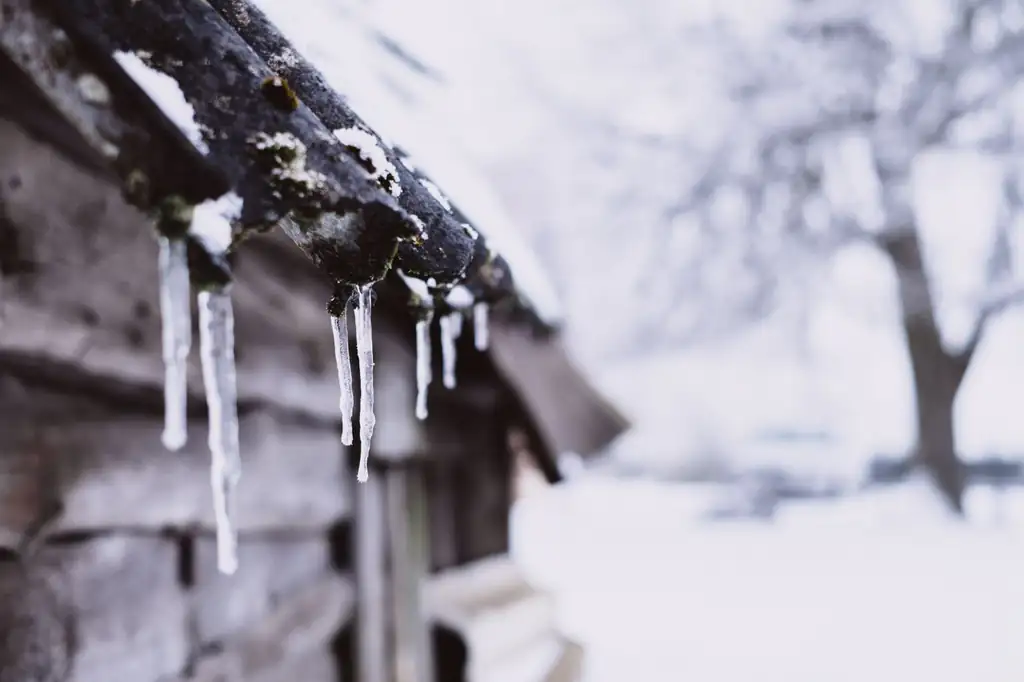
A few small icicles are normal in a freeze-thaw, but a row of large icicles hanging off the gutter usually signals an ice dam forming above — meltwater from a warm roof refreezing at the cold edge. They are a warning to look at attic heat, not just knock them off.
A few small icicles dripping off your gutter during a thaw are usually nothing to worry about. A long row of thick icicles hanging along the edge is a different message. It generally means meltwater from a warm roof is running down and refreezing at the cold gutter — the same process that forms an ice dam just above. So big icicles are a signal to look at what is heating your roof, not just something to knock down.
Icicles form whenever water drips in freezing conditions and freezes on the way down. During an ordinary freeze-thaw — sun warms the snow a little, it drips, temperatures drop and it freezes — a few modest icicles at the edge are common and not alarming.
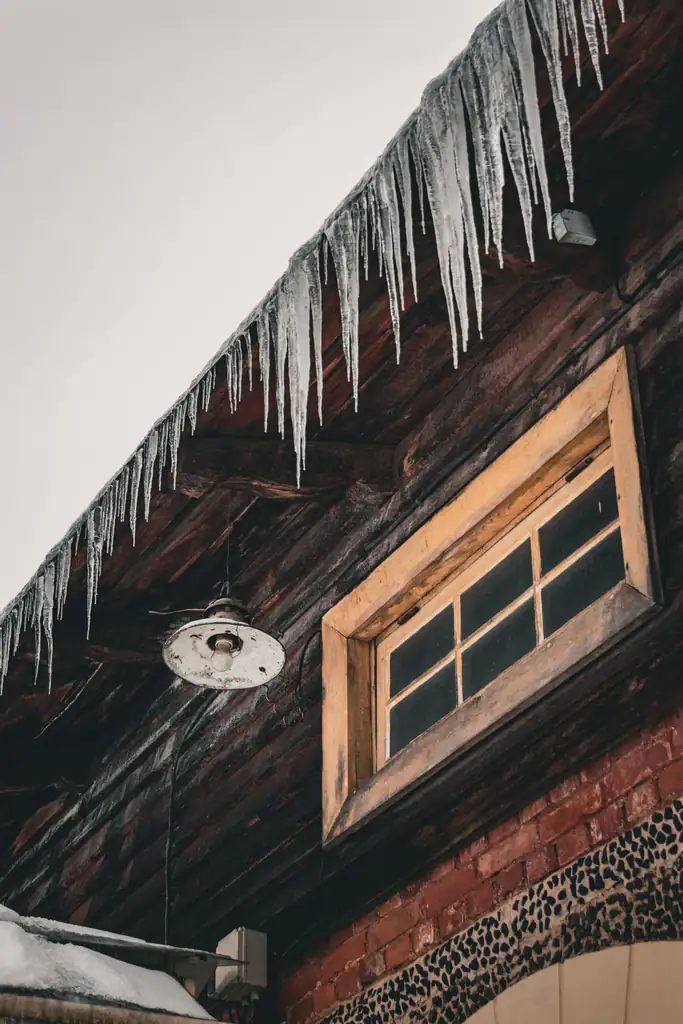
The warning version is different in scale and pattern. When you see a continuous row of large icicles all along the gutter, especially thick ones, it usually means a steady supply of meltwater is reaching the cold edge. That steady supply comes from snow melting on a warmer roof surface above, which is exactly the condition behind an ice dam. The icicles are the visible drips escaping the edge; the ice ridge building behind them on the eave is the part you often cannot see from the ground.
| What you see | What it usually means | Concern level |
|---|---|---|
| A few small icicles during a thaw | Normal freeze-thaw dripping | Low |
| Icicles only on the sunny side, brief | Sun-driven melt, not roof heat | Low to moderate |
| Long row of large icicles along the gutter | Meltwater from a warm roof refreezing at the edge | Higher — check attic heat |
| Big icicles plus a thick ice ridge on the eave | An ice dam is likely forming | Higher — address the cause |
| Icicles with interior stains appearing | Water may already be backing up | Act on the cause promptly |
Read this as a rough guide, not a diagnosis; conditions vary by roof, exposure, and storm.
Large icicles on the gutter tell you two things. First, snow is melting somewhere on the roof despite freezing weather — and the usual reason is heat escaping from the attic warming the roof deck. Second, that meltwater is reaching the cold eave and freezing there rather than draining away. Both point to the same underlying issue and the same fix: keep the roof cold so the snow does not melt and refreeze at the edge. Our guide on ice in gutters and downspouts covers what happens when that refreezing fills the gutter and blocks drainage.
Icicles are a symptom to read, not just an object to remove. A big row of them is your roof telling you it is losing heat and refreezing meltwater at the edge. Knocking the icicles off changes the view, not the cause — they will return with the next freeze-thaw cycle until you address the attic heat.
It is tempting to reach up with a rake, shovel, or broom and break the icicles off. Two problems with that.
First, it is dangerous. Large icicles are heavy and can break loose and fall without warning; prying at them from below or a ladder puts you right in the drop zone, and the ice can injure you, someone else, or a pet. Working at the roof edge in winter also invites slips.
Second, it does not fix anything. The icicles are a byproduct of a warm roof melting snow. Break them off and, as long as the roof keeps melting snow, they grow back. You have taken a risk for a temporary cosmetic change.
Do not climb onto an icy or snow-covered roof. It is extremely dangerous; serious ice-dam work is a job for professionals with the right equipment.
If icicles or an ice dam have reached the point of causing leaks, that is a job to handle from the ground where possible or to hand to a professional — see removing ice dams safely. Keep people and pets from walking directly under a heavy row of icicles in the meantime.
The productive response to a warning row of icicles is to reduce what feeds them:
Small icicles in a thaw are ordinary. A long row of large ones is a warning that a warm roof is melting snow and refreezing the water at the cold edge — the making of an ice dam. Do not risk yourself knocking them off; it is dangerous and only cosmetic. Read the icicles as a signal, keep clear of them, and put your effort into keeping the roof cold so they stop forming in the first place.
FAQ
A few small ones during a normal freeze-thaw are usually harmless. A long row of large icicles along the gutter is more of a warning — it often means meltwater from a warm roof is refreezing at the edge, which is how ice dams form.
Not always, but large ones frequently accompany a dam forming above the gutter. Icicles show meltwater is reaching the cold edge and freezing, which is the same process that builds a dam.
They are heavy and can fall without warning, injuring people or pets below, and their weight loads the gutter and fascia. That is a reason to keep clear of them, not to go up and knock them down.
Reaching up to break icicles is risky — falling ice can hurt you, and prying at the edge can damage gutters and shingles. It also does nothing about the warm roof causing them, so they come back.
Snow melts on a warmer part of the roof, the water runs to the cold eave and gutter, and it refreezes and drips, building icicles. The melting is driven by heat escaping the roof.
A heavy load of ice and large icicles can bend gutters and stress the fascia they hang from. The ice weight is the concern, and it points back to how much meltwater is refreezing at the edge.
Address the cause: keep the roof cold with attic air sealing, insulation, and ventilation so snow does not melt and refreeze at the edge. Managing snow load safely from the ground can also help.
Keep reading
Why gutters and downspouts fill with ice — clogs, poor slope, and meltwater refreezing at the cold eave. The weight risk, and the real fixes for a symptom.
The difference between ice dams and icicles — what each one is, which actually causes leaks, and why both point back to the same warm-roof cause.
Gutters are often blamed for ice dams, but a warm roof is the real cause. Here is why removing gutters does not help and what actually fixes the problem.